
Germany and the UK are often seen as two sides of the same European study dream: prestigious universities, strong economies and diverse student cities. Yet the real difference emerges after lectures end and daily expenses begin. From rent pressures to transport costs, financial realities shape student life far more than brochures suggest. Understanding the cost of living in Germany vs UK is therefore crucial for students planning to study abroad in 2026.
Studies consistently show that Germany’s overall living costs are around 20 to 25 per cent lower than the UK, while several UK cities rank among the most expensive in Europe for students. In this blog, you will explore how these differences affect student budgets, lifestyle and long-term planning.
Cost of Living in Germany vs the UK: Key Differences at a Glance
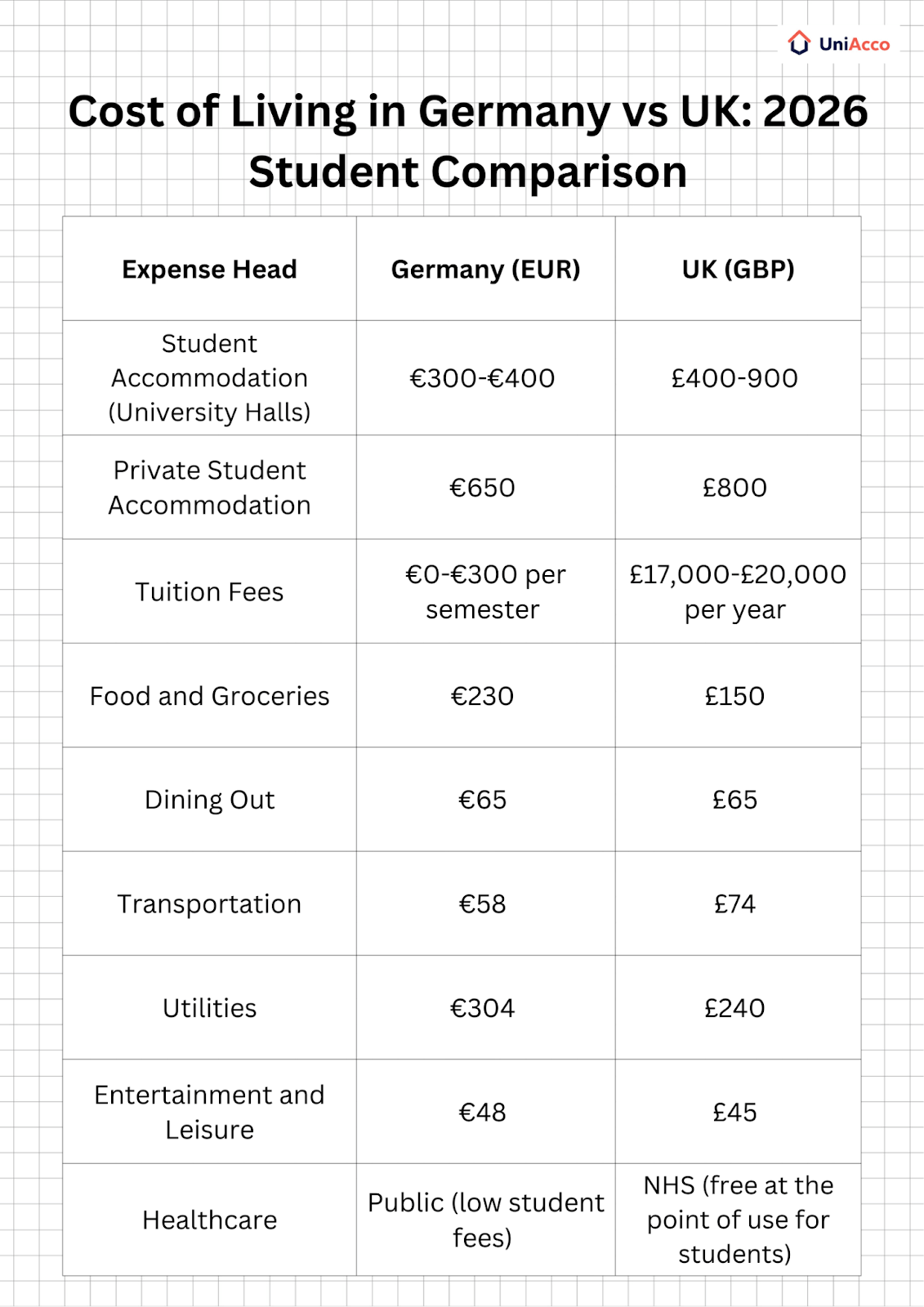
| Expense Head | Germany (EUR) | UK (GBP) | Which Is Cheaper? |
| Student Accommodation (University Halls) | €300-€400 | £400-900 | Germany |
| Private Student Accommodation | €650 | £800 | Germany |
| Tuition Fees | €0-€300 per semester | £17,000-£20,000 per year | Germany |
| Food and Groceries | €230 | £150 | UK |
| Dining Out | €65 | £65 | Equal |
| Transportation | €58 | £74 | Germany |
| Utilities | €304 | £240 | UK |
| Entertainment and Leisure | €48 | £45 | UK |
| Healthcare | Public (low student fees) | NHS (free at the point of use for students) | Equal |
Also Read: Living in Germany Vs. The UK: Which Is Better?
Breaking Down the Cost of Living in Germany vs the UK
Cost of living in Germany vs UK for international students is a major deciding factor when choosing between these destinations. On average, students in the UK spend between £900–£1,800+ per month, depending on the city, lifestyle, and accommodation type. In comparison, students in Germany typically spend around €850–€1,200 per month, influenced largely by housing, food, and transportation costs.
While both destinations offer high-quality education and strong job prospects, the UK generally presents higher variability across cities, particularly in premium hubs like London, whereas Germany tends to show more stable pricing, especially in mid-sized cities.
Cost Of Student Accommodation: Germany vs the UK
Accommodation costs vary by city and housing type in both Germany and the UK. Shared housing and on-campus halls are typically the most affordable, while PBSA and private studios sit at the premium end. Germany is generally slightly cheaper overall, whereas the UK costs fluctuate more sharply, especially in cities like London.
| Accommodation Type | Germany (EUR €) | UK (GBP £) |
| University halls | €250–€450 | £500–£1,000 |
| PBSA | €350–€600 | £700–£1,400 |
| Shared Apartments | €300–€500 | £450–£850 |
| Private studios | €600–€1,000 | £900–£1,800 |
Compare verified student accommodation in the UK with UniAcco and find rooms that fit your budget, lifestyle, and location needs—from shared apartments to premium studios.
🔍 Explore UK Student HousingRent Variation Across Major Cities in Germany vs UK
| City | Avg Student Rent Range (per month) | Market Insight / Trend |
| Berlin | €400–€700 | Affordable capital; shared WG popular amid rising demand |
| Munich | €600–€1,000 | Highest rents; competitive private market, dorms scarce |
| Hamburg | €400–€700 | Stable maritime hub; good dorm availability |
| Stuttgart | €550–€850 | Industrial rise; shared options growing |
| Frankfurt | €500–€800 | Financial demand pushes studios up 10% YoY |
| London | £900–£1,800 | Top expense; zones 3+ offer value, 5-8% annual increase |
| Manchester | £550–£900 | Affordable North West; PBSA boom keeps shares low |
| Edinburgh | £700–£1,200 | High utilities offset rents; free youth transport aids |
| Birmingham | £500–£850 | Midlands value; halls under £140/week rising slowly |
| Leeds | £500–£900 | Budget-friendly; lively areas cap social-driven hikes |
Overall, the cost of living in Germany vs UK varies across cities in both countries, but the UK tends to show sharper differences, with some areas experiencing steep rent increases due to high demand while others see occasional price drops. Germany’s rental market, by contrast, is generally more stable, with costs largely influenced by city size rather than sudden year-on-year changes. Major hubs such as Munich and London remain the priciest, whereas cities like Berlin, Hamburg, Birmingham and Leeds offer more affordable alternatives.
For students planning 2026–27 budgets, the cost of living in Germany vs UK highlights the importance of flexibility: in the UK, early bookings and location choice can help control expenses, while in Germany, selecting mid-sized cities and shared housing offers the most cost-effective options.
Cost of Studying in Germany vs UK
Germany and the UK rank among the top destinations for international students, yet the cost of living in Germany vs UK extends to stark differences in study expenses based on program structure and public policy. Germany maintains mostly free tuition at public universities (admin fees of €150- €350 per semester), even for international students, making longer Bachelor’s (3 years) or Master’s (2 years) programs more affordable overall. The UK charges high tuition (£11,000- £38,000/year for international students), but shorter 1-year Master’s and 3-year undergraduate degrees often result in lower total costs despite steeper per-year rates.
Undergraduate Programs in Germany vs UK
| Program/Field | Germany (EUR €) | UK (GBP £) |
| Business | €300-€400 | £15,000-£30,000 |
| Engineering | €300-€400 | £25,000-£45,000 |
| Medicine | €300-€400 | £40,000-£70,000 |
| Arts/Social Sciences | €300-€400 | £15,000-£25,000 |
| Sciences | €300-€400 | £20,000-£40,000 |
Postgraduate Programs in Germany vs UK
| Program/Field | Germany (EUR €) | UK (GBP £) |
| MBA | €300-€35,000 | £25,000-£60,000 |
| MSc Engineering | €300-€6,000 | £20,000-£35,000 |
| MSc Business | €300-€26,500 | £18,000-£40,000 |
| Medicine (PG) | €300-€3,000 | £38,000-£55,000 |
| Sciences (MSc) | €300-€12,000 | £17,000-£33,000 |
PhD Programs in Germany vs UK
| Program/Field | Germany (EUR €) | UK (GBP £) |
| Sciences | €300-€700 | £17,000-£28,000 |
| Engineering | €300-€700 | £20,000-£35,000 |
| Business | €300-€20,000 | £18,000-£30,000 |
| Medicine | €300-€700 | £25,000-£40,000 |
| Humanities | €300-€700 | £15,000-£25,000 |
Also Read: Understanding The Cost Of Living In The UK: A Comprehensive Guide
Cost of Food & Groceries: Germany vs UK
On average, students weighing the cost of living in Germany vs UK spend around €150–€250 per month on groceries in Germany, whereas students in the UK typically spend £120–£180 per month, depending on the city and dietary choices. While both Germany and the UK offer affordable supermarket chains and student-friendly options, the overall cost of living in Germany vs UK shows higher grocery bills in Germany for items like dairy, meat, and vegetables due to production and regional pricing factors.
| Item | Germany (EUR €) | UK (GBP £) |
| Milk (Regular, 1 Litre) | €1.12 | £1.25 |
| Fresh White Bread (500 g Loaf) | €1.91 | £1.24 |
| White Rice (1 kg) | €3.01 | £1.61 |
| Eggs (12, Large Size) | €3.31 | £2.98 |
| Local Cheese (1 kg) | €12.86 | £7.21 |
| Chicken Fillets (1 kg) | €11.03 | £6.66 |
| Beef Round or Equivalent Back Leg Red Meat (1 kg) | €17.93 | £10.78 |
| Apples (1 kg) | €2.92 | £2.21 |
| Bananas (1 kg) | €1.71 | £1.23 |
| Oranges (1 kg) | €1.98 | £2.11 |
| Tomatoes (1 kg) | €4.19 | £2.55 |
| Potatoes (1 kg) | €1.34 | £1.27 |
| Onions (1 kg) | €1.24 | £1.17 |
| Lettuce (1 Head) | €1.57 | £0.88 |
Popular Budget Supermarket Chains in Germany
- Aldi: One of the most budget-friendly options in Germany, known for low prices on everyday essentials, fresh produce, and weekly special offers that appeal strongly to students.
- Lidl: Popular for its balance of affordability and quality, Lidl offers competitive pricing on groceries, bakery items, and seasonal discounts across most German cities.
- Netto: A widely accessible discount chain with good value staples, making it convenient for students living in residential neighbourhoods and shared accommodation.
- Penny: Favoured for quick and affordable shopping, Penny focuses on essential groceries and frequent price promotions suited to tight student budgets.
- REWE: While slightly more expensive overall, REWE’s discount ranges and regular offers provide a good mix of value, variety, and quality for everyday shopping.
Popular Budget Supermarket Chains in the UK
- Aldi: One of the cheapest supermarkets in the UK, widely used by students for affordable groceries, fresh produce, and consistently low-priced own-brand products.
- Lidl: Known for competitive pricing and good quality essentials, Lidl is popular among students looking to balance cost savings with fresh bakery and weekly deals.
- Asda: A long-established budget-friendly supermarket offering low prices on staple foods, larger pack sizes, and strong value ranges suited to shared student households.
- Tesco: While not always the cheapest, Tesco’s value ranges, Clubcard discounts, and widespread availability make it a practical option for student shopping.
- Iceland: Particularly popular for frozen food, Iceland helps students manage weekly food budgets with low-cost meals, frequent promotions, and bulk buying options.
Germany vs the UK: Cost of Dining Out
Dining out forms a regular part of student life, whether grabbing a quick meal between classes or enjoying a weekend dinner with friends. While most students cook at home to save money, understanding average restaurant costs helps balance budgets and plan social spending when comparing the cost of living in Germany vs UK. Both destinations offer affordable options alongside mid-range treats, though the cost of living in Germany vs UK reveals similar pricing for set meals, but UK edges ahead on fast food and drinks.
| Item | Germany (EUR €) | UK (GBP £) |
| Meal at an Inexpensive Restaurant | €15 | £15 |
| Meal for Two at a Mid-Range Restaurant (Three Courses, Without Drinks) | €65 | £65 |
| Combo Meal at McDonald’s (or Equivalent Fast-Food Meal) | €10 | £8 |
| Domestic Draft Beer (0.5 Litre) | €4.50 | £5 |
| Imported Beer (0.33 Litre Bottle) | €4 | £5 |
| Cappuccino (Regular Size) | €3.56 | £3.49 |
| Soft Drink (Coca-Cola or Pepsi, 0.33 Litre Bottle) | €2.99 | £1.88 |
Cost Of Transportation in Germany vs UK
Public transport is a major factor in the cost of living in Germany vs UK, especially for students commuting daily to campus. In Germany, a one-way local ticket averages about €3.20, while a regular monthly pass costs around €58. In the UK, the equivalent one-way fare is about £2.50, but the monthly pass is higher at roughly £74.50, which means Germany often works out cheaper for frequent public transport users. Taxis also tend to be more expensive in Germany, with starting fares around €4.80 and roughly €2.50 per kilometre, compared with about £3.80 to start and £1.62 per kilometre in the UK, making taxis a pricier alternative in German cities.
| Transportation | Germany (EUR €) | UK (GBP £) |
| One-Way Ticket (Local Transport) | €3.20 | £2.50 |
| Monthly Public Transport Pass (Regular Price) | €58.00 | £74.50 |
| Taxi Start (Standard Tariff) | €4.80 | £3.80 |
| Taxi 1 km (Standard Tariff) | €2.50 | £1.62 |
| Taxi 1 Hour Waiting (Standard Tariff) | €35.00 | £20.00 |
Did you know?
- Germany offers heavily discounted student and semester tickets in many regions, which can reduce monthly transport costs well below standard pass prices.
- Many German cities integrate regional trains, trams and buses into a single pass, so students often travel across wider areas for the same monthly fee.
- In the UK, some cities provide capped daily and weekly fares when using contactless or travel cards, which can significantly lower costs for frequent travellers.
- Several UK universities negotiate special bus or shuttle deals for their students, effectively bundling local transport into accommodation or student union fees.
Find verified, affordable options near top universities—from budget-friendly shared flats to premium studios in Zone 1 & 2. Explore student accommodation in London with UniAcco.
🔍 Explore London Student HousingCost of Utilities in Germany vs UK
Understanding utility costs proves crucial when budgeting for student accommodation abroad, especially since what is included in rent varies widely. In many student accommodations and PBSA properties, utilities such as electricity, heating, water, and sometimes internet come bundled into the rent. In contrast, private apartments often require students to pay these bills separately.
On average, students in the UK typically spend around £100–£200 per month on utilities, while students in Germany generally spend around €150–€250 per month, depending on usage, city and weather conditions (heating significantly affects costs). The cost of living in Germany vs UK shows Germany is higher for basic household utilities due to winter heating demands.
| Utilities (Monthly) | Germany (EUR €) | UK (GBP £) |
| Basic Utilities for 85 m2 Apartment (Electricity, Heating, Cooling, Water, Garbage) | €304.49 | £240.10 |
| Mobile Phone Plan (Monthly, with Calls and 10GB+ Data) | €35.00 | £13.42 |
| Broadband Internet (Unlimited Data, 60 Mbps or Higher) | €35.00 | £32.14 |
Healthcare & Insurance Costs in Germany vs UK
International students must secure health coverage before arriving, as both countries mandate it for visas and enrollment. In Germany, public student health insurance through providers like TK costs €120-€145/month for those under 30, covering doctor visits, hospitals, and prescriptions at minimal out-of-pocket fees. The UK requires the Immigration Health Surcharge (£776/year for students) upfront for NHS access (free GP/hospital care), plus optional private insurance (£20-£50/month) for extras like dental. Germany’s system demands full monthly premiums, while the UK’s surcharge spreads costs over the visa length with broader free access.
| Healthcare Expense | Germany (EUR €) | UK (GBP £) |
| Public Health Insurance (Monthly, Under 30) | €120-€145 | N/A (IHS £776/year) |
| Immigration Health Surcharge/Visa Fee | N/A | £776/year |
| Private Top-Up Insurance (Monthly) | €35-€70 (optional) | £20-£50 |
| GP/Doctor Visit (Out-of-Pocket) | €0-€10 copay | Free (NHS) |
| Prescription Costs | €5-€10 copay | £9.65/item |
Entertainment, Fitness, and Lifestyle Costs in Germany vs the UK
Social activities and fitness keep student life balanced, and understanding the cost of living in Germany vs UK helps plan gym sessions, sports, and movie nights without breaking the bank. Both countries offer student discounts that significantly lower these expenses, though court rentals show more variance between the two.
Monthly gym memberships hover around €35-£35 before discounts, while cinema tickets favour UK pricing with cheaper student matinees. Tennis proves more affordable in the UK, but university sports facilities often provide free or low-cost access in both nations.
| Activity | Germany (EUR €) | UK (GBP £) | Notes |
| Monthly Fitness Club Membership | €35.62 | £34.84 | Students get 20-50% discounts via university partnerships |
| Tennis Court Rental (1 Hour, Weekend) | €24.22 | £13.42 | University courts are cheaper for members |
| Cinema Ticket (International Release) | €13.00 | £10.00 | Midweek/student shows €8-£7 |
Curious what others think about living costs, lifestyle and student life between the UK and Germany? Here’s a Quora thread with personal experiences, pros and cons:

Hacks To Cut Down Student Cost of Living
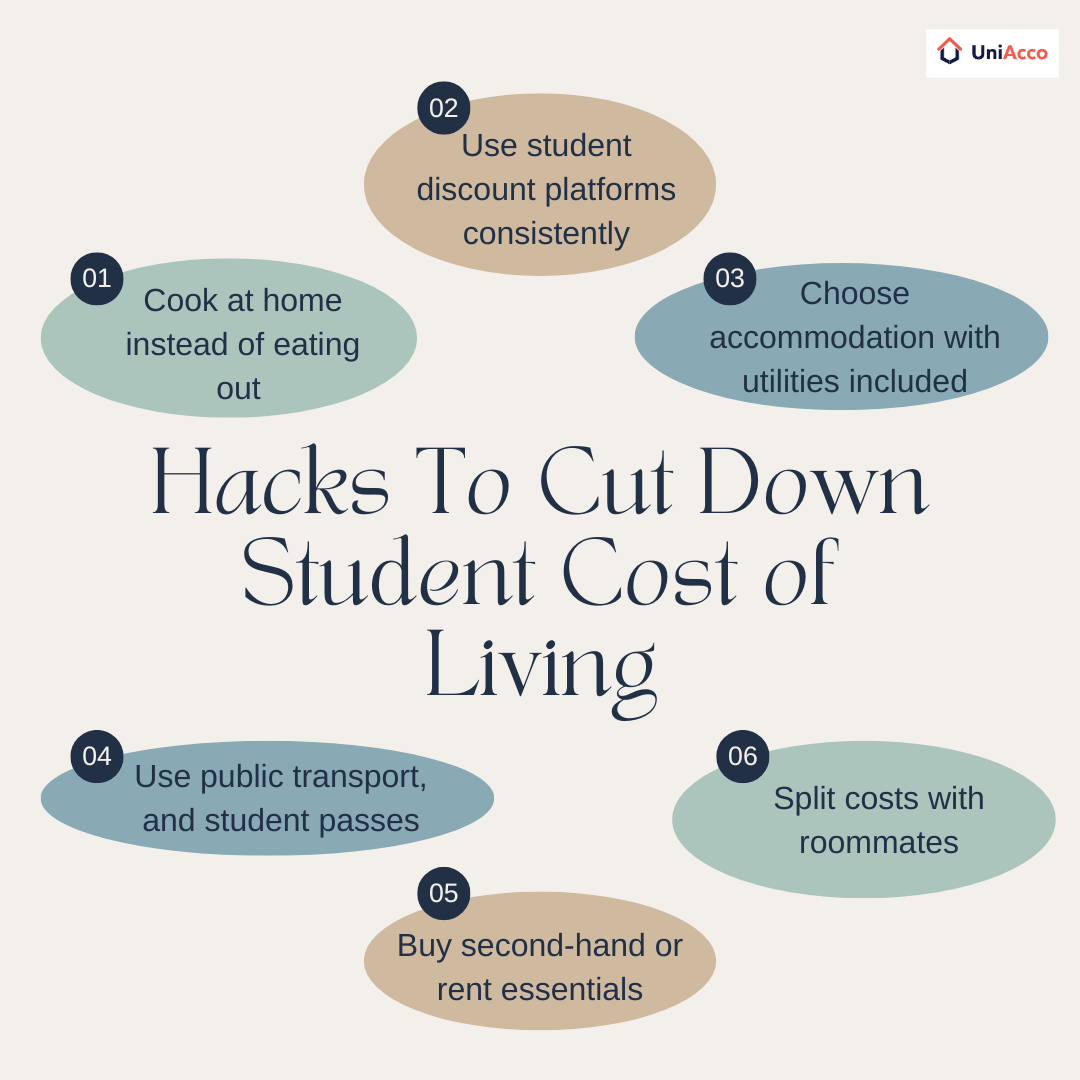
- Cook at home instead of eating out
Meal prepping cuts food costs sharply. Eating out typically costs €12–€15 / £10–£15 per meal, while home cooking averages €2–€4 / £2–£4 per serving. Batch cooking once or twice a week can reduce monthly food spending by 50–60% through planned shopping and shared groceries, while also saving time during busy study weeks.
- Use student discount platforms consistently
Platforms like UNiDAYS, Student Beans, and university IDs offer 10–30% off laptops, food, travel, apps, and entertainment. In both Germany and the UK, museums, cinemas, and many student-friendly retailers honour discounted pricing year-round. Checking these platforms before any purchase quickly becomes a money-saving habit.
- Choose accommodation with utilities included
Utility bills can quickly add up to €150–€250 / £100–£200 per month. All-inclusive student halls or PBSA help avoid unexpected costs and make budgeting easier, especially during winter heating months. This option is particularly useful for international students managing fixed monthly budgets.
- Use public transport, and student passes
Student travel passes such as Germany’s semester ticket or the UK’s 18+ Oyster and Railcards cut transport costs by 30–50%. Many universities include unlimited regional travel, significantly reducing daily commuting expenses. Reliable public transport also removes the need for costly taxis or car ownership.
- Buy second-hand or rent essentials
Second-hand books and household items from libraries, campus exchanges, or platforms like eBay, Kleinanzeigen and Depop can reduce costs by 60–80%. This applies to textbooks, furniture, and electronics alike. Buying used is especially practical for short-term student stays.
- Split costs with roommates
Sharing groceries, subscriptions, and household supplies can save €20–£40 per month. Group meal prep and bulk buying further reduce everyday expenses in shared flats or houses. Clear agreements up front help avoid confusion while maximising savings.
Cut living costs further by choosing the right student accommodation in Germany with UniAcco. Enjoy transparent pricing, inclusive utilities, and flexible options tailored to student budgets.
🔍 Explore Student Housing in GermanyAdditional Ways to Cover Living Expenses
- Securing Scholarships
Scholarships can play a major role in reducing the overall cost of living for students in both Germany and the UK. While Germany is known for low or no tuition at public universities, scholarships often help cover accommodation, health insurance, and monthly living expenses. In the UK, merit-based, need-based, and subject-specific scholarships can significantly offset higher tuition and living costs. For students comparing options in 2026, the Germany cost of living compared to the UK is often shaped just as much by available funding as by headline expenses. Applying early, preparing strong applications, and tracking deadlines across universities and funding bodies can substantially ease financial pressure.
| Scholarship Name | Offered by | Coverage & Benefits |
| DAAD Scholarship | DAAD (German Govt) | €992/month (Masters) or €1,400 (PhD), tuition, travel, health insurance, rent subsidy |
| Konrad-Adenauer-Stiftung | Konrad-Adenauer Foundation | €850-€1,200/month, tuition, accommodation, family allowance for Masters/PhD |
| Deutschlandstipendium | German Govt/Universities | €300/month (half govt, half sponsor), for 1 year renewable |
| Chevening Scholarship | UK Foreign Office | Full tuition, living stipend, flights, allowance for a 1-year Masters |
| Commonwealth Scholarship | UK FCDO | Full tuition, maintenance (£1,236/month outside London), travel, family allowance |
| Gates Cambridge Scholarship | University of Cambridge | Full tuition, £20,000+ living costs, academic development for Masters/PhD |
- Engaging in Part-Time Jobs
Part-time work helps students stretch their budget without compromising their study goals. Whether it’s campus roles, retail shifts, or industry-linked student jobs, both countries offer structured work-hour allowances that make earning manageable. It’s a straightforward way to support living expenses while building confidence and experience.
Popular Part-Time Jobs in Germany
International students in Germany can work up to 140 full or 280 half days per year at the €12.82 minimum wage (2026), with popular roles suiting flexible schedules around classes. On-campus jobs like student assistants offer field-related experience, while service gigs build language skills. Hourly pay averages €12-€20, helping cover living costs without overloading studies.
| Job Role | Average Hourly Pay (EUR) |
| Student Assistant (HiWi) | €14-€20 |
| Tutor (Academic/Language) | €15-€35 |
| Waitstaff/Barista | €12-€19 |
| Delivery/Courier | €12-€16 |
| Retail/Sales Assistant | €12-€15 |
| Office Assistant | €13-€16 |
Also Read: Scholarships for International Students in the UK
Popular Part-Time Jobs in the UK
Degree-level international students may work up to 20 hours per week during term time, with no limit during vacations; below-degree students are limited to 10 hours. Hourly rates align with National Minimum Wage: £10.42 (23+), £10.18 (21-22).
| Job Role | Average Hourly Pay (£) |
| Retail/Customer Service | £8-10 |
| Hospitality (Waiter/Barista) | £9-12 + tips |
| Administrative Roles | £10-13 |
| Campus/Tutoring | £10-15 |
Also Read: 11 Ways You Can Find A Part-Time Job While Studying
Conclusion
The real difference in the cost of living in Germany vs the UK becomes clear when you look beyond tuition fees. Germany offers lower everyday expenses, strong public infrastructure, and predictable monthly costs, while the UK provides globally recognised academic environments, compact cities, and a faster-paced student lifestyle. Each country follows a distinct financial rhythm, one shaped by affordability and efficiency, the other by structure, convenience, and academic density.
What ultimately matters is how well that rhythm aligns with your priorities, budget, and lifestyle goals. With UniAcco, you can secure student accommodation that fits your financial plan and preferred way of living, ensuring your stay in Germany or the UK in 2026 is comfortable, transparent, and stress-free.


 LinkedIn










0 Comments