

You’ve probably checked your student accommodation rent three times by now. And yes, it’s still that expensive. The 2025 NatWest Student Living Index puts average student rent at around £562.67 a month. And if you’re an international student, that number hits a little harder once you start adding groceries, transport, bills, and those “Treats on me” weekends.
So, you start looking at shared accommodation and wonder, “Do I really want to share my home with strangers?” You probably want your own space, your own routine and somewhere to unwind after a long day at university. But sharing can give you more than lower rent.
This blog gives you a clearer picture of the genuine benefits of living in shared accommodation, including the ones you may not expect.
Shared Accommodation at a Glance
| What is shared accommodation? | A property where students share common spaces while usually having their own bedroom |
| Is shared accommodation cheaper? | Often, because rent and some household costs are split |
| Is it good for international students? | It can be, particularly for students who want social support and lower upfront costs |
| What do you share? | Usually kitchens, living areas and sometimes bathrooms |
| Do you get your own room? | Usually, but this depends on the property and room type |
| Are bills included? | Sometimes; always check before booking |
| Is it better than private accommodation? | It depends on how much you value privacy, cost, social life and convenience |
| Who is it best for? | Students comfortable with shared spaces who want to control accommodation costs |
What Is Shared Accommodation?
Shared accommodation means you rent a home with other students or young professionals. You usually get your own bedroom, while sharing spaces such as the kitchen and living room. Some properties also have shared bathrooms, while others give each bedroom a private bathroom. Always check this before you book.
Your rent usually covers your bedroom and your share of the property’s common areas. Depending on the property, you may pay utilities separately for electricity, water, heating and Wi-Fi. A shared flat usually sits within an apartment building, with bedrooms opening into shared indoor spaces. A shared house gives you a similar setup inside a standalone house.
Types of Shared Accommodation for Students
Your shared accommodation can look very different depending on your university, city and budget. Here are the main options you’ll come across when searching for shared accommodation abroad.
- Shared PBSA Apartments
PBSA stands for Purpose-Built Student Accommodation. You usually get a private bedroom with a shared kitchen and living area. Most PBSA rooms come furnished, which saves you from buying furniture after arriving abroad. Many buildings also have on-site management, security and student amenities such as gyms, study rooms and social spaces.
- Shared Student Houses
Shared student houses offer a more traditional student living experience. You get a private bedroom and share communal areas such as the kitchen, living room and bathroom. You may live with several housemates, depending on the property. A private landlord or letting agent usually manages the house. Utilities can sit outside your rent. You may need to split costs for electricity, gas, water and Wi-Fi with your housemates.
- Shared Student Apartments
Shared student apartments give you the feel of having your own place, without living completely on your own. You’ll have your own bedroom, while the kitchen and living room are shared with a smaller group of students. Depending on the apartment, you might even have a private bathroom. It’s a good choice if you like having your own space but still want people around when you feel like being social.
- Homestays
With a homestay, you live in a local person’s home and become part of their everyday routine. You’ll generally have your own bedroom and share common areas with your host or their household. This can be a lovely way for international students to experience local culture firsthand rather than only seeing it from a student’s perspective. Some homestays also include meals or help around the house, depending on what you and your host agree on.
- Co-Living Accommodation
Co-living sits somewhere between having your own place and living with a community. You’ll typically have a private bedroom or studio, while kitchens, lounges, workspaces and other facilities are shared. The setup gives you a bit of personal space when you need it, with plenty of chances to meet and connect with the people around you.
The main difference from conventional student housing is the wider community setup. Co-living properties often cater to students, graduates and young professionals rather than students alone. If you value privacy but still want shared spaces and social opportunities, co-living can be worth considering.
What Are the Benefits of Living in Shared Accommodation?
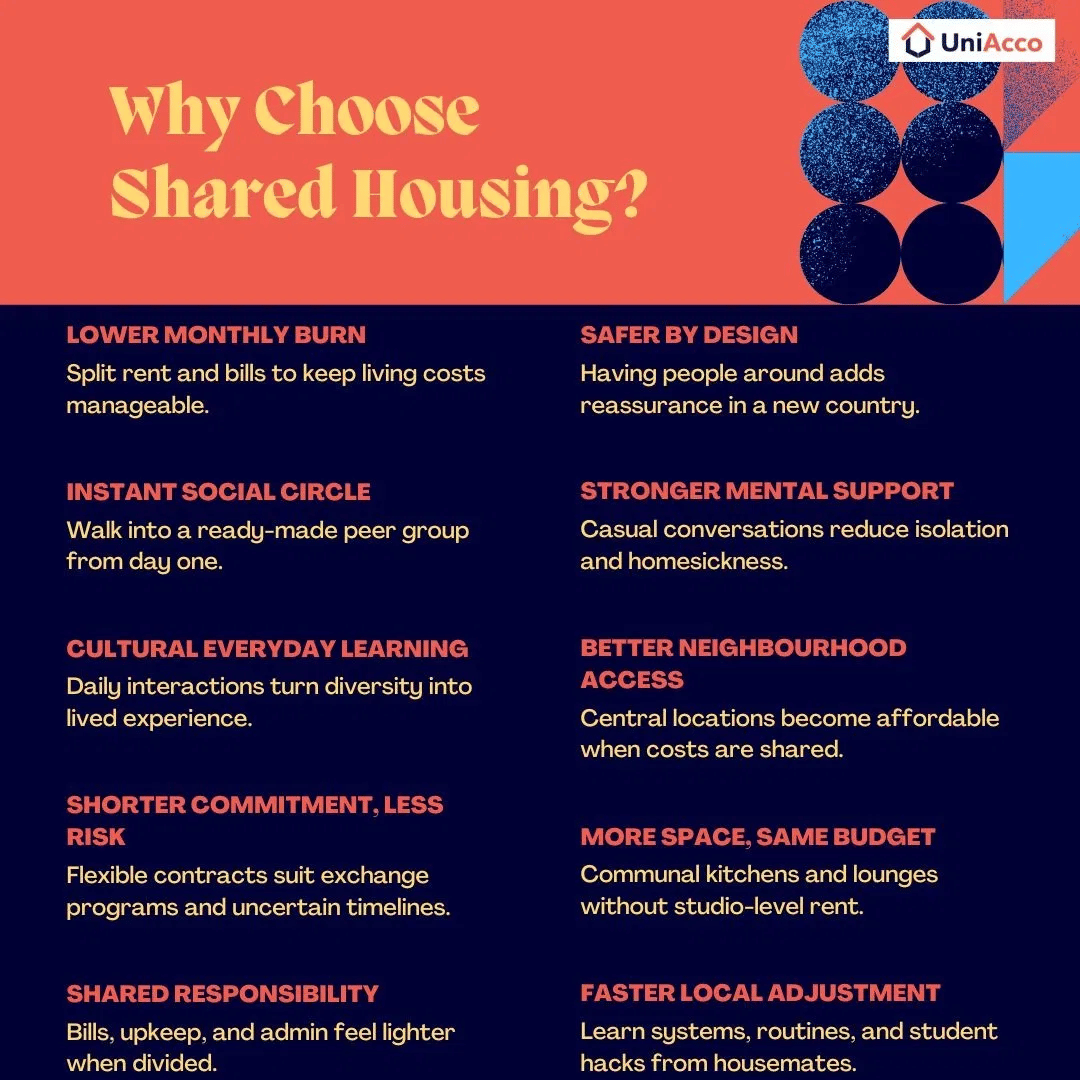
- Lower Monthly Accommodation Costs
When you choose shared accommodation for students, you split the property’s rent with your housemates. You may also share the cost of Wi-Fi, electricity, water, heating and household essentials. That can make a difference to your monthly budget. You could then put more money towards groceries, transport, university costs or the occasional meal out.
However, there is no fixed amount that every student saves. Your shared accommodation costs depend on the city, property, room type, number of housemates and what your rent includes.
- Built-In Social Connection
Moving abroad alone can feel strange at first. You’re learning your way around a new city while getting used to university life. Shared accommodation gives you people around you from day one. For first-year and international students, that can make the first few weeks feel less isolating. Your flatmate might become the person you grab dinner with, ask about the bus route or sit with during your first university event.
You may also meet students from countries and cultures you have never experienced before. Those everyday conversations can turn into genuine friendships. This benefit can matter even more if you move abroad alone. You have people to talk to when homesickness hits or your first week feels overwhelming.
Of course, living with others does not guarantee friendship. The right shared accommodation for international students can simply give you more chances to meet people naturally.
- Easier Adjustment to Life Abroad
Your first few weeks abroad can leave you with surprisingly simple questions like which bus do I take? Where do I buy groceries? How does laundry work here? When does the university library close?
With shared accommodation for international students, you may already have someone nearby who knows the answer. Your housemate might show you the cheapest supermarket, explain the local transport system or tell you how university routines usually work. They may also point out small local customs that you would otherwise learn through trial and error. That everyday help can make settling into a new country feel more manageable.
- Cultural Exchange
One of the underrated benefits of shared accommodation is how much you can learn without leaving your kitchen. You might share a flat with students from three different countries. One night, you could try your housemate’s favourite dish. The next, you might teach them a recipe from home. You’ll hear different languages, learn new traditions and discover how other people approach everyday life. Conversations about food, family, festivals or university can introduce you to perspectives you may never encounter in your own country.
These small interactions can turn a shared flat into a genuinely multicultural space, especially for international students. You do not need planned cultural events to make this happen. Sometimes, it starts with a simple question: “What are you cooking?”
- Shared Household Responsibilities
Living with housemates means you do not have to handle every household job alone. You can split tasks such as cleaning the kitchen, taking out rubbish, buying toilet paper and restocking shared supplies. You might also take turns with bigger jobs, such as cleaning the bathroom or vacuuming communal areas.
A simple weekly rota can keep things fair. You could also agree to clean up immediately after using shared spaces. That avoids one person becoming the unofficial cleaner of the house.
Shared household responsibilities only work when housemates actually do their share. Before moving in, talk about cleaning standards, shopping and shared costs. If nobody wants to discuss chores, you may end up doing far more than you expected. That is one part of shared student housing worth considering before you sign a tenancy.
- More Space and Amenities for Your Budget
A larger shared property may offer features you would struggle to afford alone, like bigger kitchens, comfortable lounges, balconies, gardens or dedicated study areas. Some PBSA shared accommodation also includes gyms, games rooms, laundry facilities and communal spaces. You get access without paying the full property cost yourself.
For example, a flat with a large living room and balcony may cost too much for one student. Split that cost between several housemates, and the same space becomes more affordable.
- Support When You Need It
Sometimes, the biggest benefit of having housemates is simply having someone nearby.
Locked yourself out? Your flatmate might be able to help. Feeling unwell? Someone can check if you need anything from the shop. Not sure how the heating works? You can ask someone who has dealt with it before.
You may also have someone to call when a household issue comes up. A broken tap, lost key or confused delivery is easier to handle when you have another person around. This can be particularly useful when you’re living abroad and still getting used to everyday life.
However, shared accommodation does not automatically mean better security. Your housemates can offer practical and social support, but they cannot replace proper building security.
- Opportunity to Build Lifelong Friendship
You might move into a shared flat knowing nobody. Six months later, your flatmates could be your squad you still speak to long after graduation. Shared accommodation gives you plenty of everyday moments to connect. Cooking dinner together, grabbing coffee between lectures or complaining about an early class can turn housemates into close friends.
These friendships can stretch across countries and cultures, especially for study abroad students. You may visit each other’s home countries, celebrate different festivals together or stay in touch after university.
Of course, friendship is never guaranteed. You may become close with your housemates, stay friendly without becoming best mates, or simply go your separate ways. That is part of the experience. The real benefit of shared student housing is having more opportunities to meet people and build relationships naturally while studying abroad.
- Practical Life Skills
Living miles away from home means handling things your parents may have sorted for you before. Shared student accommodation gives you plenty of chances to learn. You might create a monthly budget, split bills, track shared spending and plan your grocery shop.
You’ll also learn how to communicate when something bothers you. Maybe your flatmate plays music late at night. Perhaps someone keeps leaving dishes in the sink. You need to speak up, set boundaries and find a compromise that works for everyone. Then there are the everyday jobs: cleaning, cooking, laundry, rubbish and keeping track of household supplies.
These skills can help long after university. Shared accommodation for students gives you regular practice at managing money, responsibilities and relationships without someone else doing everything for you.
Start your search with trusted student accommodation platforms like UniAcco. Before booking, check the provider’s details, reviews, tenancy terms, and payment process so you can choose your student home with confidence.
🔍 Explore Student AccommodationShared Accommodation vs Private Accommodation
| Factor | Shared Accommodation | Private Accommodation |
| Rent | Usually lower per person | Usually higher |
| Privacy | Moderate | High |
| Social interaction | High | Lower |
| Bills | Often shared/included | Usually your responsibility |
| Communal space | Shared | Private |
| Household responsibilities | Shared | Your responsibility |
| Roommate issues | Possible | Minimal |
| Location | Splitting rent makes central, campus-close areas more reachable | Full control over your exact location, but central spots cost more solo |
| Best for | Budget-conscious/social students | Students prioritising privacy |
Disadvantages of Shared Accommodation
Less Privacy
Your bedroom may be private, but the kitchen, living room and sometimes bathroom are shared. You cannot always control when others use these spaces.
Different Cleaning Standards
You clean your dishes straight away. Your housemate leaves theirs in the sink until tomorrow. Small habits like this can become annoying when you share a kitchen. Talk about cleaning from the start, including dishes, bathrooms and rubbish. Agreeing on the basics can prevent a lot of arguments.
Noise and Different Routines
Your flatmate may study late, wake up early or watch films at midnight. Different schedules can become frustrating, especially during exams.
Roommate Conflicts
Sometimes, you simply won’t see eye to eye with the people you live with. Maybe someone leaves dishes in the sink or plays music late at night. These things can seem minor at first, but ignoring them rarely makes them disappear. Setting clear expectations and speaking up early can save everyone a lot of unnecessary stress.
Shared Bills Can Become Complicated
Someone may forget to pay their share of the Wi-Fi or electricity bill. Agree on payment dates and keep records of shared expenses.
Limited Control Over Common Spaces
You cannot decide everything about a shared kitchen or living room. Furniture, temperature, guests and cleaning often need group agreement.
Different Food, Cultural or Lifestyle Habits
Your housemates might eat differently, cook at odd hours or follow different religious practices. They may also have their own views on guests, noise or shared spaces. A quick chat about food, guests, quiet hours and household routines can save you from plenty of awkward moments later.
Joint Tenancy or Contractual Responsibilities
The room and rent may seem like the main things to check, but your contract could also link you to your housemates. Some agreements make tenants jointly responsible for rent or property-related costs. If someone doesn’t pay or damages the property, you may have to deal with the consequences.
How to Choose the Right Shared Accommodation?
Start With Your Budget
Set a realistic monthly limit for rent, bills, food and transport. Keep some money aside for unexpected costs.
Decide What You Are Comfortable Sharing
It’s easy to say you’re happy with shared accommodation until you realise what “shared” actually means. A communal kitchen may not bother you at all, but a shared bathroom might. Decide where you’re willing to compromise and what you simply can’t live with. Check the listing closely, too. If you need your own bedroom, make sure it’s clearly listed as a private bedroom before you book or pay.
Check the Number of Housemates
Six people sharing one bathroom is a very different setup from three people sharing two. With a bigger group, you’ll probably have more people to hang out with, but shared spaces can get busy. Think about the number of bathrooms, kitchen space and communal areas too. Before booking, check exactly how many students share each space.
Consider Your Study and Sleep Routine
Think about your typical day. If you study late or wake up early, check if the property suits quieter routines.
Check the Location and Commute
Look beyond the distance from campus. Check public transport, supermarkets, pharmacies and your expected travel time during busy hours.
Check What Is Included in the Rent
Ask specifically about Wi-Fi, electricity, water, heating and other charges. “Bills included” can mean different things across properties.
Look at the Room and Communal Spaces
Check bedroom size, storage, desk space, kitchen facilities and bathroom access. Ask for recent photos if the listing looks outdated.
Check Property Security and Safety Features
Before you get distracted by the nice kitchen and city-centre location, check the boring stuff that actually matters. Look for secure entrances, working locks and smoke alarms. Check how you would enter the building and whether your bedroom has its own lock. Also, ask who you contact if you get locked out, spot a repair issue or face an emergency. Save those numbers before moving in.
Read the Fine Print Before You Sign
Don’t sign the tenancy agreement without reading it first. Check how long the contract lasts, when rent is due and how much notice you need to give. Check the rules for guests, overnight stays and leaving early. If other students are on the agreement, see what happens if someone leaves or misses a payment. Ask about any clause you don’t understand.
Check Deposit and Cancellation Terms
Find out how much you need to pay upfront and when you can get your deposit back. Check the cancellation policy before making any payment.
Read Reviews Carefully
Do not focus only on the star rating. Read the reviews for complaints about cleanliness, repairs, noise, management and billing.
Confirm Who You Are Booking From
Know if you are dealing with a university, PBSA provider, landlord, letting agent or another platform. Check the company details and payment process before sending money.
Also Read: How to Spot & Avoid Student Accommodation Scams in the UK
What to Check Before Signing a Shared Accommodation Contract?
- Rent and Payment Schedule – Confirm the monthly rent, payment date and accepted payment methods. Check if the landlord can change the rent during your contract.
- Deposit Requirements – Check the deposit amount, payment deadline and conditions for getting it back.
- Rent Inclusions – Confirm if your rent covers Wi-Fi, electricity, water, heating and other utilities. Ask about usage limits or additional charges.
- Contract Length – Check the exact start and end dates. Make sure they match your university term and travel plans.
- Early Termination / Break Clauses – Find out what happens if you need to leave early. Some contracts may set specific conditions or costs.
Also Read: Student Accommodation Contract: Essential Early Exit Options
- Replacement Tenant Rules – Ask if you can find someone to take over your room. Check who must approve the replacement.
- Maintenance Responsibilities – Know who handles repairs and which minor issues you may need to manage yourself. Ask how you report urgent problems.
- Damage and Deposit Deductions – Check how the property records existing damage. Take dated photos and videos when you move in.
- House Rules – Look for rules covering guests, smoking, pets, parties, noise and shared spaces. These can affect your daily life.
- Liability for Shared Areas – Check who pays if something gets damaged in a kitchen, bathroom or living room. Do not assume everyone automatically shares the cost.
- Tenancy Responsibility – Check every person named on the agreement. A joint contract can create different responsibilities from an individual room contract.
One important point for international students: tenancy rules differ by country and sometimes by region. Do not rely on advice from a friend, social media post or accommodation website alone. Check the relevant official government or consumer housing guidance for the country where you will study before signing.
Also Read: Know What Is Lease Agreement for Student Accommodation Abroad
Tips to Make Shared Accommodation Work for You
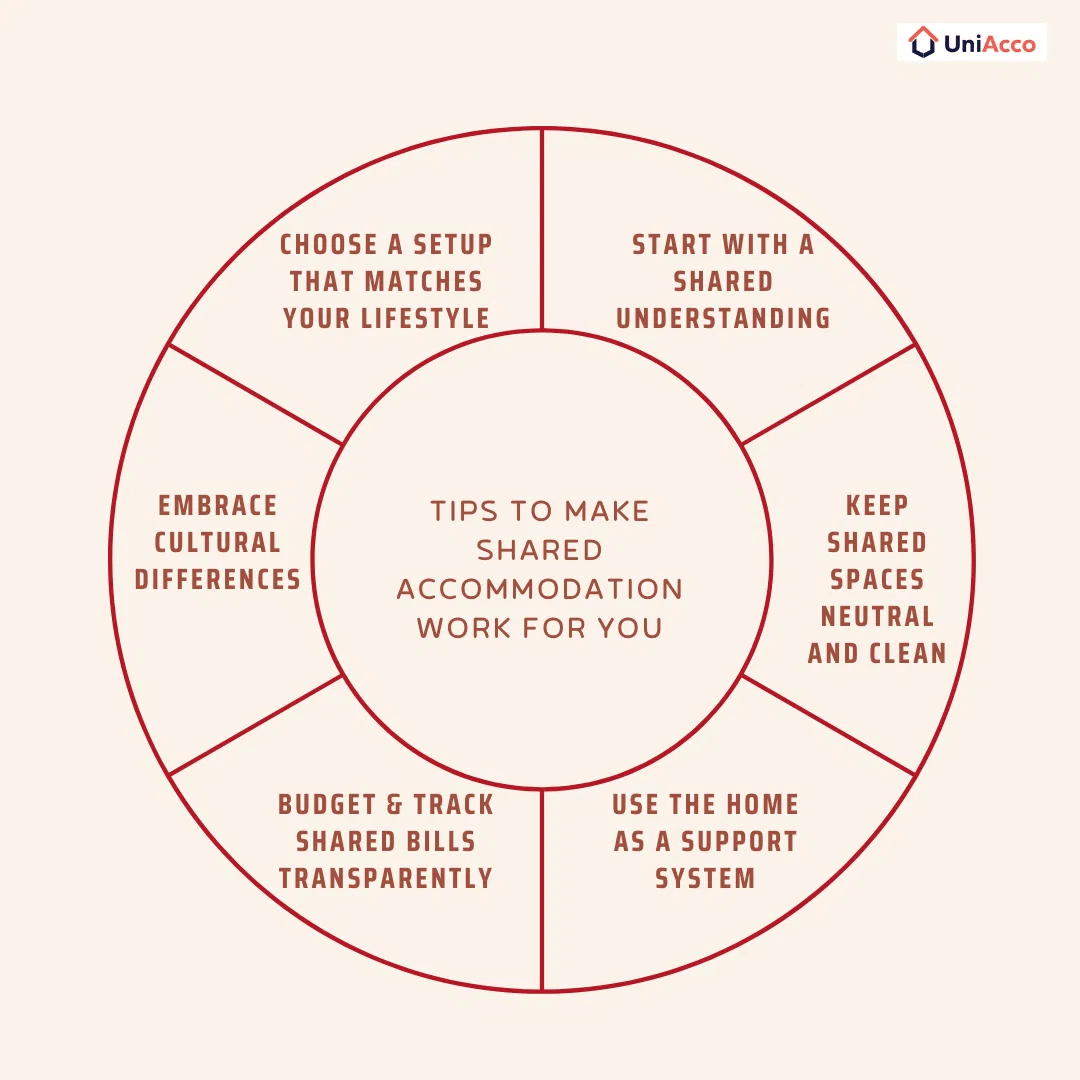
Start With a Shared Understanding: A five-minute conversation at the start can save you from months of frustration. Sit down with your housemates and agree on things like quiet hours, guests, cleaning and shared expenses. It may feel a little awkward to bring up at first, but it’s far easier than having the same argument every week.
Keep Shared Spaces Clean: The kitchen, bathroom and living room belong to everyone. Clean up after yourself and keep your stuff from taking over shared areas. If the sink is already full, adding your plate probably will not help.
Be There When Someone Needs Help: You do not have to become best friends with your housemates. Still, having people around can be useful. Check in if someone feels unwell, share important property updates and help out when something goes wrong.
Keep Shared Bills Simple: Agree on how you’ll split electricity, water, Wi-Fi and other shared costs. Keep track of who has paid and when. A simple shared spreadsheet or bill-splitting app can stop small money issues from becoming big arguments.
Respect Different Cultures and Habits: Your housemates may eat different food, follow different routines or celebrate different festivals. Ask questions instead of making assumptions. Talk about cooking, guests, religious practices and quiet hours so everyone knows what to expect.
Pick a Setup That Fits Your Lifestyle: Before choosing shared accommodation abroad, think about how you actually live. Do you need silence to study? Do you sleep late? Are you happy sharing a bathroom? The number of housemates, room type and property layout can make a huge difference. Pick a setup that works for your routine, not one that simply looks good in photos.
Conclusion
You’ve probably figured out one thing by now: shared accommodation is not simply about splitting the rent. It can help you spend less, live closer to campus and have people around when a new country feels unfamiliar. You may make friends, share everyday costs and pick up a few life skills along the way.
But here’s the bit worth remembering: cheaper does not always mean better. If you need silence, privacy and complete control over your space, sharing may test your patience. If you enjoy company and want to keep your shared accommodation costs manageable, it could be a great fit.
Think about your budget, privacy, routine and how much you’re comfortable sharing. Get those answers right, and you’re far more likely to find a student home that actually feels like home.
If London is your next stop, explore student accommodation with UniAcco. Look beyond attractive photos and choose a place that works for your everyday student life, from location and amenities to price and comfort.
🔍 Explore Student Housing in London

 LinkedIn







0 Comments