

You came to Ireland for your degree, but honestly, did you fly across continents to stay glued to lecture halls? Student life in Ireland is about striking a balance between essays and adventures, textbooks and trips. Between classes, you’ll find countless chances to tick off the best places to tour in Ireland and explore sites that most tourists miss.
This blog is about the best places to visit in Ireland, giving you weekends worth bragging about and sites to see in Ireland that will stay etched in your mind. It’s the kind of list that turns free time into unforgettable stories. After all, grades matter, but so do memories.
15 Must-Visit Places in Ireland for Students
1. Cliffs of Moher
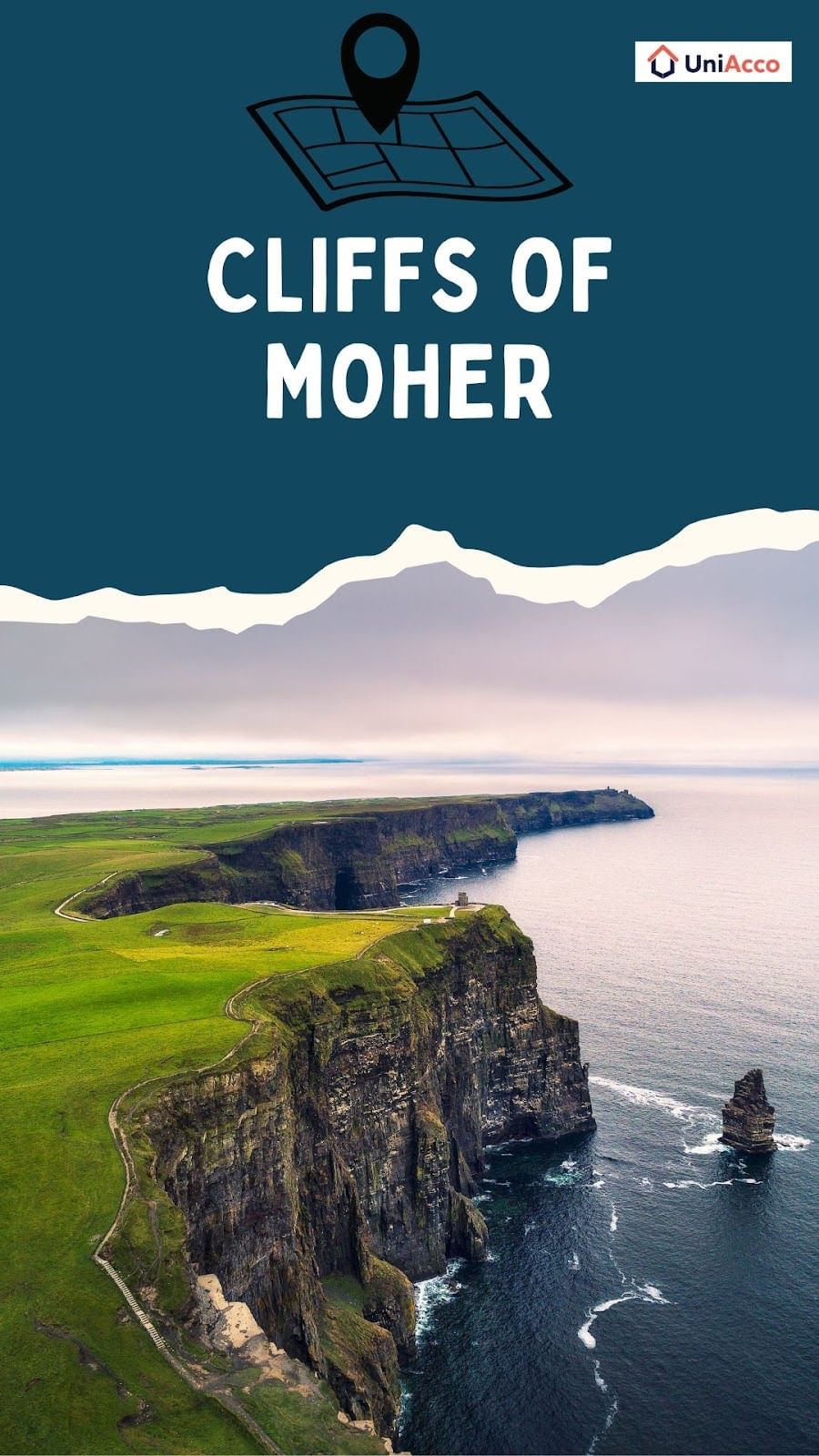
The Cliffs of Moher are among the most visited places in Ireland. Standing over 200 metres tall and stretching for kilometres along County Clare’s coast, these cliffs are dramatic, powerful, and unforgettable.
They form part of the UNESCO-recognised Burren and Cliffs of Moher Geopark, making them both a natural wonder and a heritage site.
For students, this isn’t just another tourist stop; it’s a view that will stay with you long after your degree.
Key Highlights:
- Viewing platforms with safe walkways and panoramic ocean views.
- O’Brien’s Tower, a historic stone tower offering clear-day views across counties.
- Visitor centre, carved into the hillside, with interactive exhibitions and wildlife displays.
- Spot puffins, razorbills, and other seabirds in spring and summer.
- Famous filming location (Harry Potter and the Half-Blood Prince, The Princess Bride).
Best Time To Visit:
| Period | Why It Works | Insider Tip |
|---|---|---|
| May–August | Long daylight hours, warmer weather | Go early morning or late evening to skip tour crowds |
| March–April & Sept–Oct | Fewer tourists, good mix of weather | Layers are essential—the winds are strong |
| Winter | Quiet, dramatic atmosphere | Short days, some facilities may close early |
How to Reach There?
- By Bus: Bus Éireann connects the cliffs with Galway, Ennis, and nearby towns.
- By Car: Around 1.5 hours from Galway, 1 hour from Limerick, with signposted routes.
- By Tour: Student-friendly day trips often include the cliffs as part of a larger loop.
- By Boat: Cruises from Doolin let you view the cliffs from the Atlantic side.
Budget Expectations:
- Tickets: Students pay around €12–14, which includes entry to the visitor centre and pathways.
- Parking: Usually included in admission.
- Extra Costs: Café meals, souvenirs, or add-on guided tours.
- Savings Tip: Book online in advance for lower rates.
Things to Remember While Visiting:
- The cliffs are windy year-round. Pack a windproof jacket.
- Stick to marked paths; sections near the edge are unsafe.
- Weather changes quickly, so be sure to carry a small umbrella or waterproof gear.
- Free Wi-Fi and charging points are available in the visitor centre.
- Plan your Ireland student trip in off-peak hours to get photos without crowds.
2. Ring of Kerry
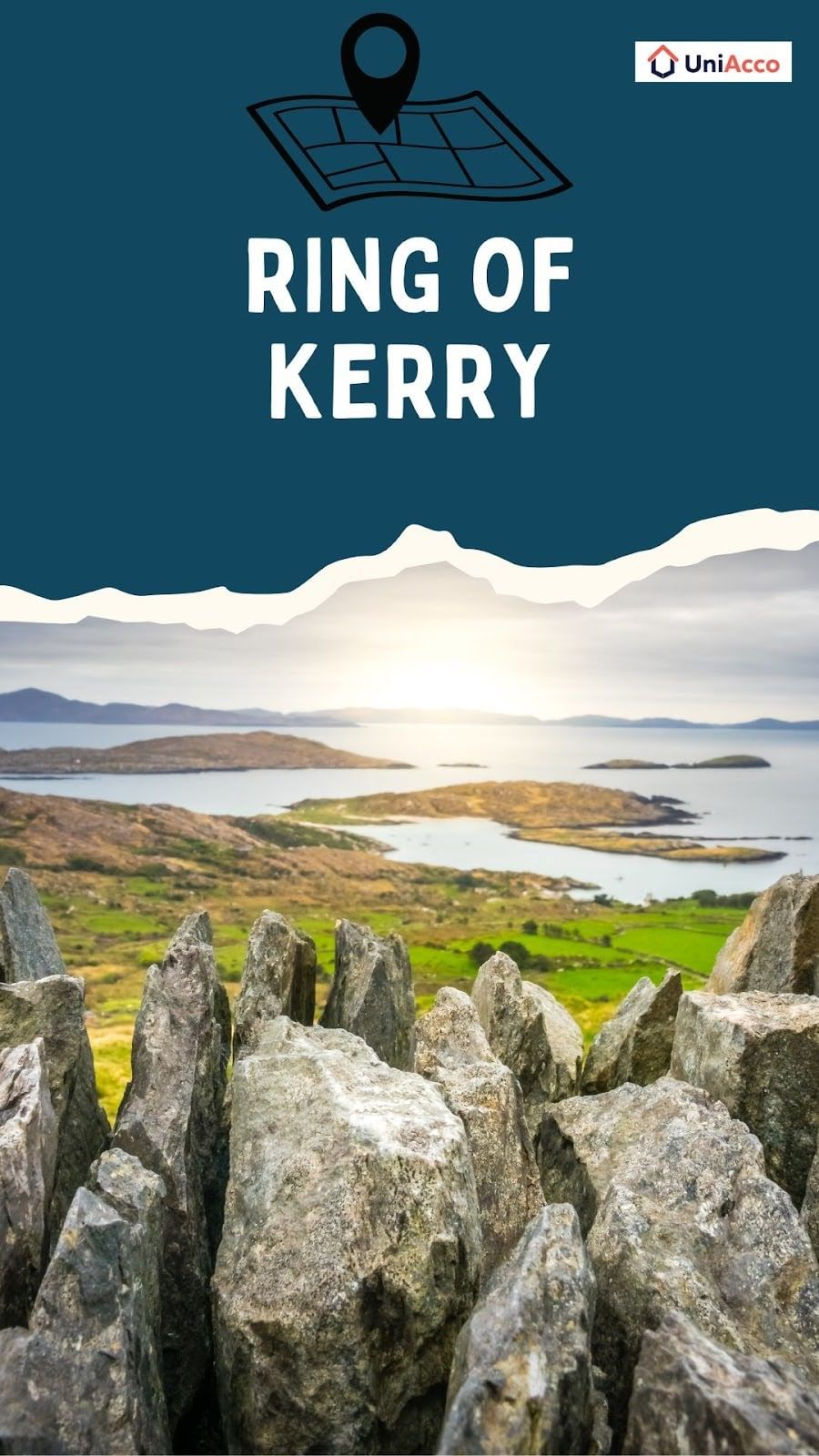
The Ring of Kerry is one of the top places in Ireland to experience nature, history, and small-town charm in one trip.
Stretching around 179 kilometres, this scenic loop circles the Iveragh Peninsula and runs through mountains, lakes, beaches, and fishing villages.
The route passes Killarney National Park, making it a perfect escape for students who want to balance study life with adventure. Every turn offers a new backdrop, from Atlantic coastlines to quiet valleys.
Key Highlights:
- Ladies View: Famous lookout over the Lakes of Killarney.
- Moll’s Gap: Winding mountain pass with breathtaking panoramas.
- Kenmare & Sneem: Colourful towns known for food, music, and Irish crafts.
- Derrynane Beach & Kerry Cliffs: Postcard-worthy stops along the coast.
- Muckross House & Gardens, Torc Waterfall, Gap of Dunloe: Experience a rich mix of history and nature.
- Skellig Ring detour: View a dramatic coastal scenery with glimpses of the Skellig Islands.
Best Time To Visit:
| Period | Why It Works | Tip |
|---|---|---|
| May–June | Driest months, fewer crowds than peak summer | Spring greens make the route extra vibrant |
| July–Aug | Lively towns, more events | Very busy. Start early to beat bus tours |
| Sept–Oct | Quieter roads, pleasant weather | Crisp air, autumn colours, shorter days |
How to Reach There?
- Starting Point: Killarney town (linked by train to Dublin and Cork).
- Driving: A car is essential; public transport doesn’t cover the entire circuit.
- Pro Tip: Drive clockwise, as tour buses usually go counter-clockwise, to avoid long waits.
Budget Expectations:
- Fuel: €30–50 for the full loop, depending on your vehicle.
- Viewpoints: Most are free.
- Attractions: Expect €5–10 for certain stops like heritage houses or gardens.
- Daily spend: Around €50–80 including meals and optional entry fees.
Things to Remember While Visiting:
- Set aside 7–10 hours for the complete loop with stops.
- Some sections have narrow winding roads, so drive carefully.
- Weather shifts quickly; bring rain gear and extra layers.
- Book accommodation in Killarney or Kenmare ahead of summer visits.
Whether you’re visiting Cliffs of Moher or exploring Dublin’s historic streets, make sure you have the best student accommodation to come home to.
3. Giant’s Causeway
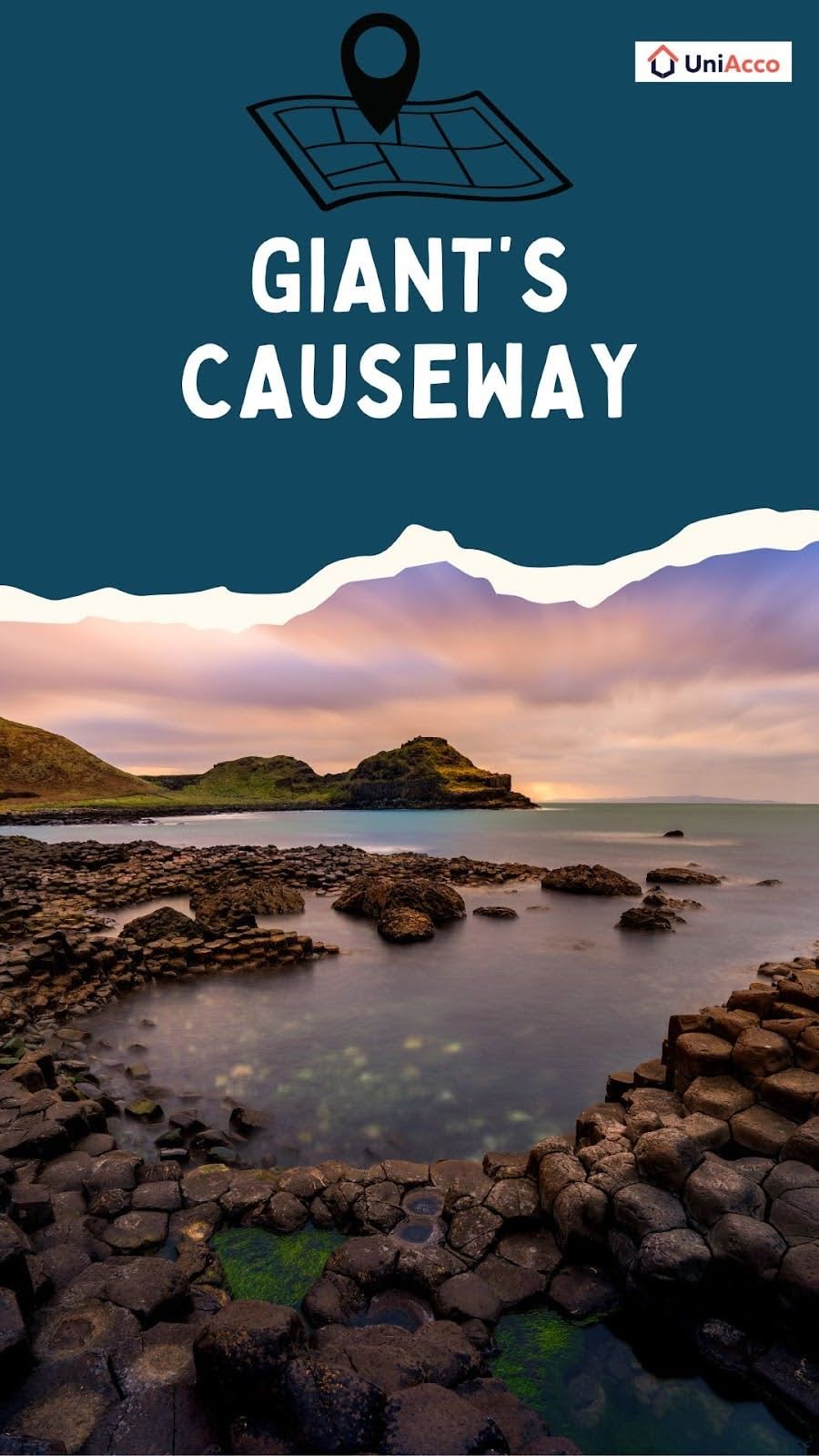
The Giant’s Causeway is a UNESCO World Heritage Site that feels almost otherworldly. Found on Northern Ireland’s Antrim Coast, it’s famous for its 40,000 interlocking basalt columns, created by ancient volcanic activity.
Some say science explains it, others believe in the legend of the giant Finn McCool.
Either way, this is one of the top places in Ireland every student should add to their itinerary.
Key Highlights:
- Hexagonal basalt columns forming natural stepping stones into the sea.
- Visitor centre with interactive exhibits on geology, myths, and local history.
- Coastal walks offering stunning views towards Carrick-a-Rede Rope Bridge and Dunluce Castle.
- Stories of Finn McCool, the giant said to have built the causeway as a path to Scotland.
Best Time To Visit:
| Period | Why It Works | Tip |
|---|---|---|
| April–October | Pleasant weather, full visitor centre hours | Summer = long days but larger crowds |
| Early morning / late evening | Fewer visitors, softer light | Great for student photos without crowds |
| Winter | Quiet, dramatic seascapes | Shorter days, limited facilities |
How to Reach There?
- From Belfast:
- Train to Coleraine (~1h 20m) → Bus 170/402 (~45m).
- Summer months: direct bus services available.
- By Car: About 1.5 hours from Belfast with clear coastal routes.
- From Dublin: Day tours often include the Giant’s Causeway with other attractions.
Budget Expectations:
- Entry: The causeway itself is free to access.
- Visitor Centre: £13 (adult), £6.50 (child), £32.50 (family ticket).
- Transport Option: Day ticket covering unlimited train + bus travel costs around £19.
Things to Remember While Visiting:
- The site is always open, though visitor centre hours vary seasonally.
- Skip the visitor centre if you’re on a tight budget—you’ll still enjoy the causeway.
- Basalt stones are uneven and slippery in wet weather, so wear sturdy shoes.
- Parking fills quickly; the Bushmills park-and-ride is a smart choice.
- Coastal paths are not wheelchair-friendly, so plan accordingly.
4. Connemara National Park

Connemara National Park spans nearly 3,000 hectares of mountains, grasslands, forests, and bogs in western Galway.
Opened in 1980, the park is part of the iconic Twelve Bens mountain range and is a haven for hikers, nature lovers, and students looking for a mix of outdoor adventure and serene landscapes.
With trails that lead to panoramic views of valleys, lakes, and historic sites, it’s an essential stop if you’re planning to visit the wonders of Ireland.
Key Highlights:
- Diamond Hill Hike: Offers spectacular views of Kylemore Abbey and the surrounding mountains.
- Visitor Centre: Exhibitions on local wildlife, flora, and heritage breeds, including Connemara ponies.
- Walking Trails: Four trails suited for different fitness levels, from gentle strolls to challenging hikes.
- Wildlife Spotting: Keep an eye out for birds, foxes, and rare plants unique to the region.
Best Time To Visit:
| Period | Why It Works | Insider Tip |
|---|---|---|
| May–September | Most reliable weather, full visitor centre services | Late spring and early autumn have fewer crowds |
| Early morning / late afternoon | Ideal for photography and quiet walks | Light conditions enhance views of mountains and lakes |
| Winter months | Fewer visitors, dramatic scenery | Some trails may be closed during adverse weather |
How to Reach There?
- By Car: About 1 hour 20 minutes from Galway City via the N59, or 15 minutes from Clifden.
- By Bus: Limited public transport via Bus Éireann; check schedules in advance.
- Access: Entry is on foot only—no driving through the park is allowed.
- Starting Point: Visitor centre near Letterfrack village, ideal for maps, guides, and trail info.
Budget Expectations:
- Park Entry: Free for all visitors.
- Transport: Fuel costs or bus fare depending on your route.
- Accommodation: Budget-friendly options in Letterfrack or Clifden.
- Extras: Optional guided hikes or visitor centre souvenirs.
Things to Remember While Visiting:
- The visitor centre opens 9 am–5:30 pm daily, and remains closed on Christmas holidays.
- Grounds may close during orange/red weather warnings; check updates before visiting.
- Dogs are allowed but must be on leads.
- Wear appropriate hiking gear and layers, as the weather can change quickly.
- Trails range from easy walks to steep climbs; choose according to your fitness level.
- Part of your Ireland student tour experience will be scenic hikes, so allow enough time.
5. Killarney National Park

As Ireland’s oldest national park, Killarney National Park is a must for any Ireland student trip. Established in 1932, it spans over 25,000 acres of mountains, forests, and the iconic Lakes of Killarney.
Home to the Macgillycuddy’s Reeks, the country’s highest mountain range, the park combines natural beauty with rich heritage.
For students, it’s one of the must-see places in Ireland to unwind, explore, and enjoy outdoor activities between lectures.
Key Highlights:
- Ross Castle: Historic 15th-century tower with lake access.
- Muckross House & Gardens: Elegant mansion with beautifully maintained grounds.
- Torc Waterfall & Ladies View: Panoramic viewpoints ideal for photos.
- Activities: Cycling paths, jaunting car rides, and boat trips on the lakes.
- Wildlife: Red deer, otters, and diverse bird species—perfect for nature enthusiasts.
Best Time To Visit:
| Period | Why It Works | Insider Tip |
|---|---|---|
| April–October | Best weather for hiking, cycling, and outdoor exploration | Summer offers long days but expect larger crowds |
| Early morning / late afternoon | Quieter trails and better lighting for photography | Ideal for students wanting a calm Ireland student tour experience |
| Winter months | Peaceful and less crowded | Some facilities may have limited opening hours |
How to Reach There?
- By Train: Direct connections from Dublin and Cork to Killarney town.
- By Car: Multiple entrances; main visitor centre at Killarney House.
- Access: Pedestrian-friendly, cycling encouraged, but no driving inside the park.
- Starting Point: Visitor centre provides maps, activity info, and guidance for trails.
Budget Expectations:
- Park Entry: Free for pedestrians.
- Attractions: Muckross House costs €9 for adults, €6 for students.
- Bike Rentals: €15–25 per day.
- Extras: Boat trips or guided tours may have separate fees.
Things to Remember While Visiting:
- The park is open 24/7 for walking and cycling; the visitor centre is open from 9:15 am to 5:15 pm (closed for lunch).
- The weather can change rapidly. Ensure you carry layers and waterproofs.
- Comfortable walking shoes are essential for trails and hill climbs.
- Allow a full or half-day depending on the activities chosen.
6. Aran Islands
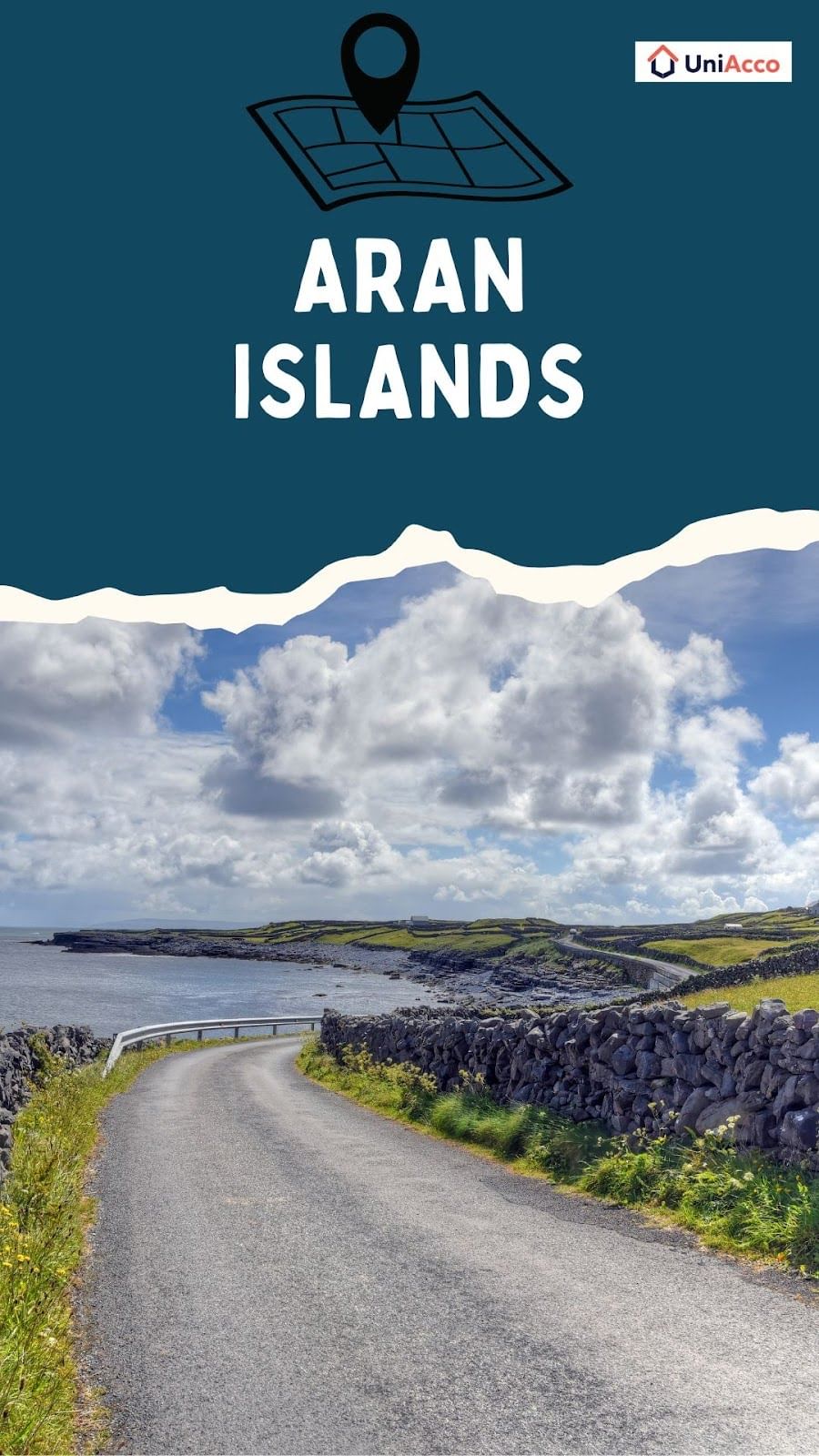
The Aran Islands are a cluster of three limestone islands, Inishmore, Inishmaan, and Inisheer, off Galway’s Atlantic coast.
Known for preserving traditional Irish culture, language, and heritage, they are among the must-visit places in Ireland.
These islands offer students a chance to experience rural life, ancient ruins, and breathtaking coastal scenery.
Key Highlights:
- Dún Aonghasa: Iconic cliff fort on Inishmore with panoramic ocean views.
- Traditional Stone Walls: Winding walls crisscrossing fields, offering a glimpse of ancient farming methods.
- Irish Language Culture: Gaeltacht communities keep Irish traditions and language alive.
- Coastal Landscapes: Dramatic cliffs, sandy beaches, and Atlantic vistas are ideal for photography.
- Archaeological Sites: Each island offers unique ruins, prehistoric forts, and cultural landmarks.
Best Time To Visit:
| Period | Why It Works | Insider Tip |
|---|---|---|
| March–October | Ferry services operate reliably, good weather for exploration | Summer is the warmest, but busiest and priciest |
| Shoulder Seasons | Fewer tourists, better value | Early spring or late September are ideal for quieter visits |
| Summer | Long days and warm temperatures | Book accommodations and ferries well in advance |
Note: Shoulder Season refers to the periods in late spring (April to mid-June) and early autumn (September to mid-October)
How to Reach There?
- By Ferry:
- From Rossaveel (year-round) or Galway City (seasonal March–September).
- Duration: 45 minutes–1 hour.
- By Flight: Short flights from Connemara Airport (~10 minutes).
Budget Expectations:
- Ferry Tickets: Adults €34–49 return, Students €29–44, Children €17–25 depending on departure point.
- Flights: Adults €63 return, Students €50 return.
- On-Island Costs: Accommodation and meals can be expensive; budget accordingly.
Things to Remember While Visiting:
- Book ferries early during summer peak months.
- The islands are best explored on foot or bicycle; car rentals are limited.
- Allow a full day for Inishmore or multiple days if visiting all three islands.
7. Skellig Michael
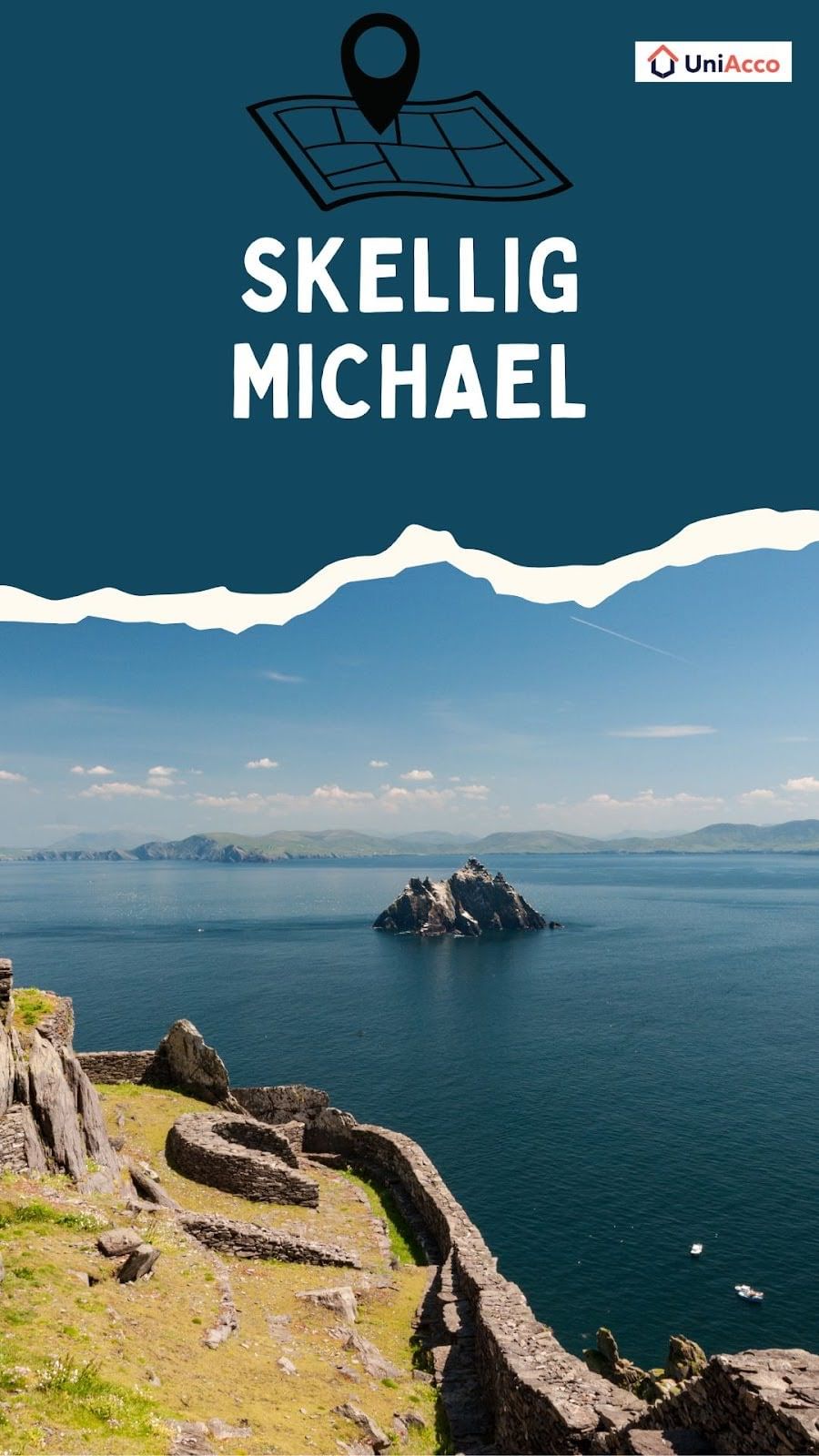
Skellig Michael is one of the most dramatic must visit places in Ireland, a rocky island rising 218 meters off the Kerry coast.
This UNESCO World Heritage Site is famous for its 6th–8th century monastic settlement, where monks lived in stone beehive huts.
Visiting this remote island is a unique experience for students seeking adventure, history, and breathtaking views.
Key Highlights:
- Beehive Huts & Monastery Ruins: Remarkably preserved structures where monks once lived.
- Atlantic Views: Stunning vistas of the open ocean and nearby Little Skellig.
- Wildlife: Seasonal puffin colonies and sightings of seals and dolphins during the boat journey.
- Remote Experience: The climb of 618 steps to reach the summit adds to the adventure.
- Boat Journey: Offers views of gannet colonies and the rugged Kerry coastline.
Best Time To Visit:
| Period | Why It Works | Insider Tip |
|---|---|---|
| Mid-May–September | Tours operate and landing is permitted | May–June for puffin sightings |
| Early Morning | Calm seas and smaller groups | Essential for a smooth Ireland student trip |
| Shoulder Season | Fewer crowds on landing tours | Weather can be unpredictable; check conditions in advance |
How to Reach There?
- Departure Point: Portmagee Marina, County Kerry.
- Tour Requirements: Advanced booking required; only 180 visitors allowed per day.
- Check-In: Must be done the day before travel.
- Boat-Only Tours: Available April–September if landing is not possible.
Budget Expectations:
- Landing Tours: Approximately €130 per person, plus booking fees.
- Boat-Only Tours: Less expensive, ideal for those on a budget.
- Accommodation: Consider staying in Portmagee or Killarney for convenience.
Things to Remember While Visiting:
- Strong fitness and no fear of heights required.
- Bring warm, waterproof clothing, food, and water, as there are no facilities on the island.
- Tours are frequently cancelled due to rough seas. Maintain flexible schedules.
- Plan for the climb; it’s steep but worth the view.
Explore everything from ancient castles to modern cities, and find a comfortable student accommodation that keeps you close to all the action.
8. Achill Island
Achill Island, Ireland’s largest island, is connected to mainland Mayo by the Michael Davitt Bridge since 1887.
With a rich history spanning 5,000 years and communities like Keel, Dooagh, and Dugort, it ranks among the must visit places in Ireland.
For students, it offers a unique combination of dramatic landscapes, traditional culture, and outdoor adventure, making it a highlight of any trip to Ireland.
Key Highlights:
- Keem Bay: Stunning beach with cliffs and turquoise waters.
- Atlantic Drive: Scenic coastal route offering unforgettable vistas.
- Grace O’Malley’s Towerhouse: Step into history of Ireland’s famous pirate queen.
- Slievemore Deserted Village: Explore the ruins of a 19th-century settlement.
- Film Fame: Locations featured in The Banshees of Inisherin.
Best Time To Visit:
| Period | Why It Works | Insider Tip |
|---|---|---|
| May–September | Warmest weather and ideal for outdoor activities | Summer has longest days but also higher accommodation costs |
| Early morning / late afternoon | Quieter beaches and scenic spots | Perfect for photography or relaxed exploration |
How to Reach There?
- By Car: Drive across the Michael Davitt Bridge from mainland Mayo.
- By Bus: Bus Éireann Route 450 from Westport (~50 minutes).
- By Bike: The Greenway cycling route connects to Westport over 43.5 km.
Budget Expectations:
- Travel Costs: Minimal once you reach Mayo.
- Meals: Pub food typically €10–20.
- Free Attractions: Beaches, scenic viewpoints, and hiking trails.
Things to Remember While Visiting:
- Limited accommodation during peak season; book ahead.
- Gaeltacht areas: some residents speak primarily Irish.
- A car is recommended for full access to all the aesthetic places on the island.
9. Dublin Castle
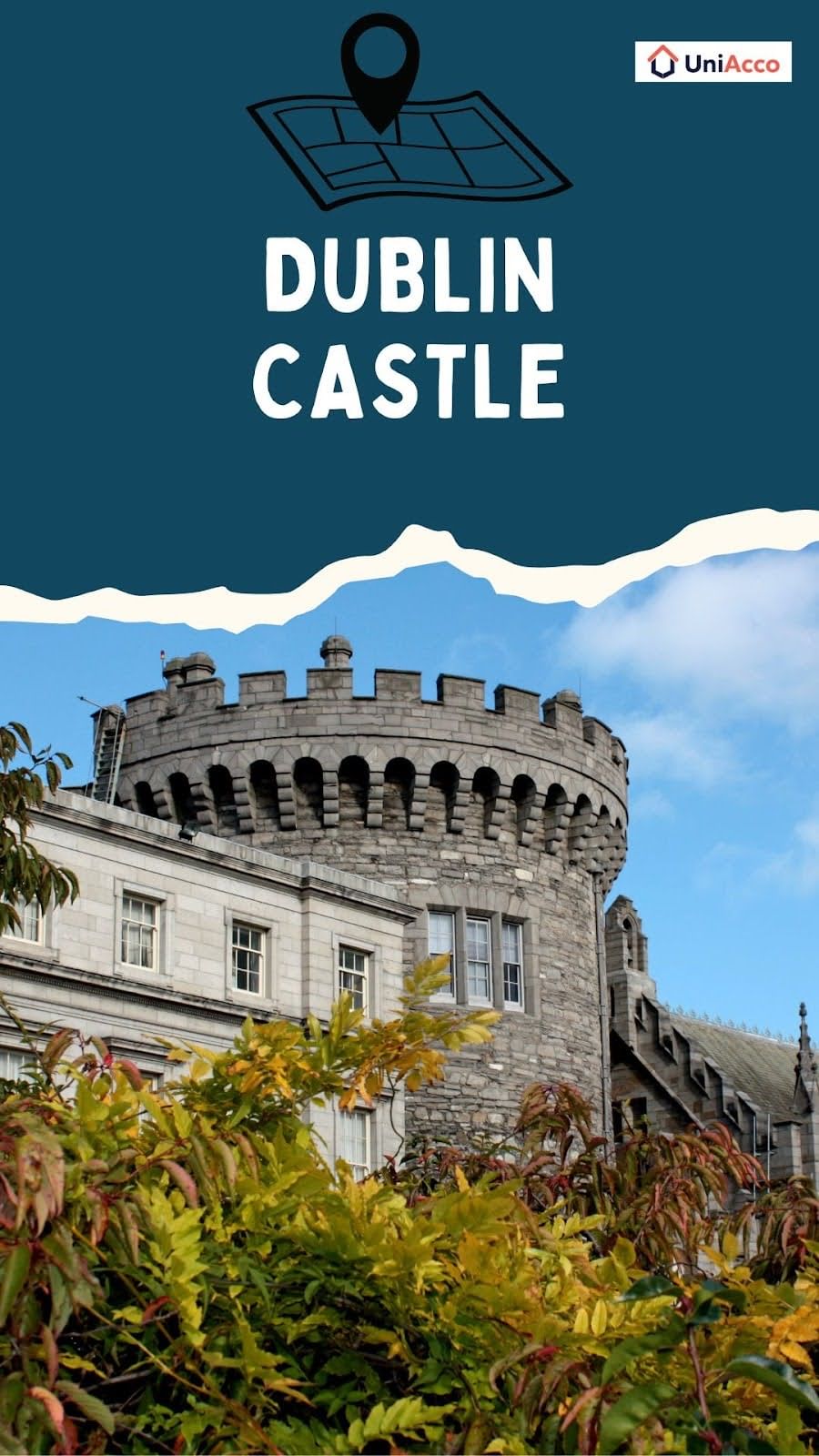
Dublin Castle, built on a Viking settlement site in the early 13th century, is one of the must-see places in Ireland.
For over 700 years, it served as the headquarters of British administration in Ireland and now functions as a major government complex and tourist attraction.
Students visiting the city can explore its rich history, architecture, and exhibitions, making it a key stop on any Ireland student tour.
Key Highlights:
- State Apartments: Victorian-era rooms showcasing grandeur and ceremonial design.
- Chapel Royal: Beautiful Gothic Revival chapel open to visitors.
- Medieval Undercroft: Viking excavations revealing Dublin’s earliest settlements.
- Gardens & Courtyards: Free access to scenic outdoor spaces.
- Exhibitions: Covering over 800 years of Irish history.
- Chester Beatty Library: Houses manuscripts, rare books, and art from across the world.
Best Time To Visit:
| Period | Why It Works | Insider Tip |
|---|---|---|
| Year-round | Consistent opening hours | Weekday mornings are quieter than weekends |
| Early Afternoon | Ideal for combined visits with nearby Trinity College | Take advantage of fewer crowds at exhibitions |
| Summer Months | Longer daylight for exploring gardens and courtyards | Great for photography |
How to Reach There?
- Public Transport: Easily accessible via Dublin Bus or LUAS tram.
- On Foot: Perfect for students staying in central Dublin. Within walking distance of Trinity College and Temple Bar.
Budget Expectations:
- Self-Guided Tours: €8 adults, €6 students.
- Guided Tours: €12 adults, €10 students.
- Family Tickets: Available for groups.
- Gardens & Courtyards: Free entry.
Things to Remember While Visiting:
- Open Monday–Sunday, 9:45 am–5:45 pm; last admission 5:15 pm.
- Some areas may be closed for government functions.
- Viking excavation accessible only by stairs—plan accordingly.
- Allow 1–2 hours for a full tour, including gardens.
10. Blarney Castle
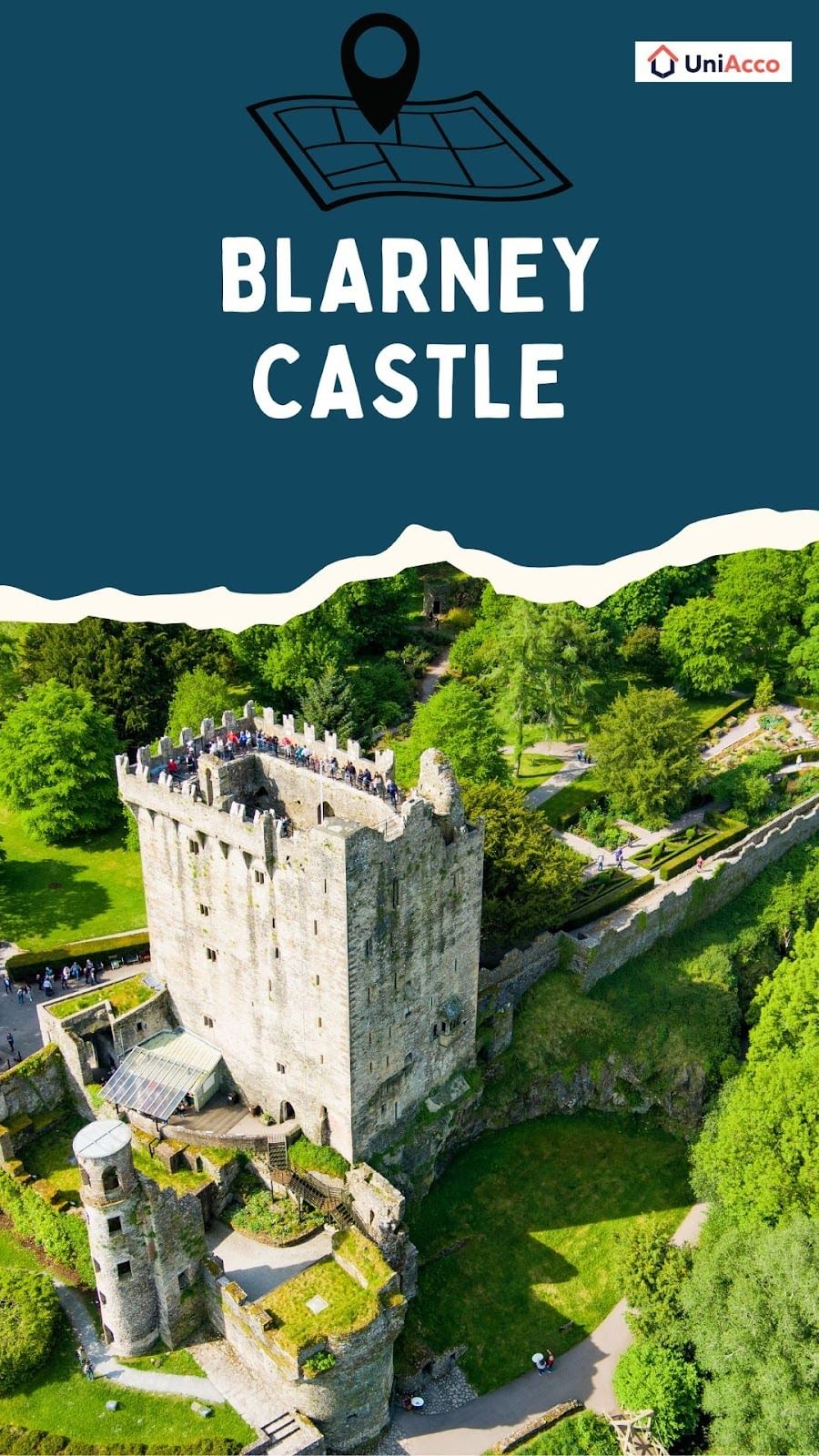
Blarney Castle, built nearly 600 years ago by Cormac MacCarthy, is renowned worldwide for the legendary Blarney Stone, also known as the “Stone of Eloquence.”
It draws visitors eager to kiss the stone and explore its rich history. Located just 8 kilometres from Cork City, it is an ideal destination for students, offering a combination of adventure, history, and scenic gardens in a single visit.
Key Highlights:
- Blarney Stone: Hang backward from the battlements for a chance to gain the “gift of eloquence.”
- Gardens: 60 acres including the Poison Garden, Rock Close, and lake walks.
- Dungeons: Explore the castle’s medieval underground chambers.
- Scenic Views: Panoramic vistas over the surrounding Cork countryside.
Best Time To Visit:
| Period | Why It Works | Insider Tip |
|---|---|---|
| May–September | Longest opening hours, best weather | Early morning avoids queues for kissing the Blarney Stone |
| Shoulder Seasons | Fewer crowds, better photo opportunities | Ideal for a calm sightseeing experience |
| All Year | Castle open year-round with varying hours | Check online before visiting to confirm seasonal timings |
How to Reach There?
- By Car: 8 km from Cork City center, straightforward drive.
- By Bus: Local services from Cork City available.
- By Train: Cork has train connections from Dublin and other major cities.
Budget Expectations:
- Adult Admission: €23
- Students: €18
- Children: €11
- Family Tickets: €60
- Inclusions: Gardens access included; allow 2–3 hours for full experience.
Things to Remember While Visiting:
- Last admission is one hour before closing.
- Stone kissing requires climbing narrow spiral stairs. Reasonable fitness is needed.
- Queues can reach 60–90 minutes in summer; plan accordingly.
- Free parking is available on-site.
- Drone photography is prohibited.
11. Kilkenny Castle
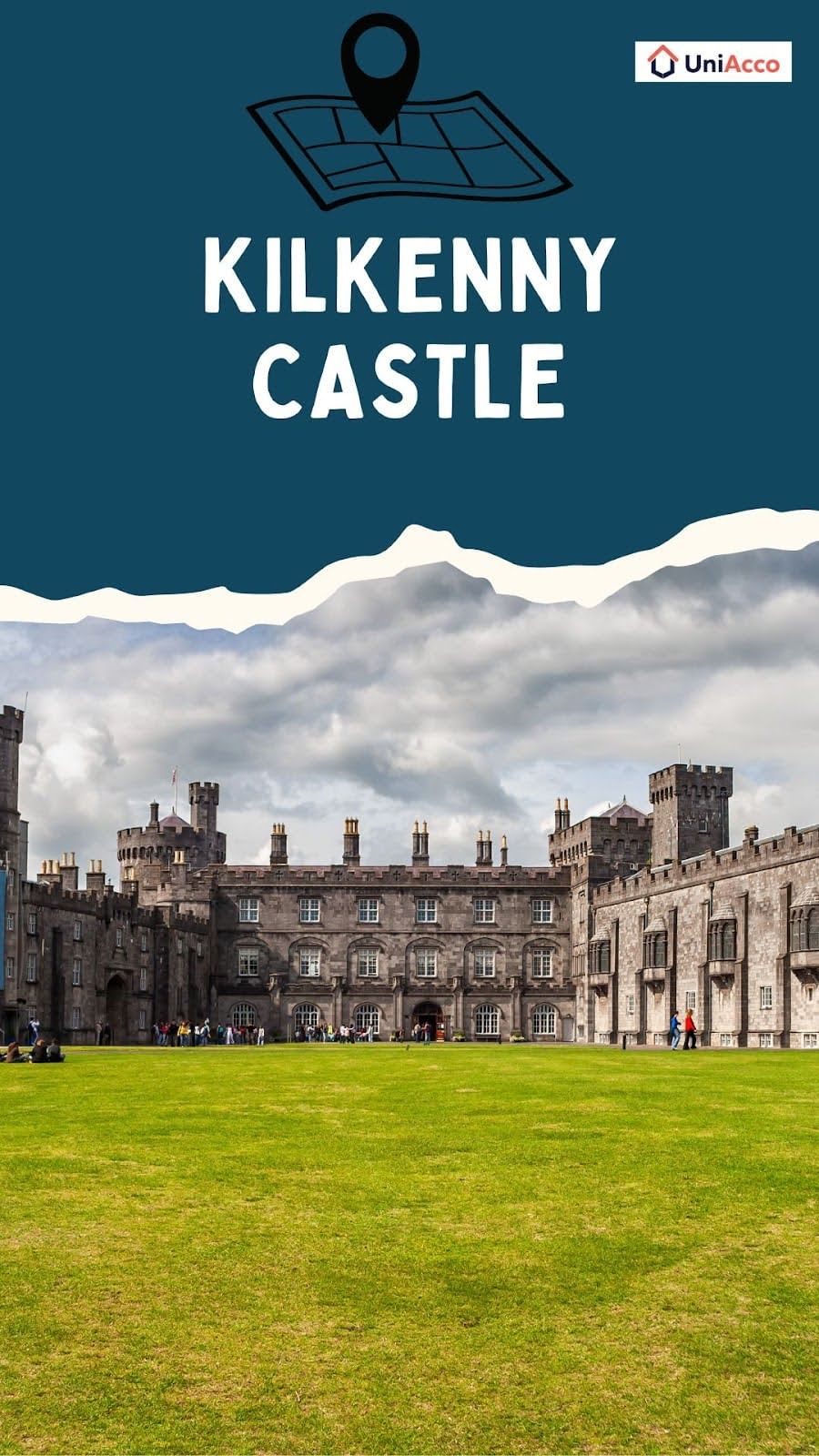
Kilkenny Castle, originally built in the 13th century, was the seat of the powerful Butler family for nearly 600 years and underwent Victorian remodeling.
Today, it stands as one of the must-see places in Ireland, offering students a glimpse into medieval and Victorian Irish aristocratic life.
With expansive gardens and parklands, the castle is perfect for a relaxed yet historically rich stop on any itinerary.
Key Highlights:
- State Rooms: Victorian-era rooms, including the impressive Picture Gallery.
- Castle Gardens & Parklands: Open year-round with scenic walks.
- Medieval Architecture: Blend of Norman and Victorian influences.
- Exhibitions: Learn about the history of Irish nobility and the Butler family.
Best Time To Visit:
| Period | Why It Works | Insider Tip |
|---|---|---|
| April–September | Best weather and extended hours | Visit early morning or late afternoon for fewer crowds |
| Off-Peak Season | Quieter castle experience | Great for students seeking peaceful exploration |
| All Year | Parklands accessible any time | Perfect for combining indoor and outdoor activities |
How to Reach There?
- By Train: 1.5 hours from Dublin to Kilkenny city center.
- By Bus: Local services connect from major cities.
- On Foot: Castle is walking distance from Kilkenny’s medieval mile attractions.
Budget Expectations:
- Adults: €8
- Students/Seniors: €6
- Children under 12: Free
- Family Tickets: €20
- Parklands: Free entry
- Guided Tours: Available for deeper exploration
Things to Remember While Visiting:
- Opening Hours: 9:15 am–5:30 pm (April–September), 9:30 am–5:00 pm (other months).
- Last admission 45 minutes before closing.
- Castle and gardens are wheelchair accessible.
- Bring comfortable shoes for strolling through gardens and parklands.
12. Rock of Cashel
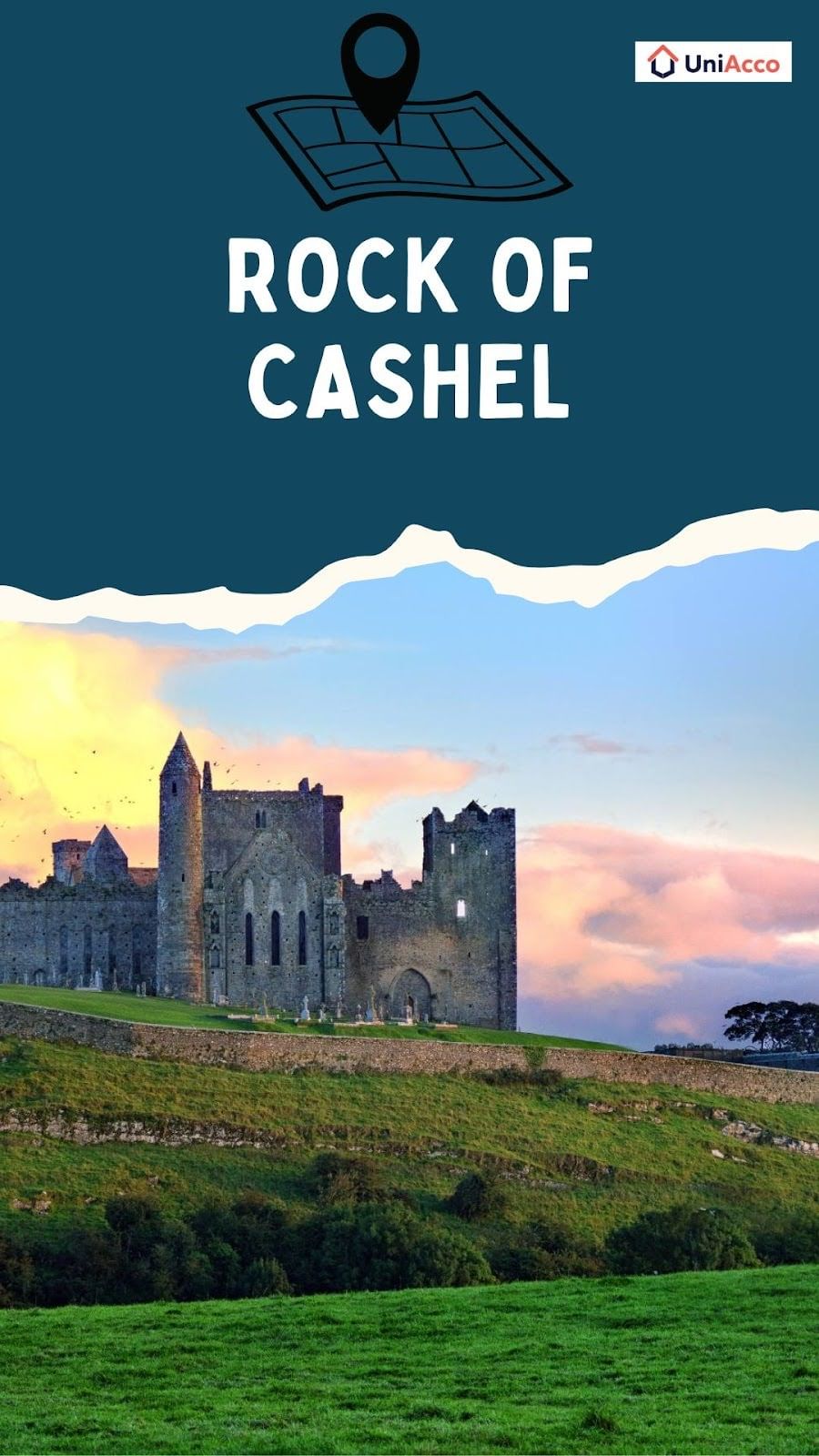
Perched dramatically on a limestone outcrop, the Rock of Cashel is one of the must see places in Ireland. Once the seat of Munster kings, it became a major ecclesiastical centre after 1101.
It offers an impressive glimpse into medieval Irish history, architecture, and culture, making it a highlight for any student trip to Ireland.
Key Highlights:
- Gothic Cathedral: Stunning 13th-century structure dominating the complex.
- Cormac’s Chapel: Ireland’s only surviving Romanesque frescoes. Guided tours required.
- Round Tower: 28-meter tower dating from 1100, iconic landmark for photos.
- Hall of the Vicars Choral & Tower House: 15th-century additions showcasing medieval life.
Best Time To Visit:
| Period | Why It Works | Insider Tip |
|---|---|---|
| March–October | Extended opening hours (9am–5:30pm) | Visit early morning to avoid peak student groups |
| Winter | Shorter hours (9am–4:30pm) | Quieter visit and fewer crowds |
| Shoulder Season | Ideal weather with lower visitor numbers | Perfect for photography and reflective exploration |
How to Reach There?
- By Bus: Services from Dublin, Cork, or Limerick.
- By Train: Thurles station (~20 km) with connecting bus services.
- By Car: Easy drive to Cashel town, with nearby parking.
Budget Expectations:
- Admission fees apply (check current Heritage Ireland rates).
- Guided tours of Cormac’s Chapel available for additional cost.
- Allow 1–1.5 hours for full exploration.
Things to Remember While Visiting:
- Pre-booking required for all groups.
- Guided tour mandatory for Cormac’s Chapel; limited tickets available onsite.
- The site is exposed, so bring weather-appropriate clothing.
- Check tour times ahead, as they may change due to weather conditions.
Stay near your campus while exploring Ireland’s top universities, all while finding the best student accommodation that fits your lifestyle.
13. Wicklow Mountains & Glendalough
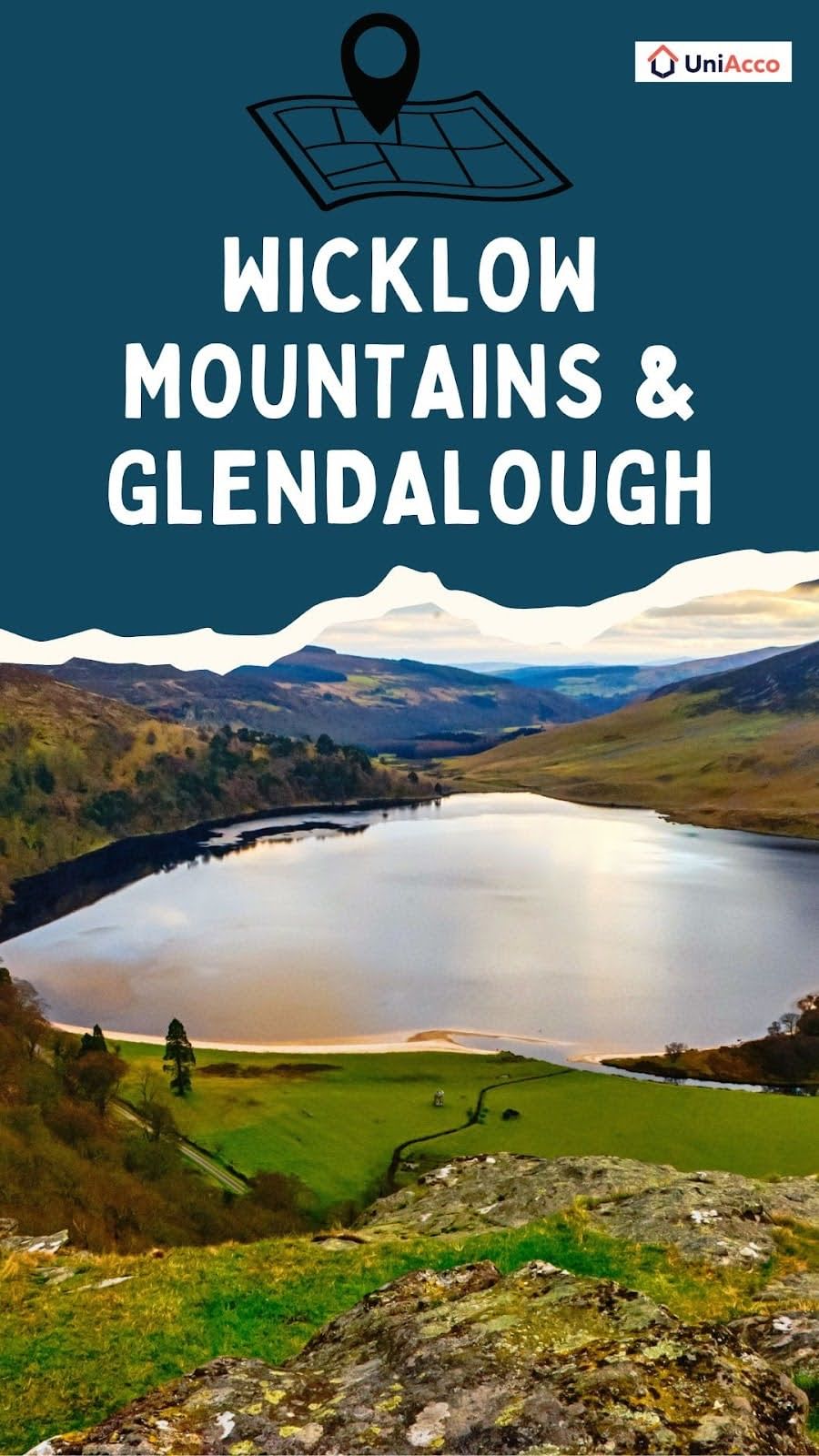
The Wicklow Mountains, often called the “Garden of Ireland,” cover nearly 23,000 hectares of forests, lakes, and rolling mountains.
Nestled within the park, Glendalough is a 6th-century monastic city founded by St. Kevin in a scenic glacial valley. This combination makes it one of the must-see places in Ireland for students seeking history, hiking, and breathtaking landscapes.
Key Highlights:
- Ancient Monastic Ruins: Round tower, churches, and early medieval structures.
- Upper and Lower Lakes: Perfect spots for photography or a peaceful stroll.
- Hiking Trails: Including the Wicklow Way and the panoramic Spinc walk.
- Waterfalls & Scenic Drives: Powerscourt Waterfall and Sally Gap drive.
- Nature & Wildlife: Diverse flora, birds, and mountain vistas.
Best Time To Visit:
| Period | Why It Works | Insider Tip |
|---|---|---|
| March–October | Ideal hiking conditions | Start early to avoid weekend crowds on popular trails |
| May & September | Pleasant weather with fewer visitors | Perfect for a relaxed experience |
| July–August | Warmest weather | Expect larger crowds but longer daylight for hikes |
How to Reach There?
- By Car: About 1 hour from Dublin via N11 and R755.
- By Bus: Services from Dublin to Glendalough available.
- Visitor Center: Provides parking, trail information, and exhibitions.
Budget Expectations:
- National Park Entry: Free
- Parking Fees: May apply at popular spots
- Glendalough Visitor Center: Charges for exhibitions
Things to Remember While Visiting:
- Trails vary in difficulty; ensure appropriate fitness levels.
- Visitor center opens at 9:30 am daily.
- Weekends and holidays can be busy; plan accordingly.
- Follow Leave No Trace principles to protect the park.
14. Newgrange
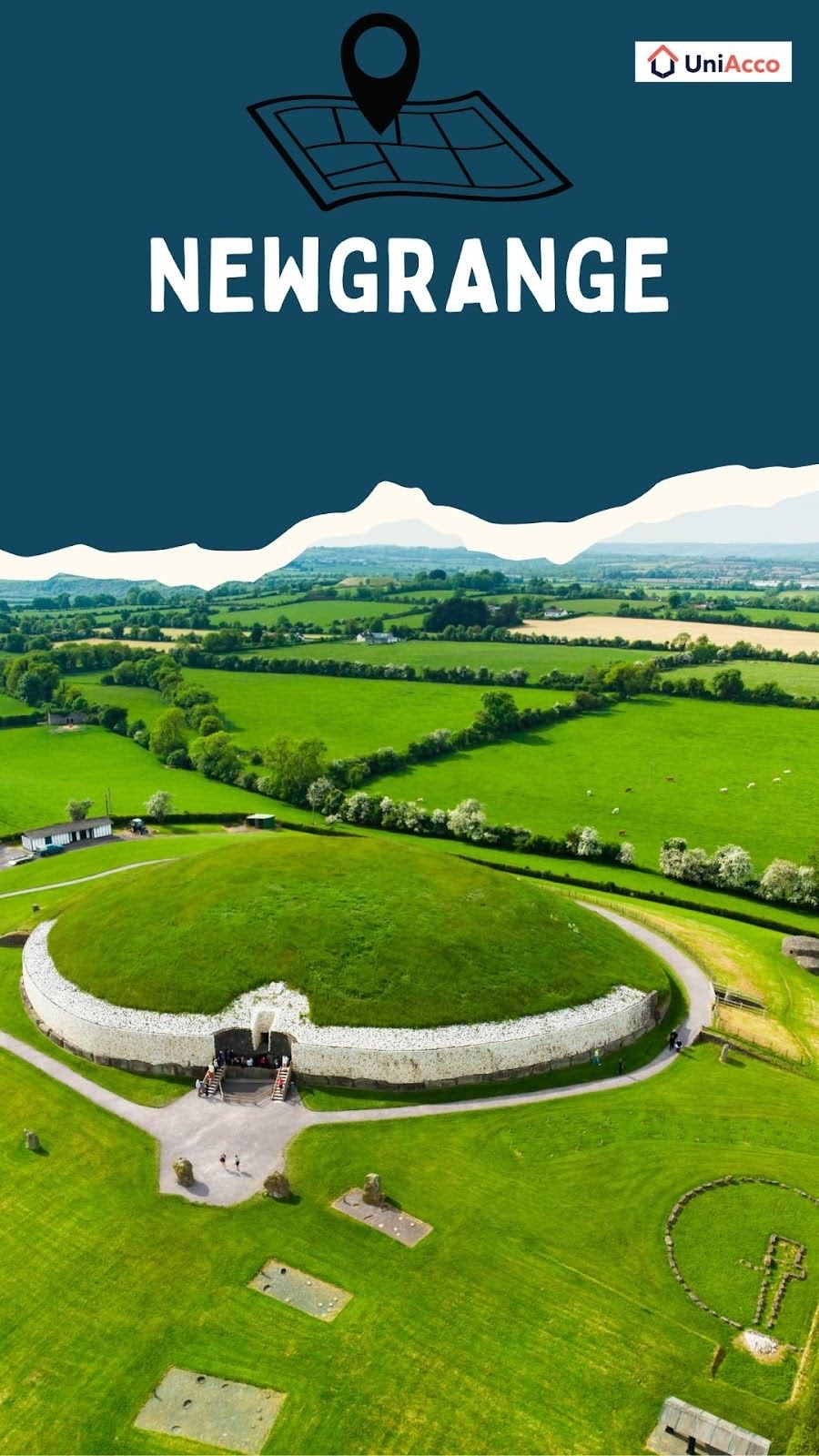
At over 5,200 years old, Newgrange predates both Stonehenge and the Egyptian pyramids, making it one of the must see places in Ireland for students fascinated by history and ancient engineering.
Part of the Brú na Bóinne UNESCO World Heritage complex, it offers insights into Neolithic astronomy, art, and architecture.
Key Highlights:
- Passage Tomb Chamber: Intricate megalithic carvings and ceremonial design.
- Winter Solstice Phenomenon: Sunlight illuminates the tomb’s inner chamber on December 21.
- Visitor Centre: Replica chamber, exhibitions, and detailed explanations of Neolithic life.
- Boyne Valley Views: Expansive landscape perfect for photography and reflection.
- Historical Significance: Home to Europe’s largest concentration of megalithic art.
Best Time To Visit:
| Period | Why It Works | Insider Tip |
|---|---|---|
| Summer | Extended opening hours and better weather | Ideal for students looking to peacefully explore sites |
| Winter Solstice | Unique illumination event | Lottery-based access; plan months ahead |
| Year-Round | Guided tours available daily | Morning tours less crowded for an immersive experience |
How to Reach There?
- By Car: About 50 minutes from Dublin to Brú na Bóinne Visitor Centre near Donore village.
- By Bus: Seasonal services from Drogheda.
- Visitor Centre Access: All entry to Newgrange is via guided tours.
Budget Expectations:
- Tickets vary by season; combined visitor centre and monument tours required.
- Student discounts available.
- Guided tours are mandatory; pre-booking is recommended in summer.
Things to Remember While Visiting:
- Access only via guided tour from the visitor centre.
- Limited daily visitors (around 700 in high season).
- Shuttle bus and short walks involved; comfortable shoes recommended.
- Photography restricted inside the chamber.
15. The Burren
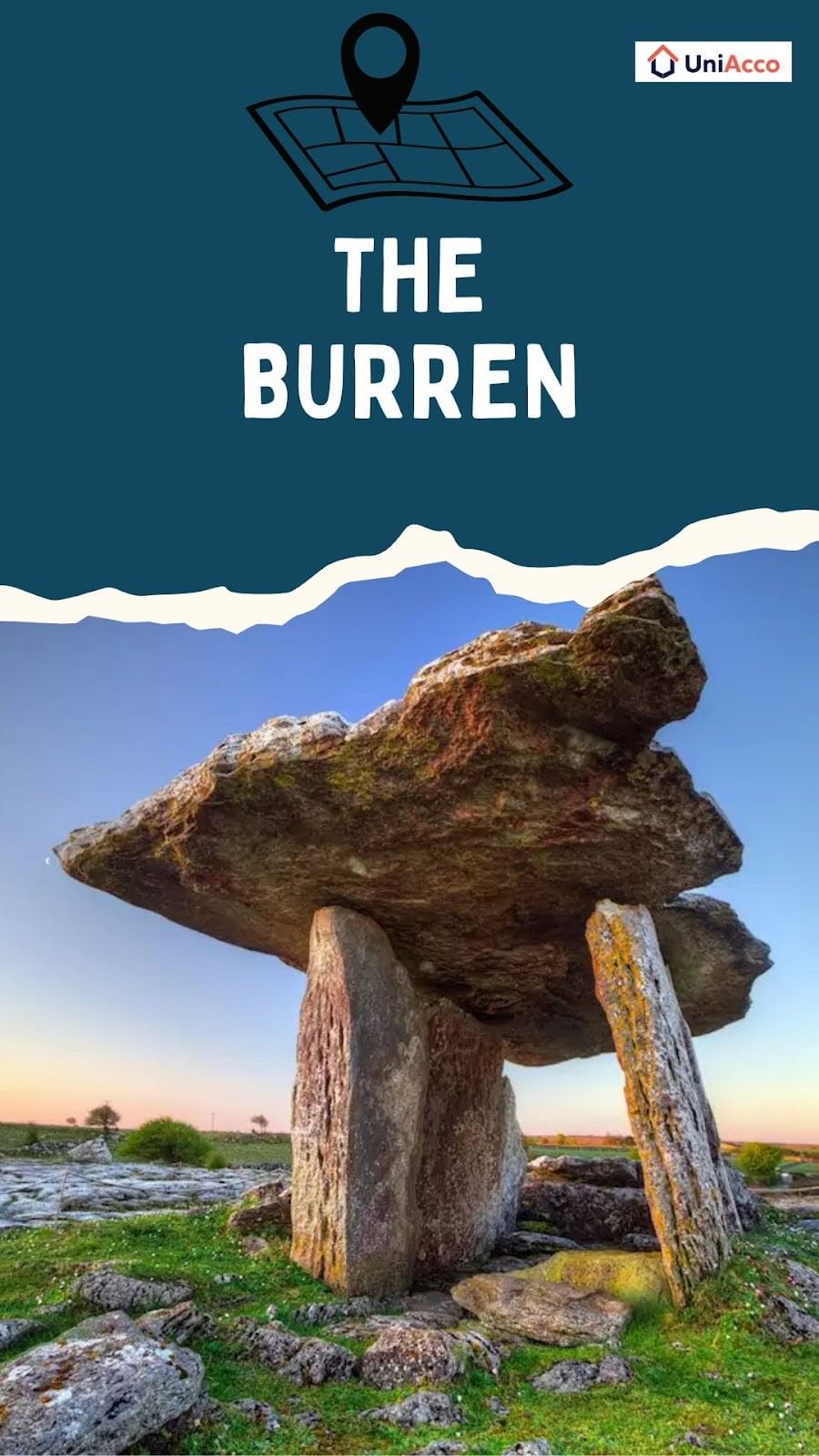
Spanning 530 square kilometers in north County Clare, The Burren is a remarkable karst landscape of exposed limestone formed 340 million years ago.
Its “lunar landscape” supports a rare mix of Arctic, Alpine, and Mediterranean flora, making it a must-visit in your student trip to Ireland.
Key Highlights:
- Limestone Pavements: Grikes and clints create dramatic natural patterns.
- Flora: Over 1,100 plant species, including rare orchids and mountain avens, growing side by side.
- Archaeology: Ancient dolmens, ring forts, and prehistoric monuments.
- Visitor Spots: Poulnabrone Dolmen, Burren National Park, Aillwee Cave.
Best Time To Visit:
| Period | Why It Works | Insider Tip |
|---|---|---|
| May | “Burren in Bloom” festival | Peak wildflower season, vibrant and photogenic |
| June | Full floral bloom | Perfect for students wishing to experience natural aesthetics |
| Year-Round | Geological and hiking exploration | Spring/summer offers best weather for walking and flora |
How to Reach There?
- By Car: Via N67 coastal road or R480 from Ennis.
Budget Expectations:
- Landscape Access: Mostly free.
- Visitor Centres & Guided Tours: Admission fees apply.
Things to Remember While Visiting:
- Limestone surfaces are slippery when wet; wear sturdy shoes.
- Respect the fragile ecosystem; avoid picking plants or disturbing wildlife.
- Weather can change rapidly; bring layers and rain protection.
Why Exploring Ireland Enhances Student Life?
- Relieve Academic Stress Through Nature & Adventure
Ireland’s scenic landscapes, from the Cliffs of Moher to Wicklow’s trails, offer a natural escape from study pressures. Hiking, coastal walks, and outdoor exploration boost mental clarity, lower stress hormones, and improve focus, allowing students to return to academics refreshed and energised.
- Build Lifelong Friendships and Social Networks
Shared adventures, cultural events, and university clubs foster deep connections. Travelling with peers, attending music sessions, festivals, and local gatherings creates memories that extend beyond classroom walls, while naturally developing interpersonal and teamwork skills.
- Immerse Yourself in Irish Culture and Language
Living in a native English-speaking environment accelerates language proficiency. Engaging in traditional music sessions, Gaelic games, or St. Patrick’s Day festivities enriches cultural understanding, teaches local customs, and strengthens intercultural communication, a key asset in today’s global workforce.
- Develop Critical Thinking and Professional Skills
Irish universities focus on problem-solving, analytical reasoning, and creative thinking over rote memorisation. By combining rigorous academics with active participation in societies and experiential learning, students cultivate skills highly valued by employers, including initiative, adaptability, and innovative problem-solving.
- Foster Independence and Personal Growth
Managing travel, budgeting, and daily life in a new country fosters resilience, enhances decision-making abilities, and boosts self-confidence. Students develop emotional intelligence, adaptability, and cultural sensitivity, becoming well-rounded individuals equipped for both personal and professional challenges.
Wrapping Up!
Your time in Ireland is a once-in-a-lifetime chance to blend study with adventure, turning ordinary weekends into stories worth sharing.
From rugged coastlines to ancient castles, every corner holds a new discovery. Exploring these best places to tour in Ireland is more of a journey that shapes who you become, opening doors to friendships, memories, and experiences beyond the classroom.
Each trip offers a window into the city’s rich culture, history, and natural beauty, highlighting the sites to see in Ireland that every student should experience.
And while you plan your adventures to these must-see sites, make sure your base is just as inspiring. With UniAcco’s student accommodation options in Ireland, you get comfort, convenience, and community, along with a premium place to stay. Book your stay today and focus on exploring, learning, and making the most of every moment.














0 Comments