

Accommodation decisions in the UK arrive earlier than most students expect, often before timetables, modules, or even visas are finalised. For many, off-campus housing becomes the default choice, not only because of its availability but also because of the control it affords over cost, location, and lifestyle. Where you live influences rent, commute, daily expenses, privacy, and how comfortably you settle into student life beyond campus boundaries.
Understanding off-campus housing options early can prevent costly mistakes and last-minute compromises for international and home students alike. This blog breaks down the types of accommodation available, realistic costs across UK cities, and practical considerations to help you choose housing that supports both your academic plans and day-to-day living.
An Overview of Off-Campus Housing
| Category | Quick Summary | ||
| Meaning | Accommodation outside university premises, offered by private providers, PBSA, or local landlords. | ||
| Ideal for | Students who want privacy, choice, better amenities, and more budget control. | ||
| Types | PBSA, shared flats, studios, en-suites, homestays, private rentals. | ||
| Average Costs in the UK | £400–£2,000 per month (varies by city and type) | ||
| Key Advantages | More independenceFlexible budgetsWider room choicesBetter privacyStrong student communities | ||
| Common Challenges | May have a higher commute timeBills managementPotential roommate issues. | ||
What Is Off-Campus Living?
Off-campus living refers to student accommodation that is not owned or managed by a university. It includes privately rented options such as shared houses, private flats, and purpose-built student residences located outside campus grounds, often in nearby student areas. These properties are managed by private landlords or accommodation providers rather than the institution itself. For students, off-campus living means arranging housing independently while studying in the UK rather than living in university halls.
Types of Off-Campus Housing Options
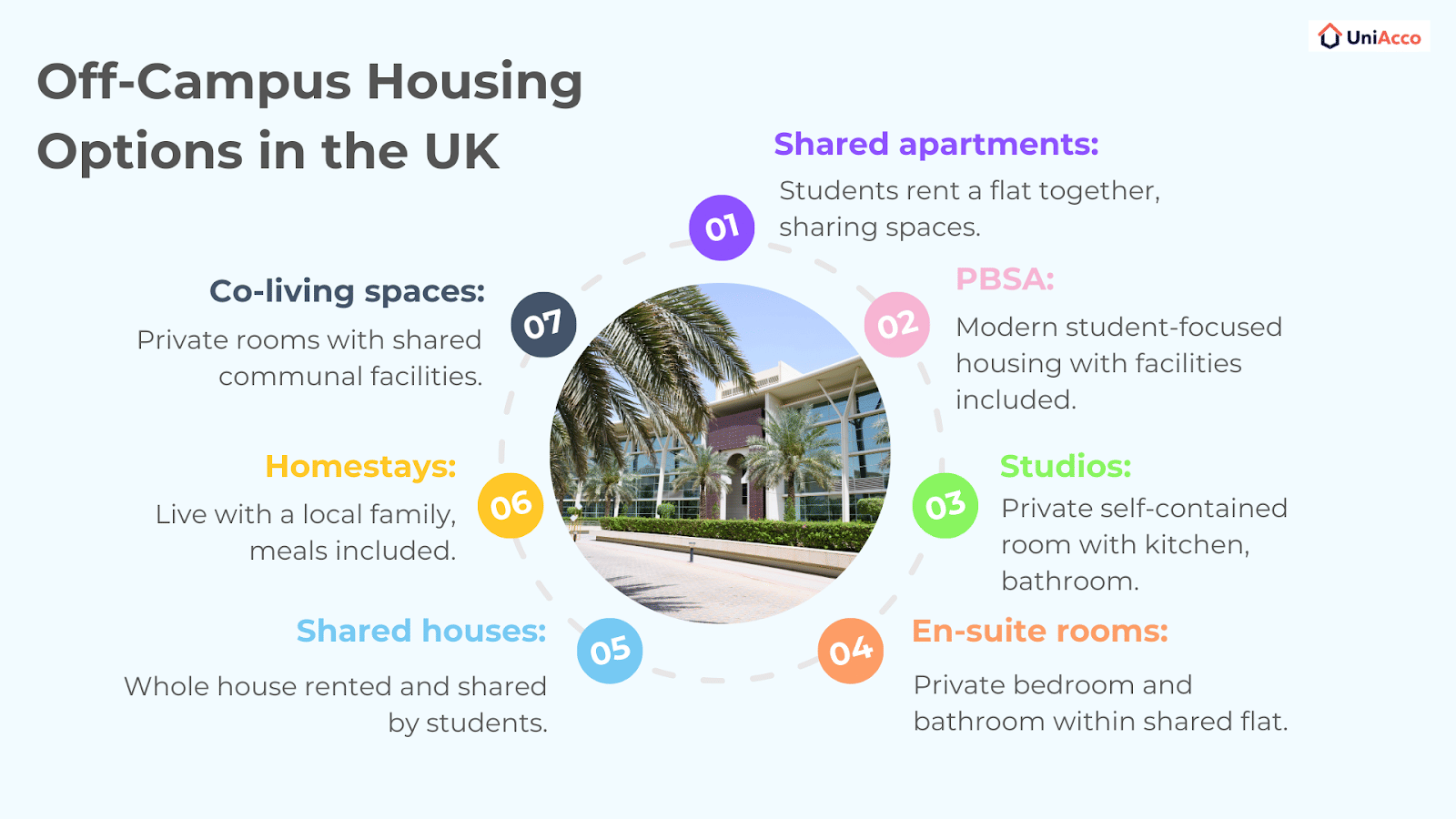
1. Shared apartments
Shared apartments are a popular form of off-campus housing in which students rent an apartment together and split the rent and utility costs. Each person usually has a private bedroom while sharing common areas like the kitchen and living room.
Average Monthly Cost across the UK:
| City | Avg Monthly Cost |
| London | £400 – £900 |
| Manchester | £400 – £650 |
| Sheffield | £300 – £450 |
| Leicester | £300 – £500 |
| Edinburgh | £450 – £750 |
| Glasgow | £350 – £600 |
| Birmingham | £350 – £600 |
Ideal For:
- Students on a budget who want to maintain a comfortable living standard without overspending.
- Students who enjoy social interaction by sharing meals, chores, and communal spaces.
- Students experiencing independent living for the first time offering a safe environment to learn essential life skills such as budgeting, cleaning, and maintaining shared spaces.
- Students seeking flexibility to choose a place that is close to university, public transport, part-time work, or social areas.
Also Read: 10 Best Areas to Live in Birmingham for Student Comfort
2. Purpose-built student accommodation (PBSAs)
Purpose-built student accommodation, or PBSA, is explicitly designed for students, offering modern, ready-to-live-in rooms. These properties are usually fully furnished, with high-speed internet, study areas, and shared social spaces. PBSAs provide a sense of community, making it easier for students to settle in and meet peers. Security features like 24/7 reception and controlled access give peace of mind. While slightly more expensive than private flats or shared houses, PBSAs combine convenience, safety, and a supportive environment for student life.
Average Monthly Cost across the UK:
| City | Avg Monthly Cost |
| London | £1300–£1950 |
| Manchester | £975–£1300 |
| Sheffield | £932–£1213 |
| Leicester | £628–£758 |
| Edinburgh | £1040–£1387 |
| Glasgow | £867–£1083 |
| Birmingham | £910–£1192 |
Ideal for:
- Students who prefer convenience with facilities such as study zones, laundry rooms, bike storage, gyms, and social spaces, all in one place.
- Those who value a strong community helping form connections quickly and feel part of a supportive community.
- Students who prioritise safety, comfort and a hassle-free environment to settle into.
- Those willing to pay for quality living with modern, well-equipped living spaces and reliable services.
Also Read: All You Need To Know About Purpose-Built Student Accommodation In The UK
UniAcco helps students explore verified fully-furnished PBSAs in London, with 24/7 customer support to assist throughout the booking process.
Browse Verified London Accommodations3. Studios
Studio apartments are self-contained off-campus units that combine a bedroom, kitchen area, and private bathroom in one space. They provide a compact and convenient living setup, offering comfort and independence within a single unit. While generally more expensive than shared accommodation, studios give students complete control over their space and daily routines.
Average Monthly Cost across the UK:
| City | Avg Monthly Cost |
| London | £1,500–£2,000 |
| Manchester | £900–£1,200 |
| Sheffield | £850–£1,100 |
| Leicester | £800–£1,000 |
| Edinburgh | £1,000–£1,300 |
| Glasgow | £800–£1,000 |
| Birmingham | £850–£1,100 |
Ideal For
- Students who prefer quiet surroundings, minimal distractions, and a focused environment for studying and personal activities.
- Postgraduate and mature students who require privacy for research, projects, or remote work without interruptions.
- Students who prefer to manage every aspect of their daily life independently, from cooking meals to cleaning and organising their space.
4. En-suite rooms
An ensuite room is a private bedroom that includes its own bathroom, located within a larger shared house or flat. While students have their own personal space for sleeping and bathing, they share common areas like the kitchen, lounge, or living room with other residents. This type of housing provides privacy for personal activities while still offering a shared, social living environment.
Average Monthly Cost across the UK:
| City | Avg Monthly Cost |
| London | £1300–£1950 |
| Manchester | £975–£1300 |
| Sheffield | £932–£1213 |
| Leicester | £628–£758 |
| Edinburgh | £1040–£1387 |
| Glasgow | £867–£1083 |
| Birmingham | £910–£1192 |
Ideal For
- Students who prefer comfort and independence while still being part of a shared living environment.
- Those seeking a balanced life between independence and social engagement, helping students maintain a well-rounded experience.
- International students seeking to settle in smoothly, build friendships, and gradually gain confidence in independent living.
5. Shared houses
Shared houses are off-campus homes rented by a group of students who share common areas such as the kitchen, living room, and bathroom. Unlike ensuite rooms, the bathroom is shared along with other spaces, while each student still has a private bedroom. Residents split rent and utility bills, and this type of housing offers a more spacious, homelike environment than university dorms.
Average Monthly Cost across the UK:
| City | Avg Monthly Cost |
| London | £650-£900 |
| Manchester | £450-£650 |
| Sheffield | £350-£500 |
| Leicester | £350-£500 |
| Edinburgh | £500-£700 |
| Glasgow | £400-£550 |
| Birmingham | £400-£600 |
Ideal For
- Groups of students who already know each other, for a comfortable and supportive atmosphere where students can live more independently while still enjoying companionship.
- Students who value space with room to relax, study, and entertain friends, creating a homely environment that encourages comfort and personal freedom.
- Those looking to manage a tight budget while still enjoying a good standard of living.
- Students who prefer a social lifestyle to experience friendship, teamwork, and a sense of community.
6. Homestays
A homestay is an off-campus housing option in which a student lives with a local family. The student usually has a private bedroom but shares the kitchen, living areas, and sometimes bathroom with the host family. This setup gives students a chance to experience everyday British life, enjoy home-cooked meals, and receive guidance and support from their hosts as they adjust to a new country.
Average Monthly Cost across the UK:
| City | Avg Monthly Cost |
| London | £1100-£1550 |
| Manchester | £650-£850 |
| Sheffield | £600-£800 |
| Leicester | £600-£800 |
| Edinburgh | £700-£950 |
| Glasgow | £650-£850 |
| Birmingham | £650-£850 |
Ideal For
- International students figuring out how to adjust to cultural differences, navigate daily routines, and feel more confident while settling into student life.
- Students seeking cultural immersion through shared meals, conversations, and participation in household routines.
- Those who prefer a family setting to reduce feelings of homesickness and create a sense of belonging.
- Younger learners or students under 18, for safety, guidance, and daily care.
7. Co-living spaces
Co-living spaces are off-campus housing where students live in a shared building that balances privacy and social interaction. Each student has a private bedroom, but kitchens, lounges, and workspaces are shared with other residents. Unlike homestays, students live independently without a host family, giving them more freedom while still offering opportunities to connect with peers. This setup combines personal space with social engagement, making it popular for students who want both privacy and a collaborative living environment.
Average Monthly Cost across the UK:
| City | Avg Monthly Cost |
| London | £900-£1300 |
| Manchester | £650-£950 |
| Sheffield | £550-£850 |
| Leicester | £550-£850 |
| Edinburgh | £700-£1000 |
| Glasgow | £650-£900 |
| Birmingham | £650-£950 |
Ideal For
- Students who enjoy a lively environment and want to be part of a supportive, interactive community while studying.
- Students on short-term study programs, internships, or exchange courses who need a convenient and adaptable living solution.
- Young Professionals and final-year students looking for private spaces for focused work with shared areas that promote networking and collaboration.
On-Campus vs Off-Campus Housing: Key Differences
| Criteria | On-Campus Living | Off-Campus Living |
| Cost structure | Fixed rent, usually includes utilities | Variable rent; more scope to control costs |
| Privacy | Shared rooms or facilities are common | Private rooms, en-suites, or full apartments |
| Social experience | Built-in university community | Depends on flatmates and neighbourhood |
| Facilities | Standard furniture, internet, campus access | Varies by property; often more living space |
| Availability | Limited and fills up early | Wider choice across multiple areas |
| Lease flexibility | Term-based contracts set by university | Choice of lease length and property type |
| Independence | University rules and schedules apply | Full control over routines and finances |
| Year-round stay | Often vacated during holidays | Usually available all year |
Pros and Cons of Off-Campus Living
| Factor | Advantages | Trade-Offs |
| Cost Control | Wider price range; shared homes can significantly reduce monthly rent | Bills may be separate and fluctuate by usage |
| Privacy | Options like studios or private rooms offer more personal space | Shared houses may still involve common areas |
| Flexibility | Choice of location, room type, and neighbourhood | Lease terms can be longer and less forgiving |
| Independence | Full control over routines, meals, and lifestyle | Requires self-management of bills and upkeep |
| Location Choice | Live closer to part-time jobs, city centres, or quieter areas | Commute planning becomes your responsibility |
| Cultural Exposure | Better integration into local communities and daily UK life | Less built-in student interaction than halls |
| Availability | More options compared to limited on-campus rooms | Popular areas book out early during peak intakes |
| Management | Some properties are professionally managed (PBSA off-campus) | Private landlords vary in responsiveness |
Why Students Prefer Off-Campus Housing?
1. Greater control over daily life
Living off-campus offers students full autonomy over their living arrangements. You decide who you live with, how you organise your day, and how your space looks and functions. This level of independence encourages practical life skills, from managing monthly expenses to handling household responsibilities. For many students, it marks a natural transition into adult living.
2. Wider budget flexibility
Compared to university-managed halls, off-campus housing offers more price variation across cities and neighbourhoods. Shared flats or houses significantly reduce individual rent and utility costs. Students can compare options, negotiate where possible, and choose accommodation that fits their financial limits without compromising basic comfort.
3. Freedom to choose your neighbourhood
Living off campus means selecting a location that suits your lifestyle, not just your timetable. Whether you prefer being close to part-time work, transport links, or quieter residential areas, off-campus housing gives you that choice. This flexibility helps students balance academics, work, and social life more effectively.
4. Deeper connection with local life
Off-campus living places students in real neighbourhoods rather than in closed-campus environments. Daily interactions with local shops, cafés, and residents help international students adapt faster and understand everyday life in the UK. Over time, this exposure builds cultural awareness and a stronger sense of belonging.
5. Better access to part-time employment
Many off-campus properties are located near commercial centres, retail areas, and transport hubs. Shorter commutes make it easier to manage part-time work alongside studies. This convenience supports financial independence while keeping academic commitments on track.
Finding the right off-campus place to live can be overwhelming, especially when moving to a new country for the first time. UniAcco helps international students explore student accommodation in the UK by offering verified listings, clear comparisons of room types and prices, and personalised support to choose housing that aligns with their study plans and daily routines.
Explore Verified UK AccommodationsCommon Mistakes Students Make When Choosing Off-Campus Housing
1. Booking Too Late
One of the most common mistakes students make is delaying their housing search. As the academic term approaches, demand for off campus housing increases rapidly, and well-located, reasonably priced properties are booked early. Students who wait too long are often left with fewer options, higher rents, or accommodation far from campus, which can add unnecessary stress.
UniAcco Pro Tip: Begin your housing search at least two to three months before your move-in date to secure better choices and competitive pricing.
2. Ignoring Safety Factors
Focusing only on rent and amenities can lead students to overlook the safety of the neighbourhood or building. Living in an unsafe area can affect daily comfort, mental well-being, and overall student experience, especially for those new to the UK. Security features such as secure entry systems and well-lit surroundings are just as important as location and cost.
UniAcco Pro Tip: Choose verified listings on reliable platforms and prioritise properties with secure access, CCTV, and 24-hour emergency support.
3. Relying Only on Photos
Online photos do not always reflect the real condition of a property. Some listings use outdated or selective images that hide issues such as poor maintenance or limited space. Students who book solely based on photos may be disappointed upon moving in.
UniAcco Pro Tip: Take a virtual or in-person tour whenever possible and read recent student reviews to get a realistic view of the accommodation.
4. Not Understanding Lease Terms
Many students sign rental agreements without carefully reviewing the terms and conditions. This can lead to confusion around deposits, maintenance duties, rent increases, or notice periods. Such misunderstandings can lead to financial or legal issues later, particularly when terminating the lease early.
UniAcco Pro Tip: Read every clause thoroughly and ask the landlord or agent to explain unclear terms before signing the contract.
5. Underestimating Additional Bills
Students often calculate rent correctly but often forget to include other expenses, such as electricity, water, internet, and council tax, where applicable. These additional costs can significantly increase monthly spending and disrupt budgeting plans.
UniAcco Pro Tip: List all expected bills in advance and consider properties with inclusive rent to keep expenses predictable.
6. Not Comparing Accommodation Platforms
Choosing the first available property without exploring other platforms can result in higher costs or missed opportunities. Different platforms offer varying prices, verified listings, and student reviews. Comparing options helps students make informed decisions.
UniAcco Pro Tip: Use trusted student housing platforms to compare prices, locations, amenities, and reviews before finalising your accommodation.
Learn what to look for when booking off-campus accommodation by reading real student experiences on Quora.

Budgeting Tips for Off-Campus Living
1. Plan and Manage Food Expenses
Food costs can quickly become one of the most significant monthly expenses when living off campus. Cooking meals at home helps control spending and reduces reliance on expensive takeaways. Planning weekly meals, buying groceries in bulk, and shopping at budget-friendly supermarkets can significantly lower food costs. Using student discounts and loyalty programmes also adds long-term savings.
2. Use Student Transport Passes
Daily travel expenses can increase if your accommodation is not within walking distance of campus. Most UK cities offer discounted transport passes for students, covering buses, trams, or trains. Choosing a pass that matches your travel routine helps reduce commuting costs and makes budgeting more predictable.
Also Read: UK Public Transport Made Easy: How to Travel Anywhere Like a Local
3. Split Utility Bills Transparently
When sharing accommodation, utility bills such as electricity, gas, water, and internet should be managed clearly. Using budgeting apps or shared spreadsheets to track expenses helps ensure that everyone pays their fair share on time. This approach avoids misunderstandings and helps maintain a smooth shared living experience.
4. Stay Alert to Deposit Scams
With numerous accommodation options available online, it is important to exercise caution when making deposits. Students should avoid transferring money without verifying the property, reviewing the lease, and confirming the landlord or platform’s credibility. Booking through trusted platforms with verified listings reduces the risk of fraud and protects your finances.
5. Consider All-Inclusive PBSAs for Predictable Costs
Purpose-built student accommodations often offer all-inclusive rent that covers utilities, Wi-Fi, and maintenance in a single monthly payment. This simplifies budgeting and reduces the burden of managing multiple bills. UniAcco helps students compare PBSAs with all-inclusive pricing, facilitating the selection of accommodation that balances comfort, convenience, and budget.
Explore real budgeting experiences and tips from students on this Reddit thread
To those studying in London or UK, how do you…? from r/Indians_StudyAbroad
Checklist Before Finalising an Off-Campus Home
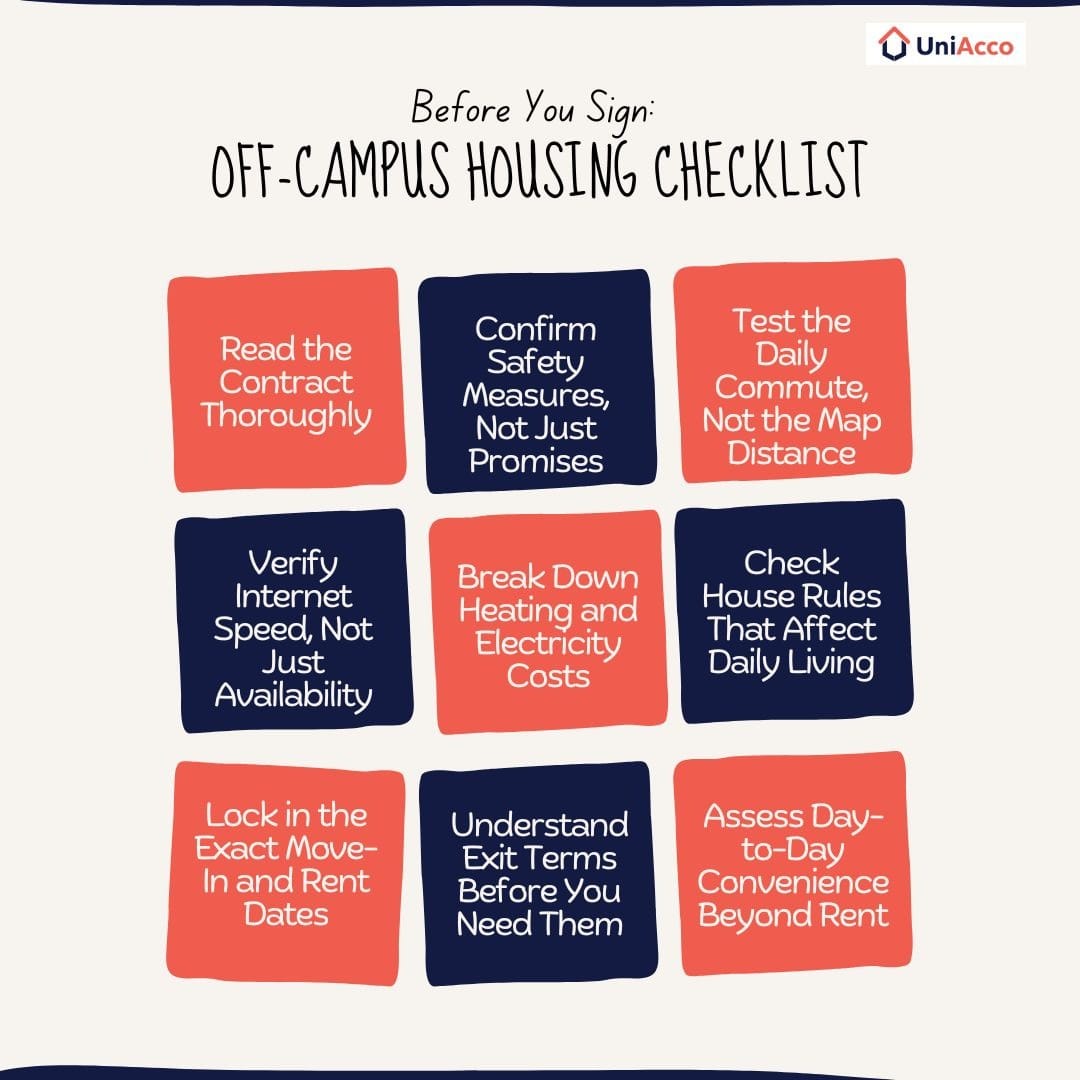
Review the Lease Terms Carefully
Before committing to any off campus housing, take time to read the lease agreement thoroughly. Pay close attention to rent payment schedules, security deposit conditions, contract duration, and maintenance responsibilities. Understanding who handles repairs, how rent increases work, and what penalties apply for late payments can prevent disputes and unexpected financial stress later.
Prioritise Safety and Security
Safety should be a non-negotiable factor when selecting accommodation. Look for secure entry systems, functioning locks, fire alarms, and emergency exits within the building. Research the neighbourhood’s safety record and assess how safe the area feels during both day and night.
Evaluate Commute Time and Connectivity
Calculate the daily travel time between your accommodation and the university. Consider proximity to public transport such as buses, trams, or train stations, as well as walking and cycling routes. A shorter, well-connected commute saves time, reduces transport costs, and leaves more room for academic work and social activities.
Check Internet Availability and Quality
A reliable internet connection is essential for online lectures, research, assignments, and communication. Confirm whether Wi-Fi is included in the rental or must be arranged separately. Ask about internet speed and reliability, as poor connectivity can disrupt studies and impact daily productivity.
Clarify Heating and Electricity Charges
Always check how utility costs are calculated and whether they are included in the rent. In the UK, heating expenses can rise sharply during colder months, which may affect your budget. Understanding average monthly costs and billing methods helps avoid surprises and allows for more accurate financial planning.
Understand Community Rules and Guidelines
Many properties have specific rules that residents are expected to follow. These may include noise restrictions, guest policies, waste-disposal rules, or shared-space usage guidelines. Being aware of these expectations helps avoid fines, maintain good relationships with neighbours, and ensures a peaceful living environment.
Confirm Move-In and Rent Start Dates
Verify your official move-in date and the day rent payments begin. Make sure these dates align with your academic schedule to avoid paying for unused days. Confirming timelines early also allows sufficient time to settle in, purchase essentials, and adjust before classes begin.
Check Exit and Early Termination Clauses
Unexpected changes can arise during your studies, such as course transfers or personal circumstances. Review the contract for early-termination clauses, notice periods, and replacement-tenant options. Knowing these terms in advance provides flexibility and protects you from unnecessary financial loss.
Also Read: Student Accommodation Contract: Early Exit Options Every Student Should Know
Assess Overall Accessibility and Daily Convenience
Ensure the property suits your lifestyle and daily needs. Check the availability of nearby grocery stores, medical facilities, banks, and public transport. Good accessibility makes everyday tasks easier, reduces travel time, and contributes to a stress-free living experience throughout your stay.
Wrapping Up!
The real difference between a smooth UK student life and a stressful one often comes down to where you live. Off-campus housing in the UK offers flexibility, privacy, and location choice, but only when the details are correct. Rent structures, contract terms, safety standards, and neighbourhood access matter far more than a listing headline.
That’s where clarity beats guesswork. UniAcco brings verified off-campus homes, transparent pricing, and student-first support into one place, so decisions are based on facts, not assumptions. From PBSAs in Birmingham to shared flats and private studios in Manchester, every option is checked, compared, and aligned with real student needs.












0 Comments