
I know we all wish choosing between long term vs short term student accommodation was as easy as tapping a poll on Instagram. One click. Done. But in the UK, it’s not that simple. Contracts are real. Deposits are real. And yes, the consequences are very real too. That’s why we’re breaking it down properly.
In this blog, we’ll explain what long term vs short term student accommodation actually means, the key differences, the pros and cons, which option might suit you best, and how to book safely without getting caught up in student accommodation scams. Just what you actually need to know.
What Is Short-Term Student Accommodation VS What Is Long-Term Student Accommodation in the UK?
When you think of differentiating between long term vs short term student accommodation, the difference isn’t just about time; it’s about money, contracts, and how settled you want to be. We are here to help you figure this out. Just as the name suggests, short-term student accommodation means you’re staying somewhere for maybe less than six months. Could be for a few weeks, a summer stay or one academic term, or maybe you’re arriving early before your main contract starts. So yeah, basically means temporary student housing.
When you’re signing a 9–12 month contract that covers the full academic year, that would go as long-term student accommodation. These long-term rentals include university halls, PBSA, shared student houses, Private flats or studios. One thing to know, a guarantor is usually required, especially in private housing. That’s someone (often a parent or guardian) who agrees to pay if you can’t.
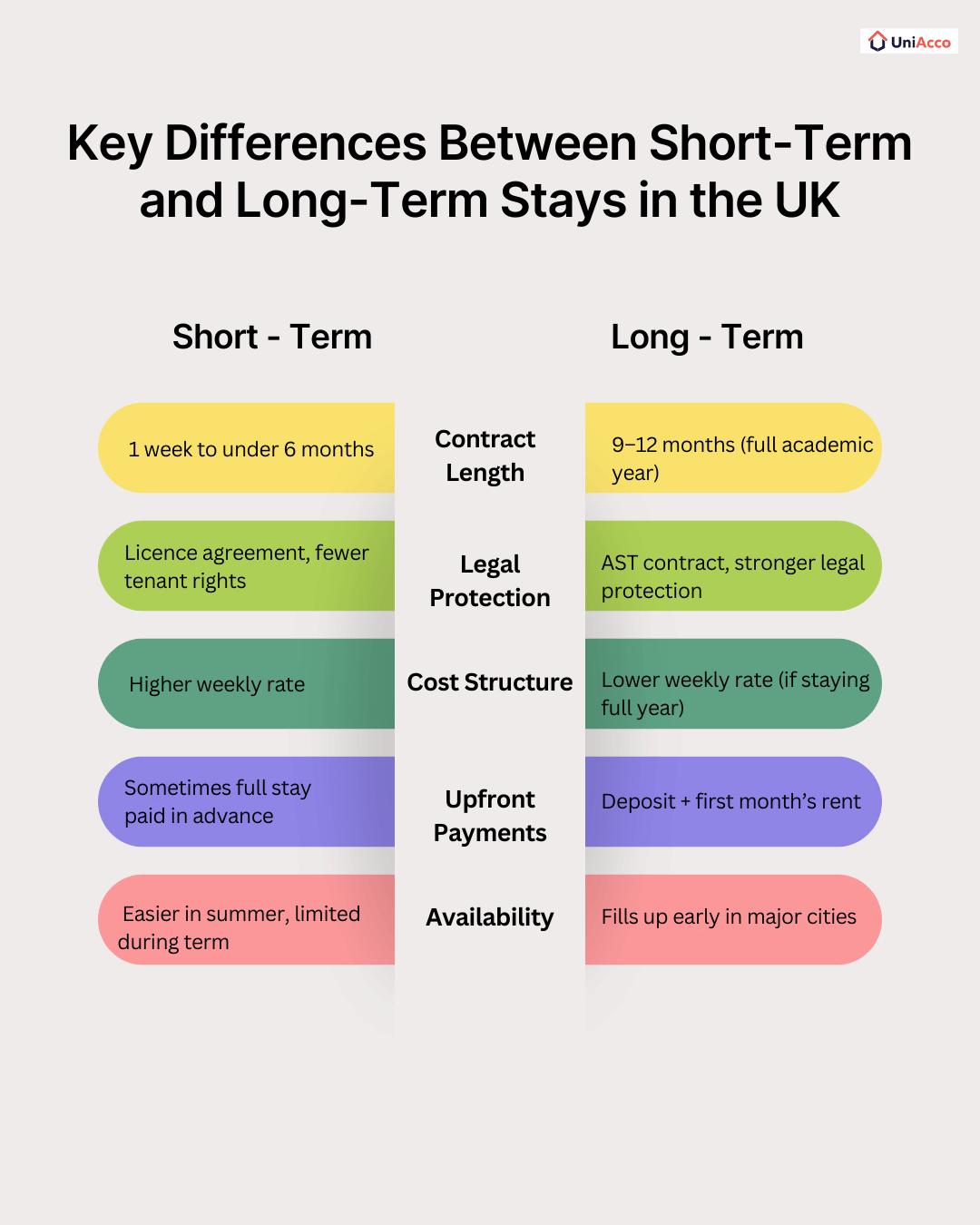
Key Differences Between Short-Term and Long-Term Stays in the UK
Contract Length
Short-term: Generally, the contract length for short-stay student accommodation goes from a week to a few months. They are definitely below six months, though. This is one of the main key differences between long term vs short term student accommodation.
Long-term: Now, when it comes to long-term contract lengths, they can easily go up to 9-12 months. So basically, it covers your whole academic year. If you’re planning to study in the UK in the near future, this long term vs short term student accommodation difference will help you plan better and understand what fits your study abroad journey. Platforms like UniAcco let you filter options instantly by contract length across 700+ cities, so you don’t waste time browsing places that don’t match your stay.
Legal Protection
Short-term: When comparing long term vs short term student accommodation, this is where legal differences really show. The next step is understanding that they often cover license agreements and fewer legal protection in short term student accommodation. You should know that in this case, providers easily set their own terms and conditions.
Long-term: Now, this is very stuff gets a little more serious than you would expect. Generally, long-term student accommodation contracts are AST. Its an abbreviation for Assured Shorthold Tenancy. That means stronger tenant rights. Your deposits are protected. You have legal notice rules. They can’t just kick you out randomly. Now that you know the differences between short-term and long-term rentals, legal protection is a big deal, especially if something goes wrong.
Cost Structure
Short-term: We all know money is a deciding factor in all cases. From simple life decisions like whether to treat yourself to that Starbucks coffee or let it go. You should also make those same decisions when you’re booking your accommodation. Understand that short-term means you’re gonna be paying higher weekly rates. Simply because you’re paying for flexibility.
Long-term: The cost varies vastly between long term vs short term student accommodation. If you’re staying for a full year, you end up paying a lower weekly rate overall. If you’re only staying three months, applying for long-term might just not make sense.
Upfront Payments
Short-term: What you may not realise when you’re considering short-term vs long-term rentals is that you sometimes have to pay a full stay in advance when it comes to short-stay student accommodation.
Long-term: You can secure your spot simply by paying a deposit amount and your first month’s rent for long-term student accommodation. If you’re booking from abroad and stressing about visa timelines, UniAcco also offers free cancellation if your visa is rejected which can make the long term vs short term student accommodation decision feel less risky.
Availability
Short-term: The number of international students pursuing degrees in the UK is around 679,970. Even though short-term student accommodation is more seasonal, it’s easier to find during the summer. However, you should know that there are usually limited spots during peak academic months. So, booking your accommodation early is the key here.
Long-term: Did you know that a shortfall of over 83,000 student beds between 2020 and 2027 has been projected? London, Manchester, and Birmingham are cities in the UK atre hotspots, and accommodations are filling up sooner than you expect. When it comes to the availability of beds between long term vs short term student accommodation, booking early is a key factor in both cases.
London rent hits different. Lock in verified short-term student accommodation in London with UniAcco and stay flexible without the stress.
🔑 Explore London Student HousingPros & Cons of Short-term vs Long-term student accommodation in the UK
Short- term student accommodation
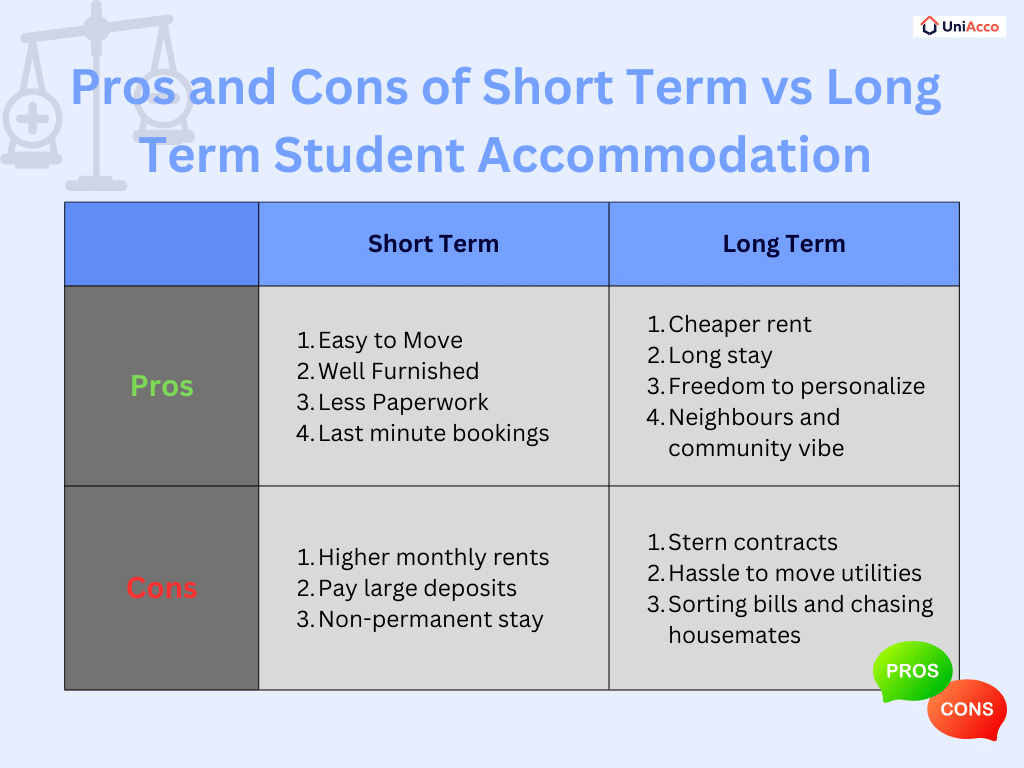
Pros of short-term student accommodation
- Easy to Move: You can easily move and try a different living situation because temporary student housing gives you flexibility.
- Well Furnished: You don’t have to worry about the place as they generally come furnished with the necessary utilities.Less Paperwork: No stress of changing your plans, as there is less paperwork involved. So basically no commitment issues.
- Last minute bookings: It’s often easier to find these at the last minute, which helps students who don’t have much time to plan ahead.
Cons of short-term student accommodation
- Higher monthly rents: In the long term vs short term student accommodation battle, a con for short-term student accommodation is that the monthly rates are usually high. This happens because you’re paying for flexibility. Providers charge more per week since you’re not committing to the full academic year.
- Pay large deposits: You’ve got to pay large deposits or full advances beforehand for these short stays. Since the contract is shorter and often more flexible, providers reduce their risk by collecting money in advance.
- Non-permanent stay: Finding stable housing can be a challenge, and you might have to look for a new place to live more than once while you study.
Long-term student accommodation
Pros of long-term student accommodation
- Cheaper rent: You are paying a lower monthly rent when it comes to long-term housing than you pay for short-term housing. You get your money’s worth.
- Long stay: When you choose long-term student accommodation, you don’t have to stress about finding another place mid-year, especially during exams. You’re settled for the full academic year, so you’re not constantly wondering, “What if I need to move?” That stability lets you focus on your studies, not house-hunting.
- Freedom to personalise: You get to personalise your space as per your vibes. You have the freedom to decorate and create a space that makes you comfortable.
- Neighbours and community vibe: You don’t have to be bothered by the thought of who my next neighbours or roommates will be. With the same faces in your long term student accommodation space, you develop a sense of belonging and community.
Cons of long-term student accommodation
- Stern contracts: This isn’t Netflix. You can’t cancel mid-season. Fixed contracts generally mean you have to obey all the rules that come with them. Maybe about the people who visit, curfew deadlines, and long-term contract technicalities.
- Hassle to move utilities: When you stay at one place for too long, and it’s time to move, it generally becomes tedious. Maybe you purchased an additional table fan or any other piece of furniture. Also, get the WiFi and other stuff set up at your new location.
- Sorting bills and Chasing housemates: Before your contract ends, you got to sort all the bills, find another place to stay, and literally start a chase for new housemates. Also, get all deposits and any pending balances squared away in one place.
If you want the real tea on how UK student accommodation contracts actually work, including the whole summer rent situation, check this Reddit thread out!
Renting 40 weeks a year or 52 weeks a year? – r/UniUK from r/UniUK
Which Option Is Better for International Students?
The chase for which one’s the best fit for you: long term vs short term student accommodation might still puzzle you. You aren’t just picking a room; you need to figure out contracts, guarantors, deposits, and your entire stay around the type of accommodation you choose. So let’s bring this chase to an end.
Choose short-term if:
- One Semester or Summer Internship: If your goal is to do one semester abroad or you’re simply here for a summer internship, pick the short-term option between long term vs short term student accommodation. No second thought in this matter. This becomes an ideal option that will work in your favour. You’d need not worry about tenancy rights or legal protection. These temporary student housing contracts are pretty flexible.
- Testing the Area First: Maybe you just want to test the waters before diving in, see the area, check the commute, figure out the vibe. If rent isn’t your main stress, you can take your time, try different areas, see what feels right, then lock something in once you’re sure.
- Arriving Early: Let’s assume you might have already booked your long-term student accommodation for September. But you arrived a couple of months, maybe in July or August. A smart move on your end. But rather than moving your contract to an early date and paying extra, you can book a short stay option. Get a hang of the place and city. Situations like this are exactly why understanding long term vs short term student accommodation matters.
Choose long-term if:
- Full-Year Commitment: If you’re studying in the UK for a full academic year or more, choosing long-term accommodation is a smart move. This commitment takes away your worry about having to look for new places every month.
- Fixed Budget, No Surprises: If you plan to study in the UK for a year or two, you should be aware that the cost of living in the UK is a lot compared to other countries. So, to avoid any further holes in your pocket, having a fixed rent helps you plan your expenses well.
- Proper Tenant Rights: Most long-term private rentals in the UK come under an Assured Shorthold Tenancy (AST). That means your deposit must be protected, and your landlord has to follow legal notice rules. You get stronger protection compared to short-term licence agreements. Basically, you’re legally covered.
Cost Comparison: Short-Term vs Long-Term
| Cost Element | Short-Term Stay | Long-Term Stay |
| Deposit | Sometimes required, sometimes full payment upfront | Deposit legally required and must be protected |
| Bills | Usually included | Included in PBSA, often separate in shared houses |
| Upfront Payment | Can require full stay paid in advance | Typically deposit + first month’s rent |
| Summer Liability | No obligation beyond stay | You may pay for the summer months even if you move out |
| Overall Value | Higher cost per week | Lower cost per week if staying full academic year |
Confused about long-term vs short-term student accommodation? Don’t guess your way through it. With UniAcco, compare verified student accommodation options across the UK.
🔍 Compare UK Student HousingHow to Book Safely in the UK
Follow these tips regardless of the long term vs short-term student accommodation type you choose. To avoid getting scammed or stuck. Simply because safety matters just as much as price.
1. Always Get a Written Contract
Never ever rely on verbal agreements from your contractors or housing agents. No matter the duration of your stay, make sure you always get your rent amount, start and end dates in writing. This avoids confusion and further worry. Like mentioned above, long term vs short term student accommodation have their own contract length, legal protection and cost structure. So choose as per you’re convience.
2. Make Sure Your Deposit Is Protected
Be aware that in England and Wales, your landlord has to protect your deposit in a government-approved scheme for long term student accommodation. If by any chance you find them avoiding or refusing to answer this question, mark it as a red flag. While short-term rentals may ask for full deposits upfront at times. Always check the terms and conditions. One of the main differences between short-term vs long-term rentals is how deposit protection works.
3. Never Transfer Money Without Verifying
Some of the safest ways to book student accommodation are through official websites or university housing lists. Make sure you aren’t sending these landlords cash before they complete and send the paperwork. You can also book through UniAcco, where properties are verified, and student support is available 24/7 throughout your booking journey.
4. Ignore “Pay Now or Lose It” Pressure
A complete red flag is when landlords say something like, “You need to transfer the deposit in the next hour, or it’s gone.” This is where you should learn to pause. This is a common trick which is up their sleeves. Genuine providers won’t rush you like this. The UK housing market is competitive, yes, but legit landlords don’t force panic payments.
5. Use Verified Platforms or University Lists
If you don’t want drama before university starts, book smart. Start with trusted sources, your university’s accommodation office, as they won’t recommend dodgy listings. It’s the safest first stop. Check with approved PBSA providers. Official letting agents, these registered agents who follow UK rental rules and proper contracts, are trusted sources. You can also book with UniAcco. Verified properties and 24/7 support throughout your student journey. If you’re still confused about long term vs short-term student accommodation and which fits best for your situation, UniAcco can help you sort this out as well.
6. Check the Tenancy Type
Before you sign anything, understand what kind of contract you’re getting. In the UK, tenancy types aren’t just admin; they decide your rights. When comparing long term vs short term student accommodation, this is one of the biggest differences students overlook. Most long-term private houses and flats fall under an AST. This is the most common contract for private long-term student housing. It usually offers stronger legal protection. Many short-stay student accommodation options operate under licences rather than full tenancies. It’s more flexible, but you don’t get the same level of legal protection. When deciding between long term vs short term student accommodation, don’t just compare prices or locations; make sure to check the tenancy type too.
Get real support and explore verified student accommodation with UniAcco for your long-term or short-term student accommodation needs.
🏠 Explore Verified Student HousingConclusion
You don’t need to stay a full year or lock into long term student accommodation in the UK just to experience all four seasons. UK weather does its own thing. If you’re lucky, you’ll see sunshine, rain, and wind all in one day. So yes, you can technically say you’ve “seen all seasons” even if you’re only here for a summer internship. That’s the fun side of the long term vs short term student accommodation decision, your stay length doesn’t limit your UK experience.
Whether you’re here for a few months or the full academic year, UniAcco student accommodation has you covered for every season. If you’re still figuring out the long term vs short term student accommodation choice, we’ll help you make it simple. We’re just a call away.











0 Comments