

Landing in the UK for the first time feels like stepping into a new version of your life, but the reality of student housing hits just as quickly. The 2025 NatWest Student Living Index reports that the average student spends £562.67 per month on rent alone, and rising costs have pushed many to lean on savings, family support, or short-term loans just to stay afloat. So how you choose to live can shape your entire university experience.
Here’s where the benefits of shared accommodation for international students stand out. This blog explores why shared homes remain one of the most intelligent, most practical housing choices for international students, and how to decide whether it’s the right fit for your study journey.
Why Shared Accommodation Matters for International Students: An Overview
| Benefit Type | What It Means for a Student | Impact |
| Affordability | Rent, utilities, and household costs are split among housemates instead of being borne individually. | Lowers monthly living expenses by 20–40%, helping students manage budgets and reduce financial stress. |
| Instant Social Network | Students live with peers, often fellow international students, from day one. | Faster friendships, reduced loneliness, and smoother social integration in a new country. |
| Cultural Exposure | Daily interaction with people from different countries, backgrounds, and cultures. | Builds global perspective, intercultural communication skills, and personal confidence. |
| Safety & Emotional Support | Living with others means help is available in emergencies or unfamiliar situations. | Improves emotional well-being and creates a sense of security, especially for first-time movers. |
| Flexible Living Options | Many shared accommodations offer shorter or more adaptable lease terms. | Ideal for exchange students, internships, or those unsure about long-term plans. |
| Better Locations | Cost-sharing allows students to live closer to universities or city centres. | Shorter commutes, better access to campus facilities, transport, and student hotspots. |
| Shared Responsibilities | Household tasks and basic maintenance are distributed among residents. | Reduces individual workload and helps students focus more on studies and social life. |
What Is A Shared Accommodation?
Shared accommodation is a housing arrangement in which two or more students live in the same property, sharing common spaces such as the kitchen, bathroom, and living area, with each person typically having a private bedroom. For international students, this setup is widespread in university cities across the UK and Europe, as it balances affordability with everyday comfort.
Rent and utility costs are split among housemates, making monthly expenses more manageable, while the shared environment offers built-in social interaction and support. Most shared student homes are located close to campuses and public transport, making them a practical first choice for students adjusting to a new country, academic system, and lifestyle.
Types of Shared Accommodation
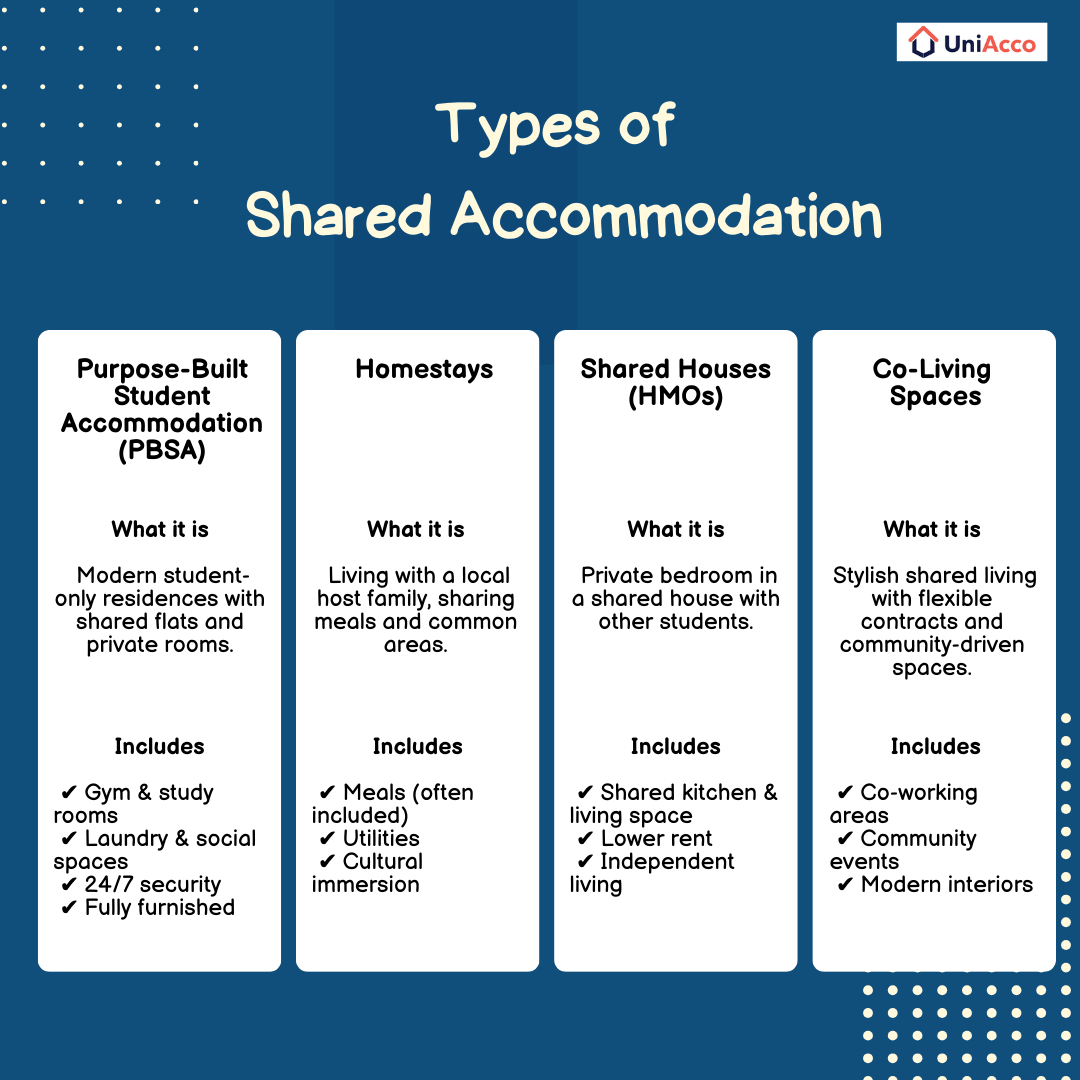
Purpose-Built Student Accommodation (PBSA)
Purpose-Built Student Accommodation refers to residential buildings designed specifically for students. These properties are usually located close to universities or in student-friendly areas and offer shared flats with private bedrooms, shared kitchens and living spaces.
PBSAs are fully furnished and typically include on-site facilities such as study rooms, common lounges, laundry areas, and controlled access systems. Many also offer amenities such as gyms or social spaces, depending on the property.
Price Range:
- £150–£250/week for en-suite/shared flats
Ideal for:
- Students who prefer a safe, managed, and hassle-free living setup
- International students booking accommodation from abroad
- First-year students adjusting to life in a new country
- Those who want bills included and predictable monthly costs
- Students who value on-site amenities and a strong student community
- Anyone looking for accommodation close to campus or city centres
Find a place that works as hard as you do. Explore UniAcco’s verified listings to secure safe, fully managed student accommodation in the UK close to leading universities and designed for a smoother, stress-free student life.
🏡 Explore UK Student AccommodationHomestays
Homestays involve living with a local host family in their home. Students usually have a private bedroom while sharing common areas such as the kitchen and living room. Meals and utilities are often included in the arrangement, depending on the provider.
This option offers a more immersive cultural experience and a quieter residential setting compared to student-only housing.
Price Range:
- £600–£900/month
Ideal for:
- Students who prefer a quiet and structured living environment
- First-time international students seeking cultural immersion
- Those looking to improve their English through daily interaction
- Students who want meals included and fewer household responsibilities
- Anyone who prefers a home-like setting over shared student flats
- Short-term stays while transitioning to long-term accommodation
Houses in Multiple Occupation (HMOs)
Shared houses, often referred to as HMOs, are privately rented homes where multiple students live together. Each student has a private bedroom, while facilities such as the kitchen, living room, and bathrooms are shared.
HMOs are common in university towns and cities and are typically rented through private landlords or letting agents.
Price Range:
- £400–£700 per month, depending on the city and property condition
Ideal for:
- Students who want lower weekly rent without compromising on essentials
- Those comfortable living with 3–6 housemates
- Anyone who prefers bigger communal spaces over premium private studios
- Students seeking short commutes to uni in popular residential areas
- First-timers who want a ready-made social circle
- Students looking for more flexible tenancy options
Co-Living Spaces
Co-living spaces are a newer form of shared accommodation for students that combines private bedrooms with high-quality shared amenities. These properties often feature modern interiors, shared lounges, co-working areas, and organised community events. Contracts are usually more flexible than traditional private rentals.
While co-living is not designed exclusively for students, it is increasingly popular among postgraduate students and young professionals.
Price Range:
- £800–£1,200+/month
Ideal for:
- Postgraduate students and PhD candidates
- Young professionals studying or working part-time
- Students who want premium shared amenities and modern interiors
- Those who prefer flexible contracts and shorter commitments
- Anyone seeking a social yet mature living environment
- Students comfortable living in mixed student–professional communities
Shared Accommodation vs Private Housing
| Criteria | Shared Accommodation | Private Housing / Studio |
| Cost per student | Approximately £400 – £800/month for a room in a shared house or university halls outside London. | Approximately £700 – £1,200+/month for a private studio or 1-bed flat, depending on the city and whether bills are included. |
| Privacy | Limited privacy due to shared kitchens, bathrooms, and common areas. | High privacy, your own space, bathroom, and kitchen. |
| Flexibility | Often less flexible; contracts usually cover 6–12 months, and joint tenancy means shared responsibilities. | More flexible depending on the provider; studios may offer individual contracts, giving you more control over your stay. |
| Social Life | Strong social environment. | More independent and quiet. |
| Bills & Utilities | Many shared accommodations offer all-inclusive bills, simplifying budgeting. If not included, costs are split between housemates. | Often not included. You may need to set up utilities (Wi-Fi, electricity, water) yourself, as noted by most university private housing guides. |
Also Read: Private Student Accommodation in 2025: Guide for Students & Parents
From central hubs to student-friendly neighbourhoods, explore options that fit your budget and daily routine. Browse UniAcco’s top-rated PBSAs and lock in reliable, well-located student accommodation in London with confidence.
📍 Browse London Student AccommodationKey Benefits of Shared Accommodation for Students
Financial Savings & Affordability
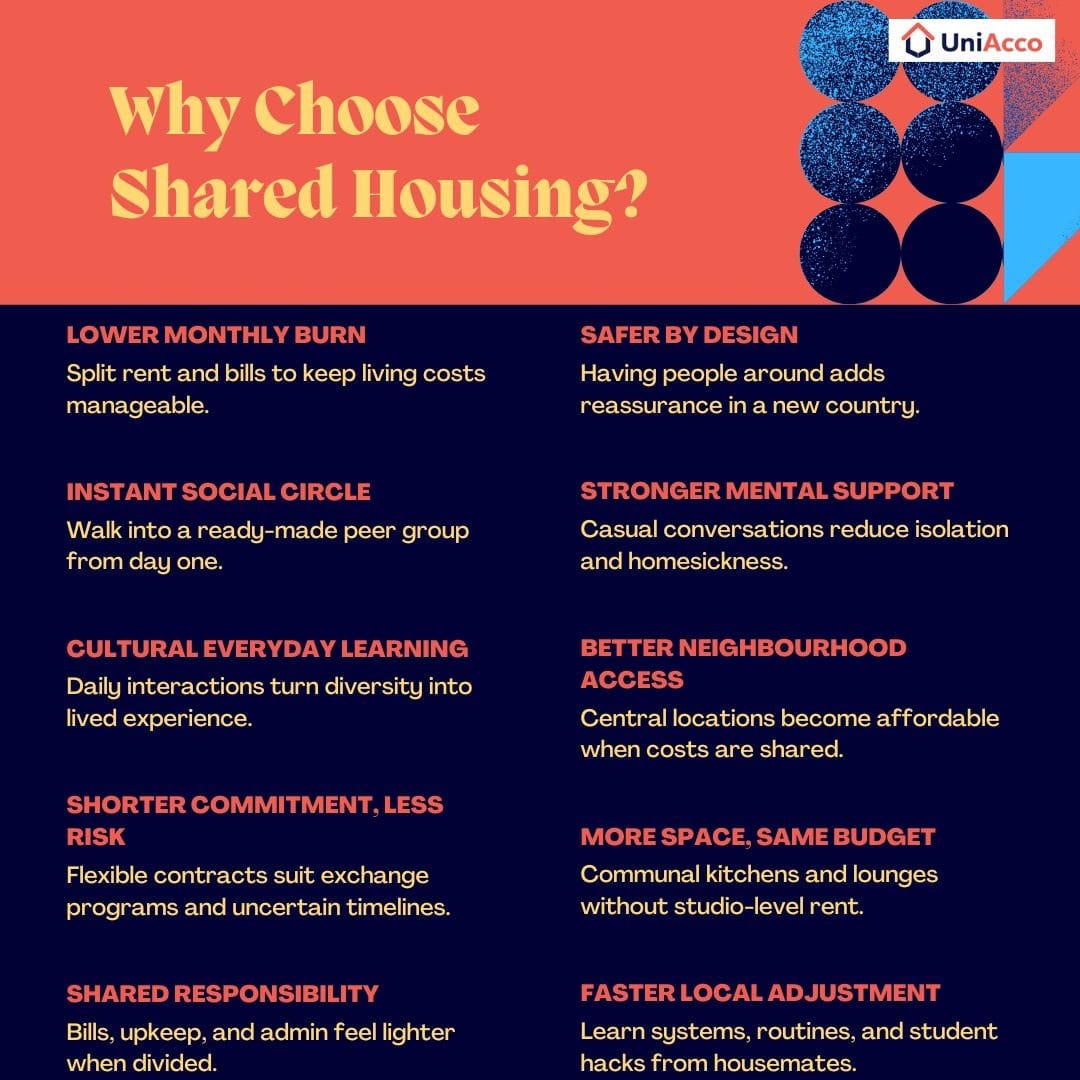
Shared accommodation remains one of the most budget-friendly housing options for international students in the UK. Instead of bearing the full cost of a studio or one-bed flat, you split the rent and utilities with housemates, bringing monthly expenses down significantly.
In most major cities, students in shared housing typically spend around £400–£800 per month, compared with £900–£1,400+ for private studios. Bills for electricity, heating, water, and Wi-Fi are also shared, reducing individual costs by 20–35%. The upfront burden is lighter as well, since deposits and setup fees are spread across the group.
For example, a £1,650 three-bed flat in Manchester works out to roughly £550 per person, while a nearby studio may cost nearly double. Over a year, this difference can result in savings of £4,500 or more, which is a meaningful amount for students carefully managing their budget.
Social & Cultural Benefits
Shared accommodation provides instant community, which becomes invaluable when you’re settling into a new country. Instead of living in isolation, you meet new people from day one, often fellow international students who understand the transition you’re going through. This environment naturally encourages cultural exchange, shared meals, and regular conversations that broaden your perspective. Everyday tasks like cooking together or dividing chores make the adjustment process easier and reduce the feeling of homesickness.
According to the UK National Student Accommodation Survey, more than 70% of students say that living in shared housing helped them make friends faster and feel more integrated into university life. For many international students, these early friendships evolve into their core support system throughout their stay in the UK.
Financial Savings & Affordability
Shared accommodation remains one of the most budget-friendly housing options for international students in the UK. Instead of bearing the full cost of a studio or one-bed flat, you split the rent and utilities with housemates, bringing monthly expenses down significantly.
In most major cities, students in shared housing typically spend around £400–£800 per month, compared with £900–£1,400+ for private studios. Bills for electricity, heating, water, and Wi-Fi are also shared, reducing individual costs by 20–35%. The upfront burden is lighter as well, since deposits and setup fees are spread across the group.
For example, a £1,650 three-bed flat in Manchester works out to roughly £550 per person, while a nearby studio may cost nearly double. Over a year, this difference can result in savings of £4,500 or more, which is a meaningful amount for students carefully managing their budget.
Social & Cultural Benefits
Shared accommodation provides instant community, which becomes invaluable when you’re settling into a new country. Instead of living in isolation, you meet new people from day one, often fellow international students who understand the transition you’re going through. This environment naturally encourages cultural exchange, shared meals, and regular conversations that broaden your perspective. Everyday tasks like cooking together or dividing chores make the adjustment process easier and reduce the feeling of homesickness.
According to the UK National Student Accommodation Survey, more than 70% of students say that living in shared housing helped them make friends faster and feel more integrated into university life. For many international students, these early friendships evolve into their core support system throughout their stay in the UK.
Flexibility and Convenience
Many international students choose shared accommodation because it offers greater flexibility than private studios or long-term leases. Several student HMOs and shared houses provide shorter contracts of 3, 6, 9, or 12 months, making them ideal for exchange students, internship placements, or those uncertain about how long they will remain in the city.
Shared homes are also easier to secure through student Facebook groups, WhatsApp communities, and university forums, especially during peak intake periods. This simplifies and accelerates the search process, particularly for students arriving mid-semester. If you’re unsure about your timeline or want to avoid being tied to an extended contract, shared accommodation gives you room to adjust plans without major financial consequences.
Support and a Sense of Safety
Living with housemates provides a level of support and security that is difficult to replicate when staying alone. There is always someone available in emergencies, which reassures students navigating a new environment.
Shared responsibilities, from splitting bills to coordinating maintenance requests, reduce the pressure of managing everything on your own. The social presence of others also plays a crucial role in emotional well-being, especially for international students far from home.
A report by Universities UK found that students living in shared houses report 20% lower feelings of isolation than those in private studios. This sense of companionship often makes the first year abroad smoother and emotionally more stable.
Better Locations and More Amenities
Shared accommodation often places students in well-connected neighbourhoods close to universities, transport links, supermarkets, and popular student hangouts. Because the cost is split among housemates, you can afford to live in areas that would typically be out of budget in a solo setup.
Shared houses also come with practical amenities such as a communal kitchen, living room, garden, or bike storage, which significantly enhance comfort without increasing rent. In cities like Leeds or Nottingham, living alone in central neighbourhoods can cost £1,000 or more, while shared flats in the same area often fall below £600 per person. This gives you better access to city life and university facilities without overspending.
Easier Transition for International Students
For many international students, shared accommodation is the easiest way to transition to life in the UK. These homes are designed for student living, offering a familiar environment where everyone is at the same stage of the same journey. Housemates often share practical advice on everyday essentials such as opening a bank account, understanding local transport routes, or adjusting to cultural norms. This support accelerates social and academic adaptation.
Research suggests that international students who live with peers in their first year adjust up to 40% faster than those who choose to live alone. Shared accommodation softens the learning curve and provides the stability students need while they find their footing abroad.

Potential Drawbacks of Shared Student Accommodation
- Privacy Limitations: In shared accommodation, personal space can feel limited, especially when you share kitchens or bathrooms. Quiet time may be hard to find, and it can take effort to carve out a routine that feels truly your own.
UniAcco Pro Tip: Choose properties with private ensuite rooms or larger personal spaces if you value downtime. Early booking gives you the best room options.
- Possible Roommate Conflicts: Different habits, personalities, or study styles can sometimes clash. Misunderstandings over cleaning, noise, or guests can escalate quickly if not addressed early.
UniAcco Pro Tip: At the start, set simple house rules and use UniAcco’s verified listings to match with accommodations that suit students with similar preferences.
- Shared Responsibilities & Reliance on Others: Chores, bills, and basic upkeep become a team effort. If someone isn’t consistent, it affects everyone, from messy kitchens to delayed bill payments.
UniAcco Pro Tip: Look for all-bills-included properties to minimise shared financial tasks, and create a rotating chore system from day one.
- Noise & Lifestyle Differences
Late-night study sessions, early alarms, cooking smells, or weekend plans can all collide. Shared living means adapting to routines that may not always align with your own.
UniAcco Pro Tip: Book student housing with strong noise insulation or quiet-living options, and request floors with students who share your lifestyle.
- General Wear & Tear: Shared spaces tend to be used more, which can make them messier or require more frequent cleaning. This can be frustrating if you prefer a tidy living environment.
UniAcco Pro Tip: Prioritise properties with regular housekeeping services or on-site maintenance to keep common areas in good shape.
Things to Check Before Choosing Shared Accommodation
Choosing shared student accommodation can be affordable and fun, but only if you know what to look for. Before you sign a contract, make sure you have checked these essentials, recommended across official university housing guidelines in the UK:
Lease Terms and Contract Type:
Every student housing contract is legally binding, so read it carefully. Confirm the start and end dates, check whether you’re responsible for the entire tenancy period, and note whether the agreement is joint (shared liability) or individual (you’re only responsible for your portion). This determines what you’re accountable for if a housemate moves out or defaults.
Also Read: Student Accommodation Contract: Early Exit Options Every Student Should Know
Whether Bills Are Included:
Many shared student houses offer all-inclusive rent that covers electricity, heating, water, and Wi-Fi. If utilities aren’t bundled into the rent, ask for the average monthly cost so you can budget realistically. This helps you avoid surprises during winter when heating bills usually rise.
Commute and Transport Connectivity:
UKCISA and UCAS both advise checking how easy it is to travel between your home and campus. Look at walking distances, bus routes, nearby train stations, and access to cycle paths. Your daily convenience, especially during early lectures or late library nights, depends heavily on where you live.
Safety Standards and Neighbourhood Security:
Before committing, review the building’s safety features, including secure entry, CCTV, fire safety compliance, and window or door locks. Research the neighbourhood as well; well-lit streets, student-friendly zones, and proximity to busy areas all contribute to your day-to-day comfort. Many universities publish local safety briefings to help students make informed choices.
Housemate Compatibility:
Shared living works best when expectations align. Check for compatibility based on gender preferences, cleanliness habits, study routines, noise levels, and lifestyle choices. Most university housing teams highlight that good housemate matching prevents conflicts later in the term.
Exit Clauses & Deposit Terms:
Before signing, understand how deposits, refunds, and exit clauses work. Deposits must be legally protected under an approved tenancy deposit scheme. Also check conditions for reclaiming your deposit, rules for break clauses, and whether you’re allowed to bring in a replacement tenant if you need to leave early.
Tips to Make Shared Accommodation Work for You

Shared accommodation can shape your entire student experience. When managed well, it becomes a space that supports your studies, social life, and well-being. These practical tips help you create a balanced and stress-free living setup from day one.
Start With a Shared Understanding
Before routines settle in, align on how the household functions. Agree on basics like noise levels, guest frequency, and study-friendly hours early on. A clear starting point reduces misunderstandings later and sets a respectful tone for everyone.
Keep Shared Spaces Neutral and Clean
Common areas belong to everyone. Treat kitchens, bathrooms, and living rooms as shared responsibility zones by cleaning as you go and avoiding personal clutter. A tidy shared space makes daily life smoother and avoids unnecessary tension.
Use the Home as a Support System
A shared home works best when people look out for one another. Simple habits like checking in before late nights, sharing important information, or helping during stressful exam weeks create a sense of reliability. This support system can make student life abroad feel far less overwhelming.
Budget & Track Shared Bills Transparently
Money matters are easier when everything is documented. Decide how utilities are split and use simple tracking tools to record payments. Clear, upfront systems prevent confusion and help maintain trust among housemates.
Embrace Cultural Differences
Living with people from different cultures and habits is part of the experience. Approach differences with curiosity rather than resistance. Flexibility and empathy go a long way in building a positive shared environment.
Choose a Setup That Matches Your Lifestyle
Not every shared home suits every student. Pay attention to room size, number of housemates, and property layout when choosing accommodation. Selecting a space that fits your study routine, sleep schedule, and comfort level makes shared living far more enjoyable in the long run.
Also Read: Student Accommodation Abroad: Tips for Finding Your Perfect Home
Conclusion
The real benefits of shared accommodation become clear once you look beyond the rent split. It’s the blend of financial ease, built-in community, safer living, and the comfort of having people around who understand the same student journey. When you pair these advantages with smart choices like reading contracts carefully, evaluating commute times, and picking housemates who match your rhythm, you create a living setup that supports both your academics and your well-being abroad.
Once you understand what makes shared living work, the next step is finding a space that feels right. UniAcco offers handpicked student accommodation in the UK, helping you shortlist homes that balance affordability, convenience, and peace of mind.














0 Comments