
It’s been weeks since checking out your student accommodation, only to find out you’re not getting your deposit. Imagine receiving your deposit statement only to find deductions for broken furniture or property damage that wasn’t present when you moved out. 16% of UK students don’t get their deposits back, and this can amount to £433, which is a lot of money.
Getting your student accommodation deposit refund is not only about cleaning the apartment before leaving. It is a bunch of things which you need to start doing several days before you leave. Landlords in the UK are very strict about this. They check everything, from furniture to the keys you’re given, any outstanding expenses, and more.
This blog prepares you for the worst, and also tells you how to get your student deposit back, what to keep in mind, and how to raise a dispute in case anything goes wrong.
Overview of Student Rental Deposit Refund in the UK
| If you want to… | Here’s what you should do |
| Get your full deposit back | Leave the property in good condition, settle any outstanding rent, and keep evidence such as photos and the inventory. |
| Know when you’ll receive it | Ask your landlord or letting agent to confirm the timeline for repayment once the tenancy ends. |
| Avoid disputes | Document the property’s condition when you move in and when you move out, and communicate any issues early. |
| Challenge unfair deductions | Review the deduction carefully, ask for an itemised breakdown, and raise a dispute if it seems unreasonable. |
| Unsure if your deposit is protected | Check with your landlord or letting agent which government-approved deposit protection scheme they used. |
What Is a Student Tenancy Deposit?
The student tenancy deposit is a refundable payment taken as security against issues such as damage or unpaid rent. It is taken at the start of the stay and returned at the end of the tenancy, once the inspection is completed; if the room is kept up to the landlord’s expectations, the deposit is given back. In England and Wales, landlords must return your deposit within 10 days of agreeing the final repayment amount with you. If deductions are still being disputed, the repayment deadline is paused until an agreement is reached or the dispute is settled.
Student Deposit vs Holding Deposit
A holding deposit is paid before you sign a tenancy agreement, usually to reserve a room or property. A tenancy deposit is paid once you become the tenant, and that money must be protected under the tenancy deposit scheme.
| Feature | Holding deposit | Tenancy deposit |
| Purpose | Reserves the property before the tenancy starts | Secures the tenancy against rent arrears or damage |
| When it is paid | Before signing the tenancy agreement | At or after the start of the tenancy |
| Protection required | Not usually protected as a tenancy deposit | Must be protected in a government-approved scheme in England and Wales |
| Refunded? | Depends on whether you go ahead with the tenancy | Usually returned at the end, minus valid deductions |
How Deposit Protection Schemes Work in England and Wales?
In England and Wales, landlords must protect eligible deposits in a government-approved tenancy deposit protection scheme within 30 days of receiving the money. Tenants/students need to be informed about the scheme their deposit is under, how it is protected, and how disputes between them and the landlord will be handled.
There are 3 deposit schemes available. They are: Deposit Protection Service (DPS), the Tenancy Deposit Scheme (TDS), and mydeposits. If there is a dispute at the end of the tenancy, the scheme chosen helps resolve it, and the deposit should remain protected until the issue is settled.
Landlords are also responsible for returning the deposit within 10 days of both sides agreeing on how much should be repaid.
Scotland and Northern Ireland
The deposit rules are different for students renting in Scotland and Northern Ireland; students are advised to check with their landlords or local agencies to help them understand how they work.
Book your student accommodation with confidence. UniAcco’s support team is available 24/7 to help resolve accommodation-related concerns, guide you through the booking process, and assist with any deposit-related queries.
🔍 Explore Student AccommodationHow to Get Your Student Deposit Back: Step-by-Step
Read Your Tenancy Agreement Again
It is always advised to go back to your tenancy agreement when doubts arise close to leaving and re-read sections on cleaning obligations, your notice period, the inventory, and any check-out requirements, so that you have a firm answer on what to do. Understand how long before you should notify your landlord and how you got the apartment. Ask them if a check-out inspection will be required and the process needed to hand back the keys.
Clean the Property Thoroughly
| Area | What landlords usually check |
| Kitchen | Hob, oven and grill – if there are remains of burnt food or grease left behind, if the fridge and freezer are emptied, defrosted and wiped. Cupboards cleaned inside and out, worktops and splashbacks de-greased, sink and taps limescale-free, floor swept and mopped. |
| Bathroom | Toilet scrubbed and disinfected, sink and taps free from limescale, shower screen and tiles without mould or soap scum, plugholes cleared, mirrors wiped, floor cleaned, extractor fan free of dust. |
| Bedroom | Mattress surface clear (if provided), bed frame wiped, wardrobe, drawers and desks emptied and dusted, carpets vacuumed, marks on walls gently cleaned where possible, any Blu Tack or stickers removed carefully. |
| Windows | Glass cleaned inside, frames and sills dusted and wiped, mould or condensation stains treated, blinds or curtains dusted or vacuumed. |
| Bins | All household and recycling bins emptied, no rubbish bags left in the property or garden, wheelie bins placed where the landlord/agent expects them. |
Repair Minor Damage
Your landlord will notice the smallest of things. You’re not expected to pay for the slightest wear and tear, but if you do notice it, be sure to fix it before you move out. This means changing faulty light bulbs, fixing the loose cupboard handles, filling tiny nail holes with appropriate filler and repainting it if needed, and carefully removing adhesive tapes you might have used to hang up posters/ notes.
Compare the Property with the Original Inventory
The moment you step into your apartment, take a video and multiple pictures for proof of inventory. You’ll be given the inventory report, which is your detailed, timestamped record of the property’s condition before the start of your tenancy. It lists each room, all fittings and fixtures, basically a before. At the end of the tenancy, the check-out report is compared to the before. It is then decided if any wear and tear goes beyond minimal damage.
Attend the Check-Out Inspection (If Possible)
If the landlord arranges a check-out inspection, try to attend it. You can bring up all of your valid queries and question rules that don’t make sense. You can also bring up areas you’ve already cleaned and repaired. They will explain the check-out procedure in detail, so be sure to listen and follow, so by the end of it you’re prepared for what’s to come.
Return All Keys
The keys given to you at the time of check-in have to be taken the best care of. This can include your front door, back door, bedroom doors, postbox, gate, and any fobs or access cards. Hand them over to your landlord the way they specify, whether that’s in-person, drop-box, or recorded delivery. Any key that’s found lost can cause a deduction in your deposit.
Share Your Forwarding Address and Bank Details
Once you’ve moved out, your landlord will need to know your address to send your deposit refund and any correspondence about deductions or disputes. If you’re returning home, then send them your address back home and bank details that are open to receiving international transfers.
Keep Evidence Until You Receive the Refund
If you’re wondering how to get your student deposit back, do not delete any of your evidence until everything is cleared from both parties. Keep your photos in place, videos, emails and messages sent to your landlord, receipts for wear and tear, and a professional cleaning invoice – if your tenancy requires a professional cleaning service. If you need to raise a dispute, this evidence will be highly helpful and help them decide how much of your deposit should be returned to you.
Common Reasons Students Lose Part of Their Deposit
| Reason | Usually deductible? |
| Unpaid rent | Yes |
| Missing furniture | Yes |
| Broken appliances | Yes |
| Excessive dirt | Yes |
| Fair wear and tear | No |
| Normal carpet ageing | No |
| Minor fading | No |
Unpaid rent
If the rent for your current month is pending, and you haven’t cleared it, your landlord can use your deposit to clear out your rent, resulting in deductions. You should be thoughtful of everything before you move out, as the slightest of mismanagement can cause a deduction.
Missing furniture
If the apartment was fully furnished when you moved in, and after departure your landlord finds any missing furniture such as broken lamps, chairs, drawers, or mattress protectors, then the cost of repair or replacement can come out of your deposit.
Broken appliances
Damage to appliances such as the washing machine, fridge, oven, or microwave that came with your apartment can lead to deductions if your landlord has to repair or fix them.
Excessive dirt
Leaving the apartment without dusting areas or, in general, keeping it clean can lead to slight deductions for the untidiness of the place, so make sure you leave the apartment exactly how you got it.
There are also some things that are minor and should not be charged, and if they are, we will help you with how to get your student deposit back from your landlord:
Fair wear and tear
This is the natural ageing of many items in the apartment. With age, it could lead to slight wear and tear. For example, scratches on furniture, hinges loosening after a few uses, etc.
Normal carpet ageing
Carpets are known to age due to the daily walking people do on them. As long as there are no huge stains or damage, the landlord cannot charge you for it.
Minor fading
Fading from sunlight on curtains, sofas or paint, or a bit of discolouration from everyday use, is part of normal ageing and should not be charged to your deposit.
We recommend students capture pictures of everything before leaving, so any unnecessary charges to your deposit can be disputed.
Also Read: How to Spot & Avoid Student Accommodation Scams in the UK
Mistakes That Can Delay Your Student Rental Deposit Refund
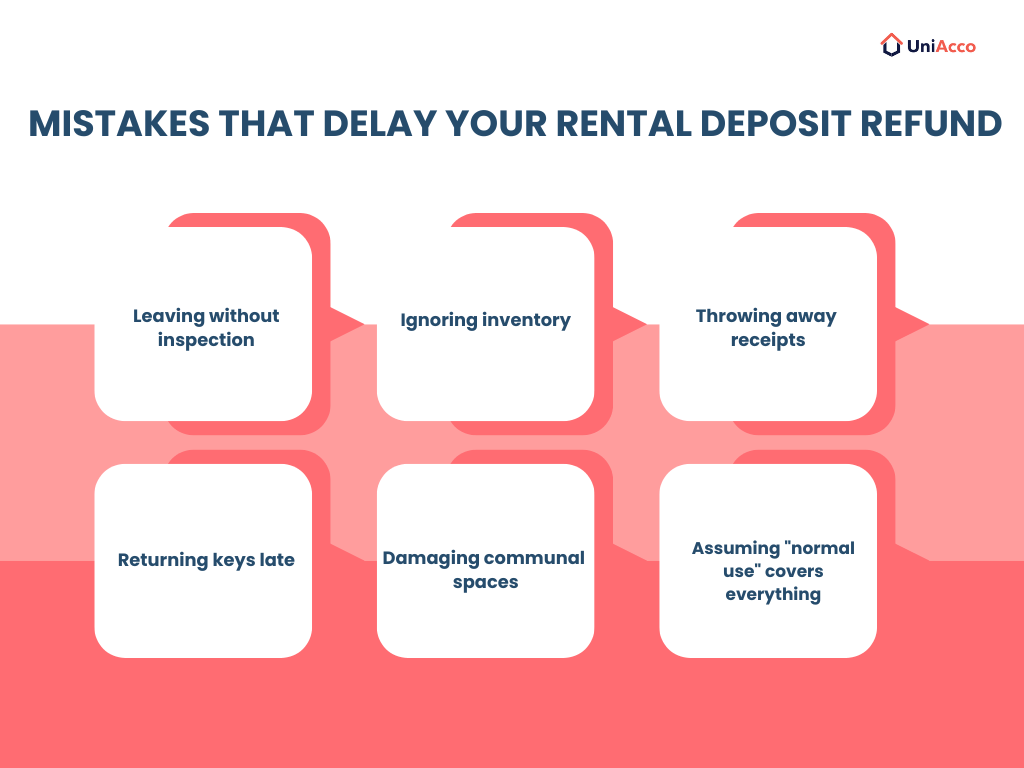
Leaving without inspection
A check-out inspection or a clear handover is necessary for students to do because, without doing that, you won’t have a clear answer if any disputes come up. It is also a way to be confident of how you left things, so the landlord cannot make up false claims.
Ignoring inventory
Not reading the inventory means you miss the chance to correct it when you have time. When the landlord compares the before and after, chances are the photos might work against you.
Throwing away receipts
If you’ve paid for cleaning, repairs or replacement items, receipts are crucial evidence. Without them, it’s harder to prove what you’ve done to put things right.
Returning keys late
One of the main aspects we’ve discussed above as well is how well you take care of your keys. Late submission of the keys can also delay your student deposit from being returned to you.
Forgetting forwarding address
If you forget to submit your forwarding address, the landlord could have issues in getting in touch with the right address to send your deposit to; this can slow down your repayment.
Damaging communal spaces
Mess or damage in hallways, shared kitchens or lounges can lead to deductions that are split between all tenants, even if it wasn’t you who left the mess, so it is ideal, with the help of your mates, you clean up the apartment so no one is affected after the inspection.
Assuming “normal use” covers everything
Not everything counts as fair wear and tear. Large stains, broken furniture, and holes in walls from heavy fixings go beyond normal use and are likely to be charged.
How Long Does a Student Deposit Refund Take?
Once both you and your landlord agree on any deductions, your student accommodation deposit refund is usually returned within 10 days via the relevant deposit protection scheme. Delays usually happen when there is a dispute, missing documentation, or your contact details aren’t up to date.
Here’s a simple timeline to explain:
| Stage | Typical Time |
| Move out | Day 0 |
| Inspection | Within a few days |
| Deductions proposed | Varies |
| Agreement reached | Depends on both parties |
| Refund processed | Usually within 10 days |
What If Your Landlord Makes Unfair Deductions?
If you find the deductions don’t make any sense, instead of panicking, follow these steps below.
Don’t panic
You are protected under the tenancy deposit scheme. So do not panic. If you and your landlord cannot come to a conclusion, you can ask for the help of the deposit scheme. They offer free dispute resolution in these cases.
Request evidence
Always ask for evidence; do not just rely on words or claims made by your landlord. Check the photos, notes, or check-out reports, which include everything you need to settle.
Ask for invoices
Request copies of invoices for cleaning, repairs, or any replacements so you can see what’s actually been charged.
Compare inventory
Look carefully at the check-in inventory and any move-in photos. If the issue was already there, point this out and send your own evidence.
Submit dispute
If you still think the deductions are unfair, raise a formal dispute through your deposit protection scheme (DPS, TDS, or mydeposits). They will hold the money until the case comes to a settlement.
Keep communication written
Your proofs are sitting there in writing. Always take any formal communication in text, emails or even letters. This becomes your record of what was said, by whom and when.
How to Raise a Deposit Dispute?
Request deduction explanation
Ask your landlord to explain the reasons for deductions, a breakdown of how they’ve calculated it, and why there are any deductions at all.
Gather evidence
If you feel the deductions are unfair, always keep your photos, videos and other types of proof on hand with you, so you can always counter your side of the story.
Contact landlord
Send a calm, detailed email setting out why you disagree with the deductions and attaching your evidence. Some people only need kindness to get a settlement.
Escalate to DPS/TDS/mydeposits
If you still can’t come to an agreement, start a dispute through the scheme that protects your deposit. They will guide you through uploading evidence and statements.
Await independent adjudication
An independent adjudicator will review both sides’ evidence and make a decision on how much of the deposit should be returned. Their decision is based on the paperwork, not emotions, so clear and organised evidence will always help things settle more smoothly.
Also Read: How Student Accommodation Design in the UK Is Evolving for Gen Z
Student Check-Out Checklist Before You Leave
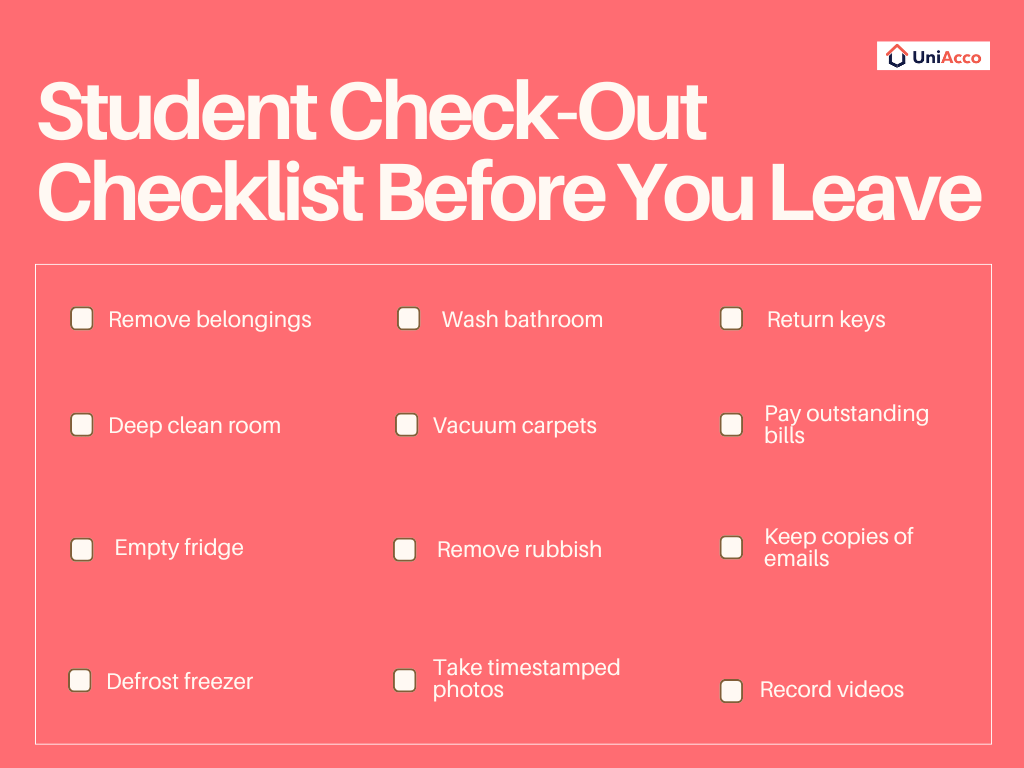
The last thing you want after returning home is an email explaining why half your tenancy deposit has disappeared. For many students, that surprise is real. The good news is that it’s often preventable. Knowing how to get your student deposit back in the UK starts long before you hand over your keys. Leave the property in good condition, keep records of everything, and understand the rules that protect tenants. A little preparation now can save weeks of stress later and help you close this chapter on a positive note.
Also Read: UK Student Accommodation Trends to Watch in 2026


 LinkedIn










0 Comments