

The United Kingdom’s healthcare landscape has undergone a significant shift, with AHPs (Allied Health Professionals) taking on responsibilities in diagnostic, triage, and independent clinical roles. In 2026, physiotherapists’ salaries in the UK are potentially set to reach their absolute peak, with top-tier Consultant Physiotherapists in NHS Band 9 earning up to £125,637 per annum under the Agenda for Change pay scale, with further earning potential through private practice, consultancy, or leadership allowances on top of this.
What’s the reason for this dynamic shift? The high remuneration is mainly driven by advanced clinical reasoning, leadership in service delivery, non-medical prescribing capabilities, and niche specialisations like MSK (Musculoskeletal) practice or elite athletic performance management. According to Indeed UK’s salary data at the time of writing, the average physiotherapist salary in the UK is approximately £44,350 per year (check Indeed’s live salary page for the most current figure, as these estimates are updated regularly). However, how much salary one earns depends on where you stand on the clinical ladder.
The baseline salary for an entry-level practitioner roughly starts at £2500 to £2800 per month, whereas senior specialists earn between £ 4,500 and £ 8,500 per month. Specialised fields like MSK and high-performance athletics pay between £45,000 and £90,000 for head physios in elite sporting bodies. In a nutshell, to reach such top brackets, clinicians must be strategic in their approach, which means pursuing a PG course, mastering advanced diagnostic skills, and navigating between the NHS and private sectors of the UK.
Is Physiotherapy a Good Career in the UK?
Yes, physiotherapy is a good career in the UK. An ageing population, rising rates of MSK conditions, and an overall increase in the push towards preventive healthcare measures have led the demand for qualified physiotherapists to record highs. NHSE prioritises primary care roles like First Contact Practitioners (FCPs) to share the load of general practitioners.
Benefits of Becoming a Physiotherapist
High Career Mobility
Physiotherapists get to explore a diverse range of work environments, from ICUs and paediatric wards to sports academies, corporate wellness programs, and private rehabilitation centres.
Direct Patient Impact
Physiotherapy offers hands-on, long-term therapeutic engagement, reducing pain and returning patients to functional independence.
Flexibility in Working Structures
From full-time permanent contracts, part-time roles, and independent practice to lucrative contracts, the profession of physiotherapy offers a diverse working structure suitable to a wide spectrum of students.
International Reciprocity
With an HCPC-recognised British physiotherapy degree, you will be able to work across borders in countries like New Zealand, Australia, Canada, and the Middle East.
Career Growth Opportunities
Before having to choose a specialisation in areas like neurology, orthopaedics, or respiratory care, clinicians can launch their careers with rotational programmes. Practitioners can also advance into operational healthcare management, independent setups, clinical academic research, or medico-legal services.
NHS vs Private Practice
NHS offers standardised Agenda for Change (AfC) pay scales which include yearly increments, NHS pension scheme, sick pay, and stability. While private practice earnings are market-driven through commissions, base salaries, and hourly rates, which have high earning potential for high-volume cases, along with corporate benefits like health insurance.
Who Should Choose Physiotherapy as a Career?
Physiotherapy is suitable for analytical, empathetic, and physically active students who have a keen interest in problem-solving. Strong interpersonal skills, a deep passion for human biomechanics and physiology, and emotional resilience are mandatory requirements to rehabilitate patients from acute trauma or chronic pain. Apart from a competitive physiotherapist salary in the UK, it offers a deep sense of professional satisfaction.
If you’ve already zeroed in on your career choice in the UK, it’s time to find a home too! Explore affordable student accommodation in the UK with fully furnished rooms and all-inclusive bills, so you can settle into student life with ease.
🔍 Explore Student Accommodation in the UKHow Much Does a Physiotherapist Earn in the UK in 2026?
Average Annual Salary
According to Talent.com UK and Reed UK, a physiotherapist in the UK can earn around £38,000 to £48,000 a year. Pay can change based on experience, job type, and location.
Average Monthly Salary
A mid-level physiotherapist can earn around £3,100 to £4,000 a month before tax.
Band 5 staff may earn around £2,500 to £2,900 a month.
Senior consultants can earn £5,500 to £7,500+ a month.
Average Hourly Salary
- Band 5: £18.40–£22.93 per hour
- Band 6: £23.03–£28.06 per hour
- Band 7/Specialist: £28.15–£32.74 per hour
- Private contractors: £35–£65+ per hour
Private pay can change based on the type of work and demand.
Median Salary
Salary trackers put the median pay at around £42,500 a year. This means that many physiotherapists earn close to this amount. Pay can be higher or lower based on experience and job type.
Factors That Affect Salary
- Experience: More years of work can lead to higher pay.
- Job type: NHS jobs follow set pay bands. Private jobs may pay more or less.
- Location: Areas such as London offer extra pay through High Cost Area Supplements (HCAS).
- Specialisation: Fields such as MSK, orthopaedic care, and sports may offer higher pay.
- Extra hours: Weekend, emergency, and on-call work can bring extra pay.
Wanna hear from an insider source about how much physiotherapists earn in the UK? Read this Reddit thread and find the answers from professionals and industry experts.
(only for UK) physiotherapist’s pay – r/physiotherapy
Physiotherapy Salary by Experience
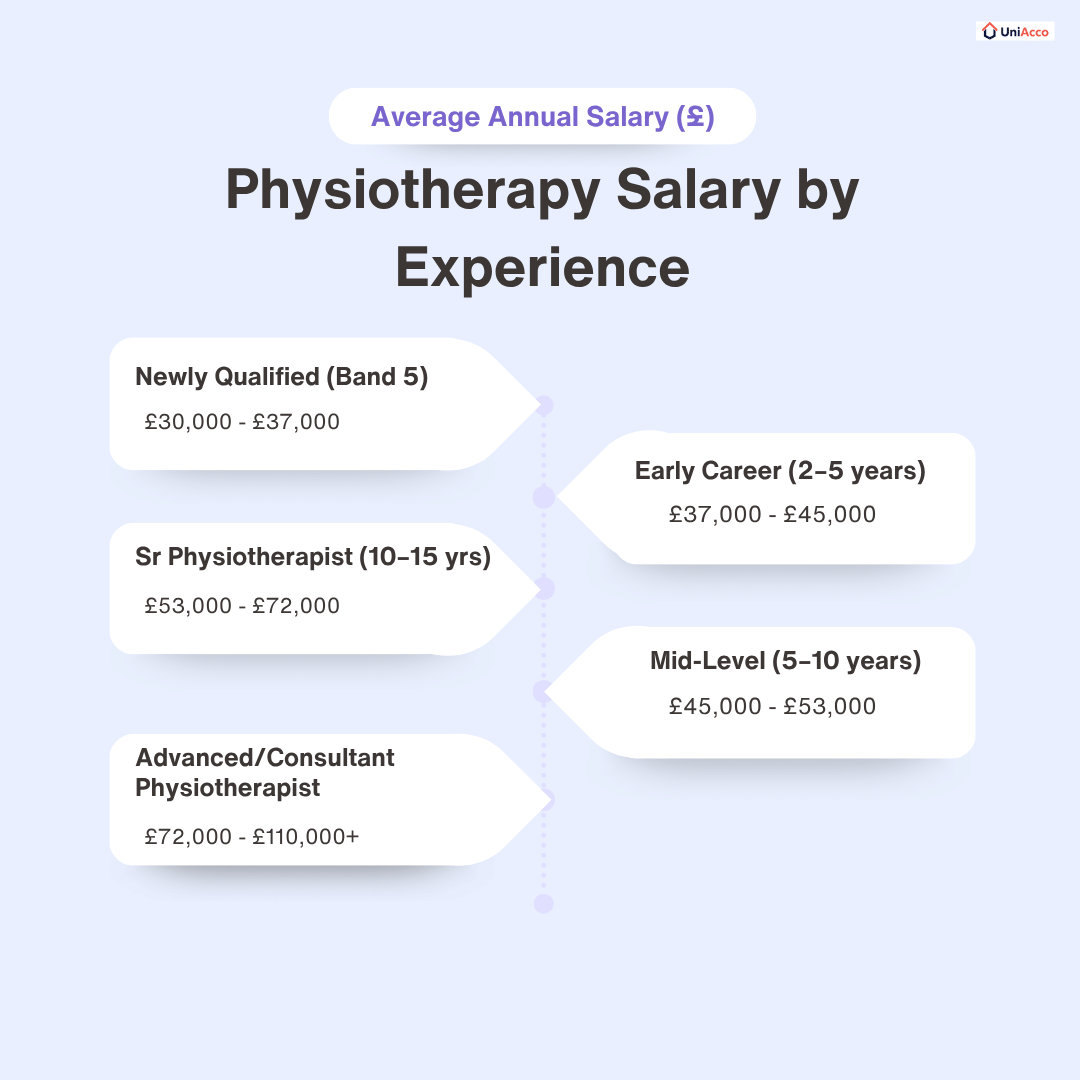
Progression of salary within the UK physiotherapy sector is directly tied to experience, demonstrated competencies, and organisational responsibilities. In the public sector, the progression of pay is governed by the NHS AfC pay system, which outlines yearly step-up points within each band. The private sector generally mirrors or sometimes even exceeds these bands to attract an experienced talent pool from the NHS trusts.
When it comes to take-home expectations, the salary of a physiotherapist in the UK per month moves from £2500 gross during early rotations up to £6000 to £9000 per month at the advanced consultant tier. However, understanding how much a physiotherapist earns in the UK requires you to look beyond starting salaries to see through the long-term earning potential.
| Experience | Average Annual Salary (£) |
| Newly Qualified (Band 5) | £30,000 – £37,000 |
| Early Career (2–5 years) | £37,000 – £45,000 |
| Mid-Level (5–10 years) | £45,000 – £53,000 |
| Senior Physiotherapist (10–15 years) | £53,000 – £72,000 |
| Advanced/Consultant Physiotherapist | £72,000 – £110,000+ |
Highest-Paying Physiotherapy Jobs & Specialisations in the UK
The salary ranges below are based on Glassdoor UK and recruitment data. Pay can change based on the employer, location, experience, and type of work. The highest figures are possible, but they are not common salaries.
The sport physiotherapist salary in the UK market is something like this — Entry-level, semi-professional roles offer £28,000–£35,000, while elite clinicians make figures above £90,000 per annum, not to forget the performance incentives!
Occupational Health Physiotherapists earn high-end corporate salaries. This is because of the direct financial ROI that they provide to businesses. Clinicians who are aiming to maximise their physiotherapist salary in the UK should target high-value specialities. These high-paying physiotherapist jobs in the UK allow practitioners to tailor their PG program in the direction of the most lucrative career paths. And if you aim for the private healthcare sector, the salary of a physiotherapist in the UK per month easily outpaces public sector benchmarks.
| Specialisation / Job Role | Average Salary (£) | Typical Employers |
| Sports Physiotherapist | £45,000 – £95,000+ | Premier Leagues, Champion Clubs, Olympics, Private Clinics. |
| Musculoskeletal (MSK) Physiotherapist | £42,000 – £62,000 | Private MSK clinics, Corporate Healthcare, NHS Outpatient Trusts. |
| Neurological Physiotherapist | £44,000 – £65,000 | Neuro-Rehab Centres, Private Neuro Practices, and Specialised Stroke Units. |
| Paediatric Physiotherapist | £40,000 – £58,000 | Community Clinics, Specialised Schools, Children’s Hospitals. |
| Orthopaedic Physiotherapist | £41,000 – £60,000 | Trauma Centres, Private Surgical Suites, Elective Orthopaedic Hospitals. |
| Respiratory Physiotherapist | £43,000 – £64,000 | ICUs, Cardiac Rehab Units, Cystic Fibrosis Centres. |
| Women’s Health/Pelvic Health Physiotherapist | £42,000 – £60,000 | Private Public Health Practices, Maternity Hospitals, Urogynaecology Clinics. |
| Geriatric Physiotherapist | £39,000 – £55,000 | Residential Care Groups, Frailty Wards. |
| Occupational Health Physiotherapist | £45,000 – £68,000 | Ergonomic Consultancies, Manufacturing Plants, Corporate Enterprises. |
| Consultant Physiotherapist | £74,300 – £110,000+ | Academic Institutions, NHS Trusts, Specialised Private Medical Groups. |
Instantly find a comfortable room that fits your salary range with UniAcco. Explore affordable student accommodation in London with fully furnished rooms and all-inclusive bills, making it easier to manage your living expenses.
🔍 Explore Student Accommodation in LondonTop Skills Required for High-Paying Physiotherapy Jobs
High-paying physiotherapy jobs need strong clinical, thinking, and people skills. Some of the key skills are:
- Patient Assessment: Checking a patient’s physical health, movement, and symptoms to find the main problem.
- Manual Therapy: Using hands-on methods, such as joint movement and soft-tissue work, to reduce pain and improve movement.
- Rehabilitation Planning: Creating exercise plans based on each patient’s needs, goals, and condition.
- Musculoskeletal Assessment: Checking bones, joints, and muscles. This can include reading X-rays, MRI scans, and ultrasound results.
- Clinical Reasoning: Using medical information to understand a patient’s condition, spot warning signs, and choose the right treatment.
- Communication & Interpersonal Skills: Explaining medical terms in simple words and working well with patients and other healthcare staff.
- Evidence-Based Practice: Using trusted medical research to choose safe and effective treatments.
- Sports Injury Management: Treating sports injuries, checking movement, and helping athletes return to sport safely.
- Leadership & Teamwork: Leading junior staff, working with doctors and surgeons, and helping train students.
- Digital Healthcare & Electronic Health Records: Using healthcare software such as SystemOne and EMIS Web to manage patient records and care.
Conclusion
If you’re thinking of choosing this profession or are looking for a job switch in the UK, the physiotherapy sector is at a major turning point. Industry hiring surveys suggest that around half of UK private physiotherapy clinics, commonly cited at 53%, are actively recruiting in 2026, reflecting sustained demand across the private sector. Mid-level clinicians are experiencing higher demand. Leaders in public healthcare are creating high-demand dynamics that will massively benefit skilled practitioners.
Knowing how much a physiotherapist earns in the UK is not just about NHS pay scales. Pay can also grow through experience, new skills, specialist roles, sports clubs, and First Contact Practitioner roles. Building the right skills can help physiotherapists earn a higher salary.


 LinkedIn










0 Comments