

Most students are familiar with shared houses, student dorms or halls of residence, and studios. However, in modern cities, you might catch yourself asking “what is a loft apartment?” As a popular student pick, loft apartments are large, open-plan homes with high ceilings and big windows that let in lots of natural light. Lofts were originally found in old industrial buildings like warehouses and factories that have been converted into homes. Now, they are popular with students and young people looking for something different. In this guide, you’ll find out about the different types of lofts, the pros and cons of living in one, what they usually cost in top university cities, and whether a loft could be a good fit for your study abroad experience.
What Is a Loft Apartment?
Lofts started appearing in New York City’s beloved SoHo in the 1960s and 1970s, with empty industrial buildings and warehouses converted into housing, initially by artists looking for affordable places to live. Nowadays, loft apartments can be custom-built in both converted industrial buildings and in newer residential developments.
A typical loft apartment is a spacious, open-plan housing unit which usually has few internal walls. Most of the kitchen, living, and dining room are combined rather than having several divided rooms, with a mezzanine often used as the sleeping area. These apartments have distinctive original architectural features such as bare brick walls, structural steel beams, concrete floors and enormous windows, along with contemporary amenities such as central heating, modern kitchens, lifts, and smart technology.
Before diving in to determine whether or not a loft apartment suits your needs, take a look at its typical attributes.
Loft Apartment at a Glance
| What is it | A large, open-plan studio apartment, usually repurposed from old factories, warehouses, or other industrial structures. |
| Layout | Open-plan with minimal interior walls |
| Ceiling Height | Usually 10–16 ft (3–5 m) |
| Bedrooms | Open sleeping area or mezzanine; some have enclosed bedrooms |
| Windows | Large floor-to-ceiling or warehouse-style windows |
| Living Space | Spacious with flexible layouts |
| Avg Cost | UK USACanada Australia |
| Best For | Students, young professionals, creatives, and remote workers |
Salient Features of a Loft Apartment
- Open Floor Plan
Almost all loft apartments have a single large living room instead of a cluster of separate rooms. This ensures a free-flowing space that occupants can furnish and adapt according to their tastes and preferences by adding partitions or furniture.
- High Ceilings
Lofts usually have significantly high ceilings that give them the feel of a much larger space and ensure good ventilation.
- Large Windows
These units have large windows that bring more sunlight into the loft and create a brighter atmosphere.
- Industrial-Inspired Design
The design of loft apartments often incorporates the raw building elements such as exposed brick walls, concrete, steel beams, and wooden floors, which provide them a rustic industrial look.
- Mezzanine Sleeping Area
Many lofts have a small area used as sleeping quarters, kept elevated above the main floor to define the space without blocking natural light.
- Flexible Living Space
With fewer walls than in a typical apartment, people have flexibility in designing furniture in their loft, whether for study, dining, or a work area.
Looking for affordable student accommodation? Explore verified student housing with UniAcco and find a fully furnished home that matches your budget, lifestyle, and university preferences.
🔍 Explore Affordable Student HousingTypes of Loft Apartments
Not all loft apartments are created equal. Based on their architecture and function, most lofts are classified into three categories.
- Hard Loft
Hard lofts are essentially existing, legitimate industrial buildings (factories, warehouses, etc.) that have been transformed into condos, without compromising any of their architectural features. They offer the true warehouse feel you’ve probably come to love, with their industrial design, vast interiors, and a sense of history. Hard lofts appeal to people with a specific taste for urban aesthetics and design. Some common features include:
- Original industrial warehouse or factory buildings
- Exposed pipes and ductwork
- Brick walls
- High, exposed ceilings (beams and steel framing)
- Industrial-style factory windows
- Soft Loft
Soft lofts mimic the look and feel of a hard loft, but they are a newer style of apartments that weren’t built in actual factories or warehouses. They offer an open floor plan and the airiness of lofts while taking advantage of modern construction techniques and building features. Soft lofts are perfect for renters who love the industrial loft look but also want the benefits of updated accommodations and better energy efficiency. Some of the features of a soft loft are:
- Modern construction
- High ceilings
- Big windows
- Modern kitchen and bathroom design
- Better insulated walls and windows
- Live-Work Loft
Live-work lofts are a new type of condo or apartment layout built for combining home and office space. Their spacious floor plans are perfect for setting up a home office, studio, or any creative workspace. They are popular among people working remotely, freelancers, and individuals who run their own business from home. A live-work loft is well-suited for:
- Graphic Designers
- Freelancers
- Architects
- Artists
- Content creators
- Remote workers
- Small Business Owners
Loft Apartment vs Studio Apartment
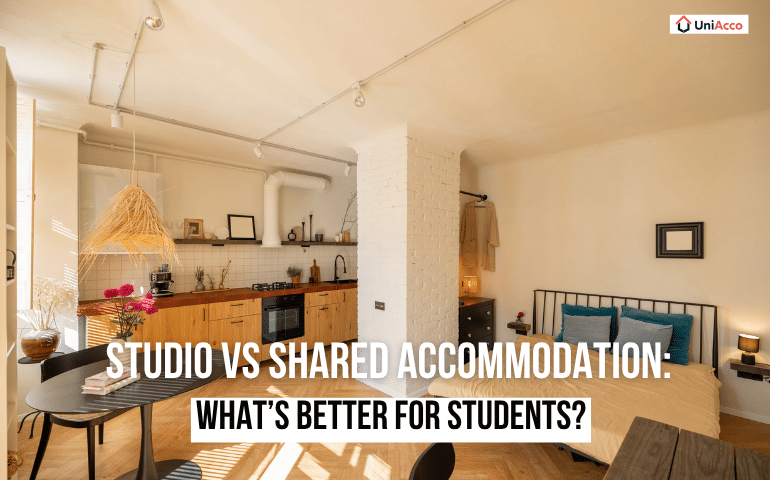
Studios and lofts are among the top picks for students seeking new residences. While they have a similar feel, studios and lofts can vary in terms of space, design, cost, and function. Knowing the basic distinctions between them may help you select the one that suits you best.
| Feature | Loft Apartment | Studio Apartment |
| Definition | A large open-plan apartment which is usually a converted old warehouse or factory with high ceilings and no or few internal walls. | A self-contained flat with only a bathroom in an enclosed section; the kitchen, bedroom, and sitting room are all open. |
| Size | Generally larger | Usually compact |
| Ceiling Height | High ceilings | Standard ceilings |
| Layout | Open with expansive living area | Single-room layout |
| Windows | Large warehouse-style windows | Standard apartment windows |
| Cost | Usually more expensive | More affordable |
| Storage | Moderate; depends on design | Often includes built-in storage |
Loft Apartment vs One-Bedroom Apartment
Considering a loft versus a one-bedroom apartment, you’ll need to decide where your priorities will fall in the realms of privacy, space and living experience. Below is an exploration of both in relation to how the two are uniquely designed:
| Feature | Loft Apartment | One-Bedroom Apartment |
| Definition | A large open-plan apartment which is usually a converted old warehouse or factory with high ceilings and no or few internal walls. | A one-bedroom apartment is simply an apartment with one separate, enclosed bedroom plus living, kitchen, and bathroom space. |
| Privacy | Limited due to open layout | Greater privacy with separate rooms |
| Walls | Few interior walls | Fully enclosed bedroom |
| Space | Larger open area | Defined rooms with less open space |
| Ideal For | Individuals, couples, creatives | Students seeking privacy or families |
Advantages of Living in a Loft Apartment for Students
Whether you are preparing to emigrate for education or simply looking for better living arrangements, you’ll want something that enhances both your academic and personal lives. Below are just a few reasons why loft-style apartments could contribute to your day-to-day life as a student.
Comfortable Study Environment
The bright, open layout creates a calm and productive space for studying. Large windows and spacious interiors can also make long study sessions more comfortable.
Modern Aesthetic
From exposed brickwork and concrete finishes to industrial-style steel beams, many loft apartments have a sleek, contemporary look that many students and young professionals will find appealing.
Spacious Living
Whether it’s space for homework, chilling out, or simply somewhere to keep all your worldly goods, an extra space such as a loft can definitely come in very useful and, in general, is much bigger than standard student accommodations.
Ideal for Sharing with Roommates
Many loft apartments are suitable for sharing with roommates, subject to the tenancy agreement. Splitting the rent can help make this type of accommodation more affordable.
Modern Amenities
You’ll likely find that contemporary loft apartments will offer you a wide variety of convenient features including fully equipped kitchens, wireless internet connectivity, keyed security access and in-home laundry.
Popular in Major Student Cities
Loft apartments are readily available for study in trendy student locations, such as London, New York City, Toronto, Melbourne and Manchester – they all put you within an easy commuting distance of your university, transport links and all city centre amenities.
In spite of these advantages, there are some considerations you should be aware of if you’re going to consider a loft apartment. Prior to committing to renting one, know about some of the potential downsides of living in this type of apartment when it comes to storage space, living space, privacy, and cost.
Disadvantages of Living in a Loft Apartment
Less Private
As they lack internal walls, open-plan layouts don’t separate living, sleeping and studying areas, so you won’t have a whole lot of private space.
High Utility Bills
A large apartment with high ceilings tends to consume more energy, resulting in much higher heating and electricity bills.
Sound travels more freely
In the absence of numerous walls to soak up sound, it will be much easier to hear appliance noises, conversations, or what your housemates are up to from anywhere within the flat.
Limited Storage
A lot of lofts prioritise open space over storage, so you might need to invest in extra shelves or a wardrobe to meet your needs.
Expensive
Lofts tend to be located in prime areas and in city centres and, as a result, are likely to be pricier than standard apartments or studios.
Whether you prefer a loft apartment or another type of student housing, UniAcco makes it easy to find verified and affordable accommodation that suits your budget, lifestyle, and study needs.
🔍 Explore Student AccommodationAverage Cost of Loft Apartments
While a loft apartment is the dream, the price you’ll pay will differ from country to country, city to city, neighbourhood to neighbourhood. Here is a rough idea of how the average monthly rent can compare across a few well-liked study abroad destinations.
| Country | Average Monthly Rent |
| UK | £1,200–£2,800 |
| USA | US$1,800–US$4,000 |
| Canada | CA$1,800–CA$3,500 |
| Australia | AU$1,300–3,300 |
Best Located Loft Apartments for Students
Loft apartments are especially popular in cities with thriving creative industries and regenerated industrial districts. Many leading study abroad destinations offer a wide range of loft-style accommodation close to universities and public transport.
London
From converted warehouse apartments to contemporary lofts in Shoreditch, Hackney or Bethnal Green, these lively districts offer amazing Tube and Overground links that appeal to students at institutions such as UCL, LSE, King’s College London and Queen Mary University of London. The areas burst with trendy bars, indie cafes and artsy workshops, and house some of the most expensive rental markets in the UK.
Manchester
A blend of older converted warehouse spaces alongside new builds and lofts in the Northern Quarter and Ancoats provides a buzzing, well-connected spot that’s a short stroll from the University of Manchester and Manchester Metropolitan University. It’s no surprise they are a favourite with city-living students who won’t be reliant on their bus pass day-to-day.
New York
Home of the first warehouse converted into modern loft apartments, New York City presents legendary examples in SoHo, Tribeca, DUMBO and select areas of Brooklyn. Though SoHo and Tribeca will generally run you up a higher tab, Brooklyn loft life is less expensive but still within easy subway distance for Columbia, NYU and other universities.
Boston
Industrial loft apartments in the Seaport District, Fort Point and South Boston. Boston’s tech hub innovation district houses industrial conversions that consist of large apartments with a New York loft feel. Many students attend nearby universities including Northeastern University, Boston University and Harvard University, using the MBTA to travel to the neighbourhood.
Toronto
Authentic warehouse lofts, as well as modern soft-lofts, can be found throughout the Distillery District, King West, and downtown Toronto. For students attending the University of Toronto, Toronto Metropolitan University, or OCAD University, an easy commute by public transit is possible, along with many opportunities for internships in both the financial and tech industries.
Melbourne
The outer northern fringes of Melbourne’s central business district, particularly in such suburbs as Fitzroy, Collingwood, and Richmond, are home to converted heritage industrial warehouses and industrial loft apartments. They also host the University of Melbourne and RMIT University, and the districts are alive with creative industries, tram services, and various coffee shops and coworking venues favoured by students.
Sydney
To live within easy reach of Sydney University, UTS, and UNSW, loft residents tend to gravitate towards Surry Hills, Alexandria, Chippendale, and Redfern-former warehouses now remodelled into contemporary residences. In these inner-city enclaves you’ll find creative culture, a dining scene, plus stable rail, as well as light rail links to university hubs.
Not sure if a loft apartment is the right fit? Explore affordable student accommodation abroad with UniAcco and compare verified housing options to find the perfect place for your lifestyle and budget.
🔍 Explore Student AccommodationHow to Find a Loft Apartment Abroad?
Before renting a loft apartment, you should do some homework to plan for it. Use the plan below to determine options, minimise expenses, and find accommodations that are well-suited to your requirements.
1. Determine your budget for your accommodation
You need to identify what you can afford each month for your rent, bills, travel, and anything else associated with it.
2. Determine your desired destination
It is essential to search for areas that are convenient to the university you will attend, well served by public transportation, and are within close reach of amenities.
3. Employ well-established student accommodation
Websites: Browse trustworthy websites, university housing providers, and approved rental search platforms.
4. Compare costs of rent and services and compare apartments.
Take note of furnishings, Internet facilities, laundry facilities, secure access, car parking facilities, and common areas.
5. Take virtual and physical visits to apartments and homes.
A personal viewing will allow you to assess lighting, space, condition, and storage, as well as confirm that it is as described online.
6. Read your tenancy agreement and understand all of the small print
Understand the clauses concerning your deposit, maintenance responsibilities, notice period required for vacating the property, and when the tenancy agreement can be terminated.
Common Mistakes Students Make When Renting a Loft
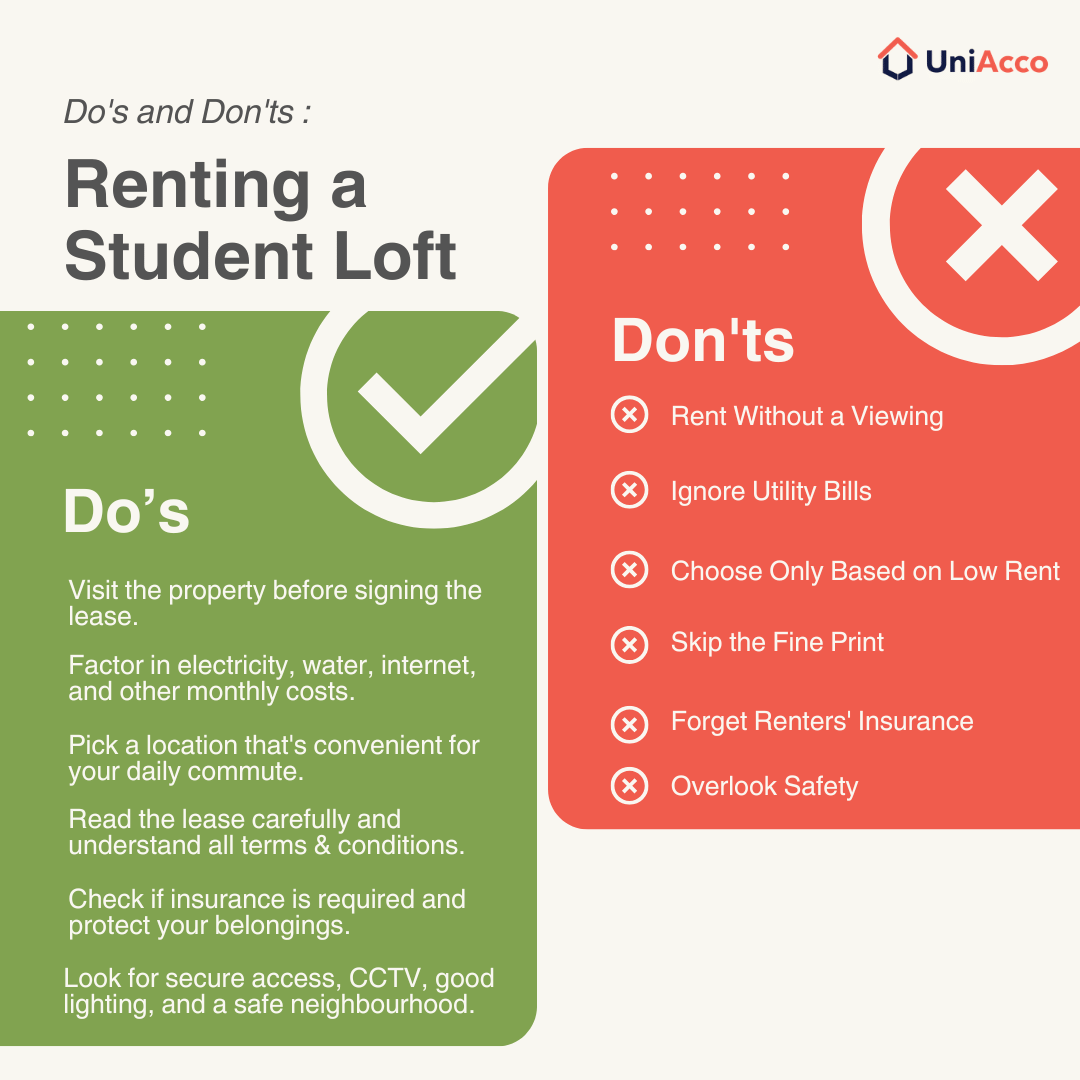
Many students throw themselves into renting without considering all of the nitty-gritties. Avoid these to keep money in your pocket, stress levels down, and to secure the loft apartment that’s best for you.
- Renting Without Viewing the Property
Don’t just choose an apartment based on internet pictures or listings. Arrange a virtual or physical tour of the apartment before you sign a lease to ensure the apartment is what you want.
- Ignoring Utility Costs
The monthly cost of rent might not cover things like electricity, heat, water and internet. It’s a good idea to account for these expenses.
- Choosing a Location Far from Campus
You might be able to rent cheaper the further out you go, but do consider if this commute will be long and cost you more on transport to get into university daily.
- Not Understanding Lease Terms
Read the tenancy agreement thoroughly to find out information about the length of tenancy, security deposit that you are liable to pay, who will be in charge of maintenance, and rules regarding guests or sub-letting.
Also Read: How to Spot & Avoid Student Accommodation Scams in the UK
- Forgetting Renters’ Insurance
In certain locations, the landlord or university may require you to have a renters’ insurance policy to cover your possessions against theft, fire or accidental damage. Make sure you know if this is the case.
- Overlooking Security Features
Always evaluate the security aspects of the property before renting. Ensure that the building and the neighbourhood have good security facilities such as secure access control, CCTV, illumination at night, and established building management.
Conclusion
If you want something a bit different from the usual student apartment, a student loft might be a good choice. With high ceilings, open layouts, lots of natural light, and modern décor, lofts offer a great space to study, work from home, or relax throughout the day. While they often cost more than traditional student apartments and may offer less privacy, many students find the extra space worth the higher rent. While on your house hunt, be sure to compare rent and utility costs, check the interior and location, and read the lease carefully so you know it fits your budget and lifestyle.
Also Read: How Student Accommodation Design in the UK is Evolving for Gen Z








0 Comments