
Ireland’s world-class universities, welcoming culture and stunning landscapes make it a favourite destination for students across the globe.
Ireland offers globally ranked universities, a safe English-speaking environment, and strong job prospects with top global companies. With a vibrant student life, wide course options, and clear post-study pathways like work visas and PR, it’s a smart choice for Indian students looking for quality education in Europe.
If you’re exploring universities in Ireland without application fees, this guide offers a clear overview of your available options, associated costs, and key initiatives supporting international applicants.
List of Universities in Ireland Without Application Fees & Their Ranking:
| University | QS World Ranking (2026) |
| Trinity College Dublin | 75 |
| University College Dublin | 118 |
| University College Cork | 246 |
| University of Galway | 284 |
| University of Limerick | 401 |
| Dublin City University | 410 |
| Maynooth University | 771 |
| Technological University Dublin | 781 |
Many universities in Ireland without application fees aim to support international students by waiving charges for select programmes or applicant groups, promoting accessibility and inclusion.
- Trinity College Dublin
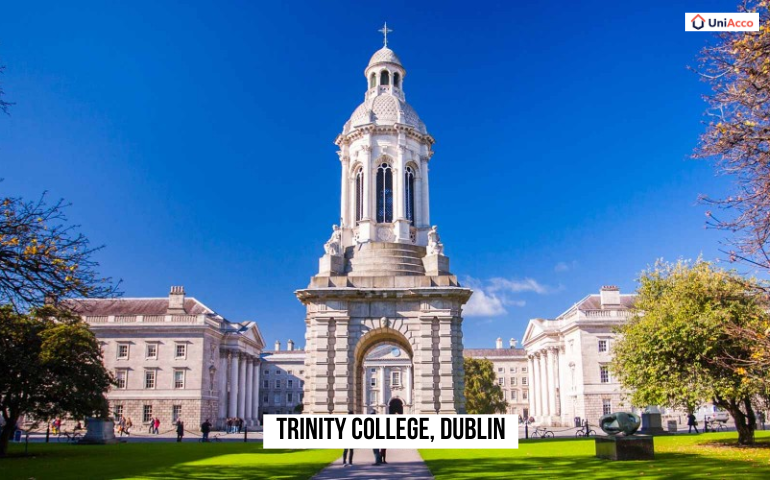
Trinity College Dublin is Ireland’s oldest university, founded in 1592, and consistently ranked among Europe’s top research institutions. Located in the heart of Dublin, it offers world-class facilities and a vibrant campus life to over 21,500 students from around the globe. Its academic reputation is reinforced by a diverse curriculum that integrates traditional scholarship with innovative research. Trinity’s faculties in arts, sciences, engineering, business, and health sciences are internationally recognised. The college prides itself on fostering critical thinking and leadership skills, producing notable alumni in literature, science, and politics.
QS World University Rankings 2026: 75
Top Programmes: Computer Science, Business Studies, Law, Medicine, Engineering, Literature
Fees: Approx. €6,100 – €55,000 per year for international students, depending on programme level
- University College Dublin (UCD)

UCD is Ireland’s largest university with a student body of over 39,000, including 11,100 international students from more than 150 countries. Founded in 1854, it is situated on a sprawling green campus in Dublin and is renowned for its emphasis on research, employability, and global engagement. UCD’s diverse course offerings, international partnerships, and state-of-the-art facilities support learning across six major colleges. Its graduates are in high demand worldwide, and the university is ranked in the top 1% globally for higher education.
QS World University Rankings 2026: 118
Top Programmes: Business, Engineering, Health Sciences, Social Sciences, Computer Science
Fees: Approx. €10,000 – €35,000 per year for international students, depending on course
- University College Cork (UCC)

Founded in 1845, UCC is a world-class university with a reputation for teaching, research, and sustainability leadership. Home to around 24,000 students, including 4,000 international students from over 130 countries, the campus is located in Ireland’s second city, Cork. UCC is noted for its strong research output, graduate employability (96% for undergraduates and postgraduates), and a dynamic campus set in a lively and accessible city. It offers over 130 degree and professional programmes with a focus on both academic rigour and practical skills development.
QS World University Rankings 2026: 246
Top Programmes: Environmental Sciences, Business, Computer Science, Medicine, Arts and Humanities
Fees: €13,000 – €20,000 (undergraduate first year, varies by programme)
- University of Galway

As one of Ireland’s oldest and most respected universities, the University of Galway (formerly known as NUI Galway) is renowned for its research-led teaching and strong industry connections. Established in 1845, it serves over 19,000 students, including more than 3,300 international learners. Its campus sits beside the River Corrib in Galway, offering a unique coastal and cultural environment. The university leads in fields such as medical technology, sustainability, and creative arts. Notably, it holds Ireland’s highest graduate employability rate at 98%.
QS World University Rankings 2026: 284
Top Programmes: Biomedical Science, Engineering, Law, Business, Marine Sciences
Fees: Varies by programme and level, typical range €13,000 – €23,000
- Dublin City University (DCU)

DCU, established in 1975, is renowned for its industry connections, innovation, and student-focused environment. With over 20,000 students representing 122 countries, it provides a global campus experience. DCU is ranked among the world’s best young universities and boasts a strong record for graduate employment (92% within six months). The university offers modern facilities across multiple Dublin campuses and a curriculum that emphasises practical skills and enterprise.
QS World University Rankings 2026: 410
Top Programmes: Data Science, Engineering, Business, Education, Communications
Fees: €13,000 – €20,000 annually for international students, depending on course
- University of Limerick

The University of Limerick stands out for its innovative approach to education, strong links to the business and creative sectors, and a welcoming environment for over 18,000 students (including 3,300+ international students). Located along the Shannon River, its modern campus is at the heart of Ireland’s “Wild Atlantic Gateway.” Known for its co-op placement programmes, the university integrates real-world experience with academic study and is highly regarded for graduate employability.
QS World University Rankings 2026: 401
Top Programmes: Arts, Business, Engineering, Health Sciences, Sports Science
Fees: Undergraduate: approx. €13,000 – €23,000; Postgraduate: approx. €6,000 – €22,000
- Maynooth University

Maynooth University, situated 25 kilometres from Dublin, combines over 225 years of academic tradition with a modern, research-led focus. With nearly 13,000 students from 20+ countries, it is widely recognised for its diverse humanities, social sciences, science, and high-impact research. The university is committed to inclusion, sustainability, and strong community engagement, offering a close-knit learning environment.
QS World University Rankings: 771-780
Top Programmes: Computer Science, Business, Social Sciences, Teacher Education, Mathematics
Fees: €4,750 – €25,000 per year for international students, depending on course
- Technological University Dublin (TU Dublin)

TU Dublin is Ireland’s first technological university and one of the country’s largest, with 28,500+ students from more than 100 countries. Formed from the merger of three institutes, TU Dublin is an industry-focused institution that offers a broad spectrum of over 200 programmes across STEM, Business, Arts, Creative Media, Hospitality, and Social Sciences. The university is committed to innovation and sustainability, providing excellent career preparation through strong industry ties and placement opportunities. Campuses are located across Dublin, offering both urban convenience and vibrant student life.
QS World University Rankings: 781-790
Top Programmes: Engineering, Business, Computer Science, Culinary Arts, Creative Media
Fees: Undergraduate: €11,650 – €21,886; Graduate: €4,500 – €21,750 per year for international students.
Understanding the Free Fees Initiative in Ireland
The Free Fees Initiative is a significant government-backed programme designed to make higher education more accessible and affordable for eligible students from the European Union (EU) and European Economic Area (EEA). This scheme primarily supports undergraduate students enrolling in publicly funded institutions across Ireland. Here’s how it works:
- Tuition Fee Coverage:
Under this initiative, the Irish government covers the standard tuition fees for eligible EU/EEA undergraduates. This means students do not pay the full tuition fee amount, substantially reducing upfront education costs.
- Student Contribution Charge:
While tuition fees are covered, students are required to pay a student contribution charge, which supports student union services, exams, and registration. As of 2025, this charge can be up to €3,000 per academic year.
For many students, this fee is considerably less than full tuition fees and can often be managed through part-time work or budgeting.
- Means-Tested Grants:
Recognising disparities in household incomes, the government offers means-tested maintenance grants to eligible students from lower-income families. These grants may cover part or all of the student contribution charge, reducing financial burdens further.
Applying early for these grants is essential, and students usually provide family income documentation to qualify.
Who Is Eligible for the Free Fees Initiative?
This scheme primarily supports EU/EEA citizens who meet specific residency and course requirements. It applies to students pursuing their first undergraduate degree at a recognised institution, as well as certain teacher training and apprenticeship programmes.
Non-EU international students are not eligible for this initiative and must pay full tuition fees, which differ by university and course. However, many universities in Ireland offer scholarships, fee waivers, and reduced or no application fees to ease financial barriers, particularly beneficial for those exploring universities in Ireland without application fees.
Tuition Fees in Irish Universities
Tuition fees in Ireland depend on your course, level, and citizenship:
- Undergraduate degrees: €10,000 – €30,000 per year
- Postgraduate degrees: €10,000 – €35,000 per year
- Medical and specialist programmes: €30,000 – €55,000 per year
Public universities typically set higher fees for non-EU international students. However, some Ireland universities without application fee also offer lower tuition costs or scholarships.
Also Read: Cost Of Studying In Ireland: 2025 Updated Guide
Cost of Living in Ireland
Planning your finances is key to enjoying your time in Ireland stress-free. While the country offers an excellent quality of life, it’s also among the pricier European destinations. Here’s a quick guide to what you can expect:
- Estimated Annual Expenses
International students typically spend between €7,000 and €12,000 per year, depending on the city and lifestyle.
- Monthly Budget Range
Your monthly cost of living could range from €800 to €1,500:
- Dublin: €1,100 – €1,800 (highest costs, especially rent)
- Cork: €860 – €1,400 (moderate and student-friendly)
- Galway & Smaller Cities: €800 – €1,100 (more affordable, quieter pace)
- Typical Monthly Expenses Breakdown
| Category | Estimated Cost (€) | What should you know? |
| Accommodation | 300 – 1,600+ | Shared housing is more affordable; Dublin studios cost more. |
| Food & Groceries | 200 – 300 | Cooking at home saves money; eating out occasionally is manageable. |
| Utilities & Internet | 60 – 110 | Covers electricity, heating, and Wi-Fi. |
| Transport | 50 – 135 | Student Leap Card offers major travel discounts. |
| Study Materials | 50 – 70 | Includes textbooks and stationery. |
| Health Insurance | 45 – 90 | Required for non-EU students. |
| Leisure & Misc. | 60 – 150 | Covers gym, outings, mobile plans, and more. |
If you’re seeking universities in Ireland without application fees, always confirm through the university’s official site or by contacting their admissions office before applying, as policies can change and may differ by course or applicant category.
Ireland remains an outstanding choice for international students seeking quality education, rich cultural experiences, and strong career prospects. With a growing number of universities in Ireland without application fees, the barrier to entry is lowering, making it more accessible to students worldwide.
Ready to take the next step? Explore your student housing options in Ireland with UniAcco for finding affordable, safe, and student-friendly accommodation close to your chosen university.
Also Read: Ireland Student Visa Requirements
FAQs
Q1. Which universities in Ireland do not charge application fees for international students?
Answer: Several universities, including Maynooth University and Technological University Dublin, offer no application fee policies. Others like Trinity College Dublin and University College Dublin waive fees for select programmes or applicants.
Q2. What is the average student contribution charge under the Free Fees Initiative?
Answer: Eligible EU/EEA students pay a contribution charge up to €3,000 per year, which covers registration and student services, separate from tuition fees.
Q3. Are non-EU international students eligible for the Free Fees Initiative?
Answer: No, non-EU international students are not eligible for this government scheme but can benefit from scholarships and application fee waivers offered by various universities.
Q4. How much does it typically cost to live in Ireland as a student?
Answer: Monthly living expenses range from approximately €800 in smaller cities like Galway to €1,800 in Dublin. Costs include accommodation, food, transport, and leisure.
Q5. How can I waive application fees when applying to multiple Irish universities?
Answer: Check each university’s official website for eligibility criteria. Common waiver reasons include financial hardship, scholarship consideration, or applying through official agents like IDP who may offer fee waivers.


 LinkedIn










0 Comments