
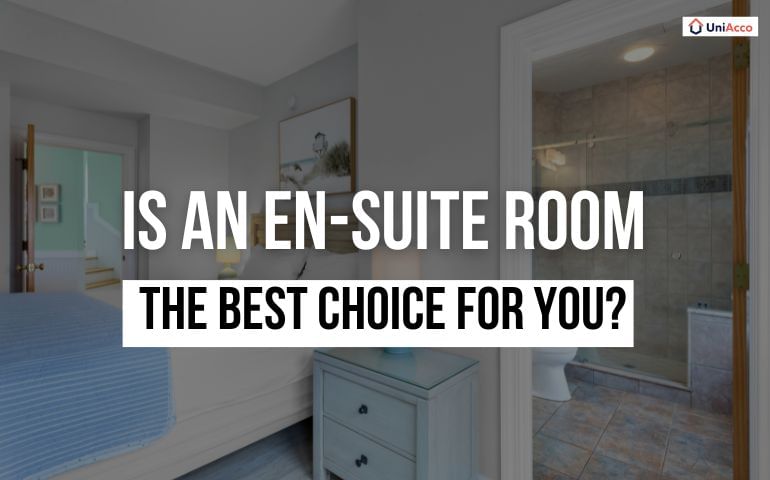
Starting life at a new university is exciting, but finding the right student accommodation can feel overwhelming. Should you share a bathroom? How much privacy do you really need? Among the many student housing options, an ensuite room often stands out. However, before you decide, it’s helpful to understand the meaning of an ensuite, what sets it apart from other rooms, and why many students abroad prefer this option.
Understanding En-suite Rooms
An en-suite room is one of the most popular choices in student accommodation abroad. At its core, Ensuite consists of a private bedroom with an attached bathroom, often paired with shared kitchens or common areas.
Many student accommodations abroad now offer ensuite rooms as a standard choice because they combine comfort, convenience, and affordability. They are especially popular among international students who want the privacy of a personal bathroom while still enjoying the social aspects of communal kitchens or common areas.
Key Advantages of an Ensuite Room for Student Accommodation

When comparing student housing abroad, many students ask, “What is an ensuite and why should I choose it?” The benefits go beyond just having your own bathroom. Here are the main reasons international students prefer ensuite rooms:
- Personal Privacy and Comfort
Moving to a new country means adapting to different routines, cultures, and people. Having an ensuite room ensures you have a private bathroom connected to your bedroom, making daily life easier. You don’t need to share with unfamiliar housemates or adjust to their schedules. For many students, this privacy creates a sense of security and comfort, which is especially valuable during the first few months abroad.
- Better Hygiene and Maintenance
Shared bathrooms in student housing can lead to problems with cleanliness since everyone’s habits differ. With an ensuite, you set your own hygiene standards. You know who’s using the space, you decide how often it’s cleaned, and you avoid issues like unwashed sinks or messy showers. For international students, this control over personal space adds peace of mind in a new environment.
- Improved Focus on Studies
Time management becomes critical when balancing classes, assignments, and part-time jobs abroad. In a shared bathroom setup, waiting for others or dealing with last-minute delays can eat into your routine. An ensuite eliminates these issues. You can get ready on your own schedule, stay organised, and create a consistent environment that supports better focus on academics.
- Balanced Independence and Social Life
An ensuite room is often described as the middle ground between a studio and a shared room. While a studio offers complete independence, it can sometimes feel isolating. Shared rooms, on the other hand, may lack privacy. Ensuite rooms give you privacy when you need it, but still allow you to socialise with peers in shared kitchens or lounges. This balance helps international students adapt socially without compromising personal space.
- Ideal for International Living
Studying abroad often comes with cultural shifts and lifestyle changes. An ensuite provides a familiar comfort, your own bathroom, which can ease this transition. Whether you’re managing long study hours, adjusting to new food habits, or just needing a quiet space to reset, an ensuite room supports your overall well-being.
Standard Facilities in Ensuite Rooms for Students Abroad
The facilities provided in an ensuite room can vary depending on the accommodation provider, but most ensuite rooms offer a mix of comfort, privacy, and practicality.
| Facility | What’s Included? | Why is it Useful for Students Abroad? |
| Private Attached Bathroom | Bathroom connected directly to your bedroom with shower, toilet, sink, and mirror. | Ensures privacy, hygiene, and no waiting for shared facilities. |
| Fully Furnished Bedroom | Bed, study desk, chair, wardrobe, shelves, and basic storage. | Lets you settle in quickly without buying furniture abroad. |
| Shared Kitchen & Dining | Access to communal kitchens with cooking appliances, fridge, and storage. | Helps save on food costs while socialising with flatmates. |
| Utilities Included | Water, electricity, and heating often bundled into the rent. | Simplifies budgeting by removing the stress of separate bills. |
| High-Speed Internet | Wi-Fi or wired internet provided within the rent. | Reliable connectivity for online classes, research, and family calls. |
| Laundry Facilities | On-site washing machines and dryers (shared within the building). | Convenient and cost-effective compared to finding external laundrettes. |
| Security & Maintenance | CCTV, secure entry, and on-site staff support. | Offers safety and peace of mind in a new country. |
How to Find the Right Ensuite Room Abroad?
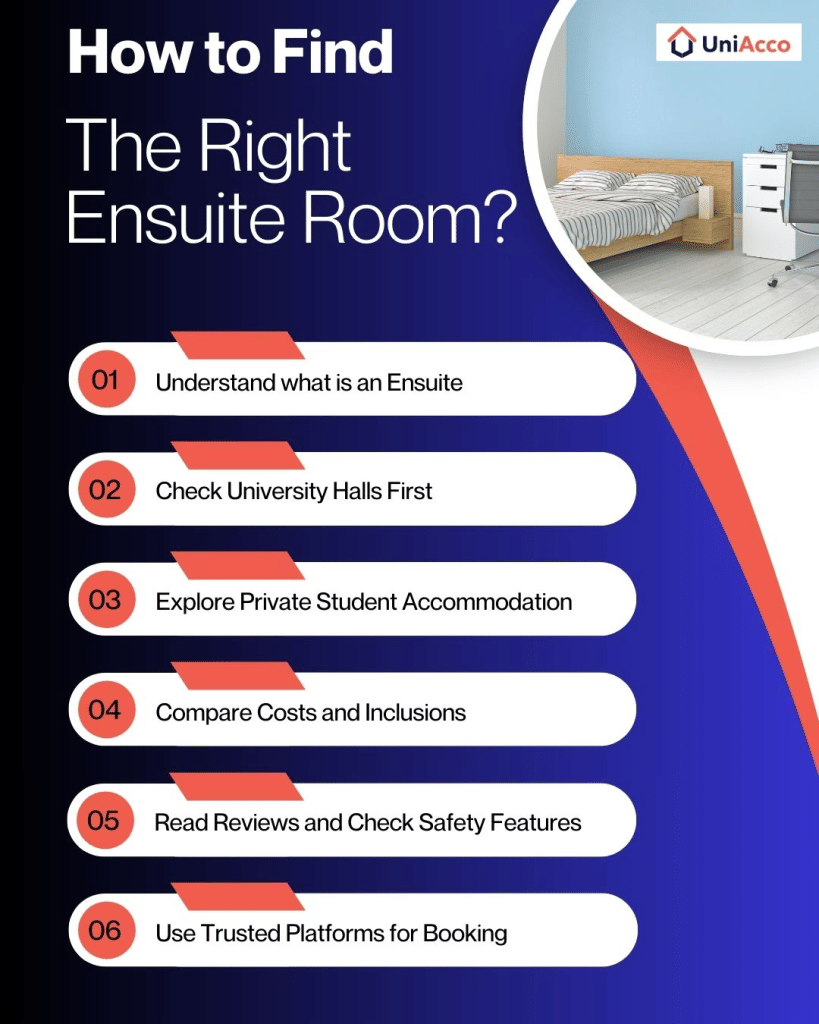
Looking for the right student accommodation abroad can feel overwhelming, especially if you’re unsure what an ensuite room includes or where to start. Listed below are some practical steps to make the process easier:
- Understand the Ensuite Meaning Clearly
Before starting your hunt, make sure you know exactly what an ensuite room is. It’s a private bedroom with an attached bathroom, usually combined with access to a shared kitchen or living area. This definition matters because many housing providers use different terms, and being clear about the ensuite meaning prevents you from ending up with a shared bathroom setup when you expected privacy.
- Check University Halls First
Most universities abroad offer en-suite rooms in their halls of residence. These are usually located close to the main campus, which saves travel time and transport costs. They also give you the benefit of being surrounded by fellow students, making it easier to build a community right from the start. For first-year international students, this can be a safe and convenient option.
- Explore Private Student Accommodation
If you want more choice in terms of facilities, locations, and price ranges, private student housing providers often offer a wider selection of ensuite rooms. These properties may come with added features such as gyms, study lounges, cinema rooms, and round-the-clock security. They also tend to be spread across popular student neighbourhoods, giving you flexibility in choosing whether you want to live closer to campus or the city centre.
- Compare Costs and Inclusions
Rent for ensuite rooms varies significantly depending on the city, type of property, and the amenities included. Some listings may appear affordable at first glance, but exclude utilities like electricity, heating, or internet. Others may offer all-inclusive packages, which make budgeting much easier. Before committing, calculate the actual monthly expense by adding up all potential costs, not just the rent.
- Read Reviews and Check Safety Features
Moving abroad means you’ll be living in an unfamiliar environment, so safety and reliability are critical. Look for student feedback on accommodation platforms, Google reviews, or university forums. Pay attention to details about maintenance response times, neighbourhood safety, and the overall quality of the property. Also, confirm the presence of essential security measures like CCTV, secure entry systems, and on-site staff.
- Use Trusted Platforms for Booking
Searching for housing on random sites or social media groups can be risky, especially with rising scams targeting international students. Instead, rely on trusted student housing platforms. UniAcco, for instance, lists verified ensuite rooms in top student cities worldwide. With transparent pricing, real-time availability, and personalised support, it helps students find safe and suitable options without unnecessary stress.
Other Student Room Types You Can Consider Abroad
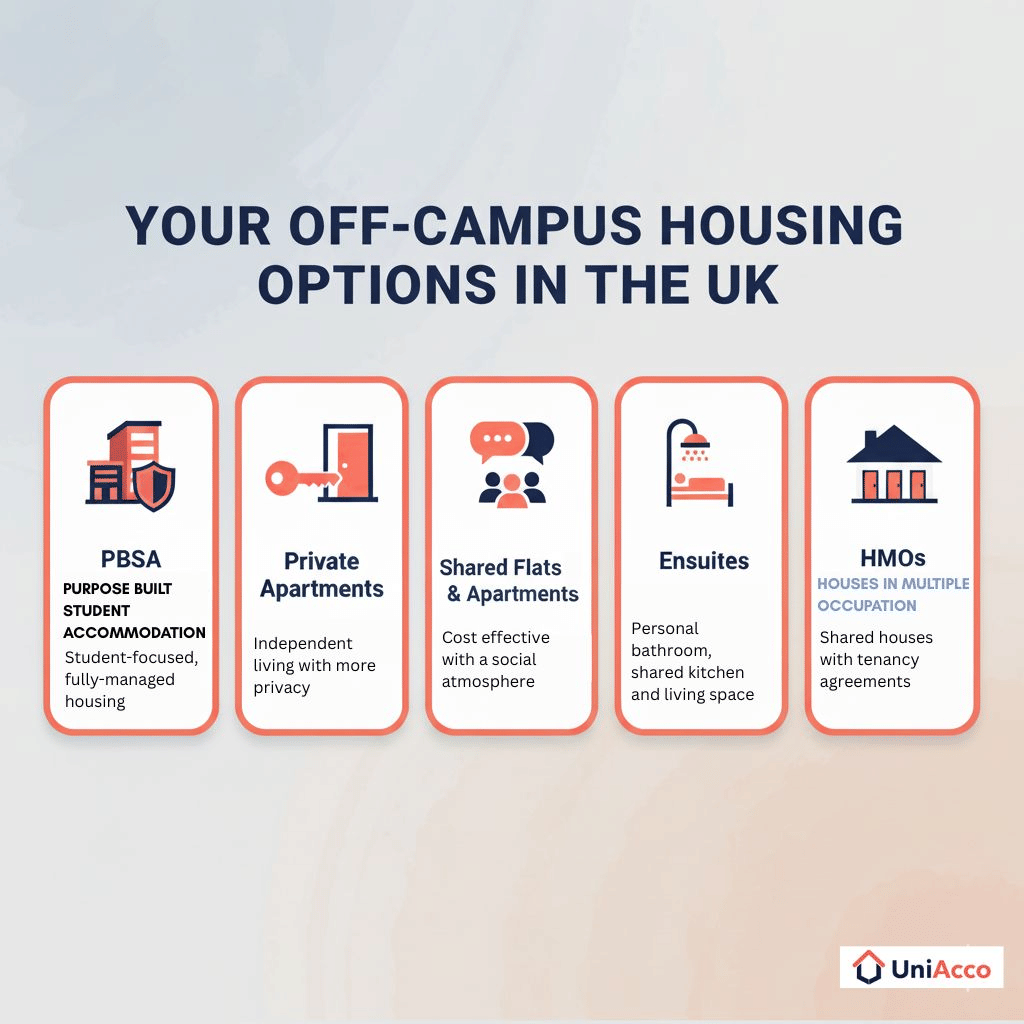
1. Private Student Housing
Private student housing is purpose-built student accommodation designed exclusively for university students. These properties combine convenience, safety, and a strong sense of community, making them highly popular among international students.
Key Features
- Purpose-built with study areas, gyms, and common lounges.
- Managed by professional housing companies for reliable service.
- Options include en-suite rooms, studios, and shared flats.
Pros and Cons
| Pros | Cons |
| High-quality facilities tailored for student life. | Usually more expensive than shared housing. |
| Secure and professionally managed. | Limited choice in flatmates. |
| Close to universities, reducing commute. | High demand near popular campuses. |
Ideal For
- Students who want a structured, secure environment.
- First-year international students who prefer ready-made facilities.
- Those willing to pay more for convenience and community.
2. Shared Apartments or Houses
Shared apartments or houses offer a flexible and budget-friendly alternative to private housing. Students rent private rooms while sharing common areas with housemates.
Key Features
- Private bedrooms with shared kitchen, living room, and bathroom.
- Greater flexibility in choosing housemates and lease terms.
- Typically located in residential neighbourhoods.
Pros and Cons
| Pros | Cons |
| More affordable compared to private halls. | Privacy is limited due to shared spaces. |
| A homely, local living experience. | Quality of living depends on housemates. |
| Flexible in terms of rent and duration. | Less structured maintenance and support. |
Ideal For
- Students on a tight budget.
- Those who enjoy a homely, community-style setup.
- Students comfortable sharing space with others.
Also Read: Benefits Of Living In A Shared Accommodation
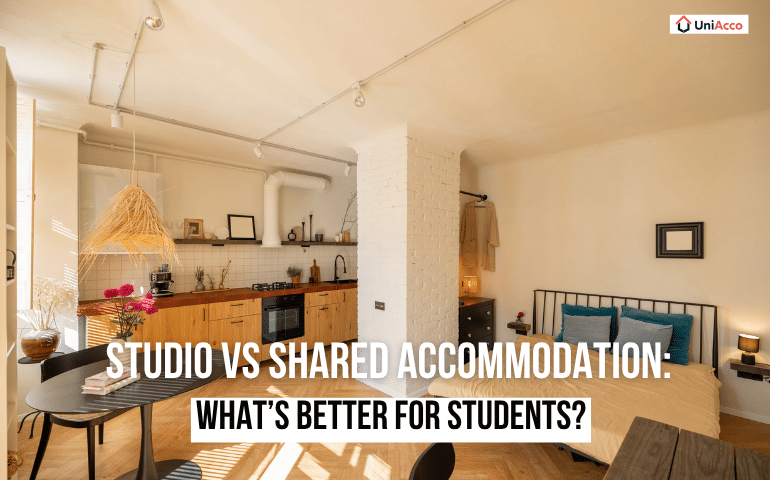
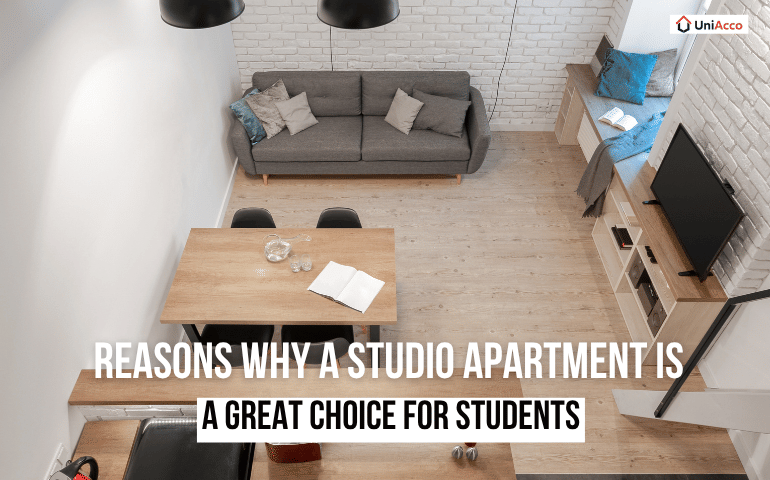
3. Studio Apartment
Studio apartments provide compact, self-contained living spaces that combine privacy and independence. They’re a top choice for international students who prefer quiet study environments.
Key Features
- Single unit combining bedroom, study, kitchenette, and bathroom.
- Complete privacy with no shared spaces.
- Modern interiors designed for efficient use of space.
Pros and Cons
| Pros | Cons |
| Full independence and privacy. | Higher rent compared to shared options. |
| Quiet space ideal for focused study. | Limited social interaction may feel isolating. |
| Efficient, well-designed living space. | Compact size may not suit everyone. |
Ideal For
- Postgraduate students or final-year undergraduates.
- Those who value independence and quiet study.
- Students with higher budgets seeking private living.
4. Homestays
Homestays involve living with a local family, offering cultural immersion and everyday support. This option is particularly popular among first-time international students.
Key Features
- Live with a host family, often with meals included.
- Daily exposure to local customs, language, and lifestyle.
- Flexible options for short or medium-term stays.
Pros and Cons
| Pros | Cons |
| Cultural immersion and language practice. | Less independence and flexibility. |
| Built-in support system for newcomers. | House rules may feel restrictive. |
| Cost-effective for short stays. | Not ideal for long-term accommodation. |
Ideal For
- Students new to the country and culture.
- Those looking for a short-term stay.
- Students seeking a supportive, family-like environment.
Also Read: What Are The Popular Types Of Student Accommodation?
Factors to Consider When Choosing Student Accommodation Abroad
Finding the right place to live is just as important as choosing your university. The type of room, be it a shared flat, studio, or ensuite room, can affect your comfort, budget, and even academic performance. Below are the key factors international students should weigh before making a decision.
- Location Matters Most
Proximity to Campus: Staying close to your university saves time and commuting costs. For instance, living within walking or biking distance means you can spend more time studying or socialising instead of being stuck in traffic.
Nearby Amenities: Grocery stores, clinics, banks, and public transport within easy reach can make day-to-day life stress-free.
Cultural & Social Scene: Some students prefer to be in lively areas with cafés, events, and nightlife, while others choose quieter neighbourhoods to focus on studies. Pick a location that matches your lifestyle.
- Budget Planning
Rent Costs: Decide how much you can realistically afford each month. Rent often varies by season, property type, and location. Ensuite rooms or private studios may cost more, but they also offer extra privacy.
Living Expenses: Beyond rent, factor in food, transportation, and entertainment costs in your city. A central location may save travel expenses but come with higher rent.
Deposits & Fees: Most landlords will require deposits or one-time fees. Always review terms before signing. This ensures that there are no surprises when securing your housing.
- Facilities and Amenities
Basic Facilities: Reliable Wi-Fi, heating, cooling, and laundry are must-haves for international students. A well-maintained ensuite bathroom can significantly add to your comfort.
Furniture & Appliances: Check if the property is fully furnished. Furnished housing saves money and hassle, especially when moving abroad for the first time.
Shared Spaces: If you choose shared housing, inspect kitchens, living rooms, and bathrooms. Clean, functional common areas improve the quality of shared living.
Special Requirements: Students with accessibility needs or other specific requirements should confirm them with landlords before finalising.
Also Read: All You Need To Know About Purpose-Built Student Accommodation In The UK
- Lease Terms & Flexibility
Tenancy Duration: Align your lease with your study programme. Short-term leases are better for semester exchanges, while year-long leases suit full-degree students.
Flexibility: Some contracts allow early termination or renewal. This can be a safety net if your study plans change or you wish to move into another housing type, like an ensuite room or studio, later.
Also Read: What Is a Lease Agreement for Student Accommodation Abroad?
- Cultural & Social Fit
Cultural Comfort: Choose an environment that feels familiar or exciting, depending on your preference. For example, a homestay might suit students eager to experience local traditions, while an ensuite in a private hall offers more independence.
Community Opportunities: Accommodation with social spaces, like lounges or shared kitchens, helps you meet other students, build friendships, and settle faster in a new country.
Wrapping Up!
The right student accommodation abroad shapes your comfort, focus, and overall study experience. An ensuite room gives you privacy, convenience, and independence with the bonus of having your own bathroom, while still allowing you to connect with flatmates through shared kitchens or common areas. That balance is exactly why many international students prefer it over other room types.
Still, every student’s needs are different. Consider your budget, lifestyle, and study priorities before deciding if an ensuite is the right fit. Whether you go for an ensuite room, a studio, or shared housing, the key is to find a space where you can feel at home while studying abroad.
That’s where UniAcco helps. With verified listings, detailed room features, and support at every step, UniAcco makes it easier to compare ensuite rooms, PBSAs and other student housing options across top study destinations, so you can focus on studies while we simplify the search.
FAQs
Q1. What is an ensuite room?
Ans: A bathroom is included with an en suite bedroom. An en suite bathroom is located adjacent to a bedroom and is only accessible through the bedroom door.
Q2. What is included in an ensuite?
Ans: Some ensuites are linked rooms with all of the bathroom necessities, while others are open spaces with no solid walls. Most ensuites include a toilet, sink, and shower, but larger ones may additionally include a vanity, tub, and extra closet space.
Q3. What is the difference between a suite and an ensuite?
Ans: The distinction between an ensuite and a suite is that an ensuite is a bathroom linked to a bedroom; a private bathroom (as opposed to a shared, public bathroom), whereas a suite is a retinue or company of attendants, such as an ambassador’s suite.
Q4. How big is an ensuite?
Ans: An en-suite bathroom or shower room measures about 1200 mm in width by 2100 mm length on average. With careful design and planning considerations, a functioning en-suite can also be created in a considerably smaller space.

 LinkedIn





0 Comments