

You know what sums up student life perfectly? It’s like you’re stuck in a never-ending episode of Stranger Things, except the real monster isn’t from the Upside Down—it’s your to-do list. One moment you’re relaxing, and the next you suddenly remember you have three assignments, two deadlines, and an exam coming up. According to the Times Higher Education (THE), about 30% of students feel stressed every week on average. In the UK and Australia, it’s even higher, with 33% of students reporting weekly stress, based on their 2024 Student Wellbeing Survey.
In this blog, you’ll find the common signs and symptoms of stress, what causes stress, and top stress management tips for students like you to stay calm, focused, and productive instead of feeling like your brain has 27 tabs open at once.
What is Stress?
The simplest way to describe stress is your body’s reaction when you feel pressure or worry. We know, for you as a student, stress usually comes from exams, deadlines, or personal challenges. A tad bit of stress can help you stay alert, but it becomes a matter of worry when it starts affecting your health and performance. A good example would be, let’s say, you have three exams coming up, multiple chapters to revise, and very little time left. So, you start sleeping less, skipping meals, and studying for long hours without breaks. Now, instead of feeling motivated, you realise that you have gotten more anxious and exhausted than usual. This drops your concentration, and even simple topics start to feel confusing and overwhelming. This is exactly when stress begins to affect both their health and their academic performance.
Common Signs and Symptoms of Stress for Students
Everyone throws around the word “stress” these days. You might even hear kids in 3rd or 4th grade saying things like, “I’m stressed because of my homework.” But real stress is a little more serious than just feeling annoyed about schoolwork. So how can someone who is actually dealing with stress know for sure that what they’re feeling is really stress?
The answer is to pay attention to certain signs and symptoms. Stress usually shows up in the way you feel, think, and behave. Sometimes your body reacts with headaches or trouble sleeping. Other times, your emotions might feel harder to control, like feeling anxious, overwhelmed, or irritated. Your habits can also change, such as procrastinating more or avoiding people. To help you understand this better, we’ve listed a few common symptoms that can help you recognise if you might actually be experiencing stress.
1. Physical symptoms
The most common way stress shows up is through physical symptoms. If you’ve noticed, you’re getting frequent headaches, and you feel tired all the time, even if you haven’t done much physical work. Another common sign is having trouble sleeping. You might find yourself lying awake thinking about exams, assignments, or deadlines in the middle of the night. Stress also causes a fast heart rate (palpitations) and high blood pressure problems.
Also, your stomach is often the first place these reactions show, and you feel nauseous or have an upset stomach. And yes, most importantly, it affects digestion and leads to problems like constipation or diarrhoea. We know, these sounds gross, but it’s all true. If you also notice some skin rashes, hair loss, more than usual acne on your skin, even lightheadedness or blurry vision, these are signs that your body is telling you that you need better stress management tips in your routine.
2. Emotional symptoms
If you are not the kind to snap out on people easily, but of late you’ve realised you’re easily irritated and angered, this could be because you are stressed. When you are stressed, your mood can change quickly. You might feel anxious before classes, tests, or presentations. In more intense cases, it can lead to panic attacks or feelings of sadness that make it harder to stay motivated with studies. You also feel like you’re overloaded with assignments and deadlines. Or sometimes you get the feeling of being stuck, or like you are losing control. Simple things like hanging out with friends, playing sports, or even attending classes might not seem to interest you. Stress can exhaust you emotionally in ways you can’t seem to understand. This makes you forgetful, misplace things, or struggle to make simple decisions.
3. Behavioural symptoms
Sometimes, without you even noticing it, your eating patterns often change when stressed. You start eating much more than usual, especially munching on snacks or junk food while studying. While some of you might even lose your appetite completely. So, you start skipping meals without realising it. We all have done this, procrastinating and delaying our work to some extent, but when you start putting off assignments or avoiding responsibilities because the workload feels too big to handle and have no intention of completing these tasks, that’s not normal. That is stress playing with your behaviour. It also makes you pick up unhealthy habits like nail-biting, fidgeting, or constantly checking your phone when you feel anxious. As much as you may not like to hear it, stressed students also end up having an unhealthy amount of alcohol, tobacco, or other substances. If you also start avoiding your loved ones and prefer to stay isolated, that’s stress acting up.
If deadlines, exams, and moving abroad already feel stressful, finding housing shouldn’t be. Get the best deals & guaranteed lowest prices for student accommodation in the UK with UniAcco.
🏡 Explore UK Student HousingTop Stress Management Tips for Students
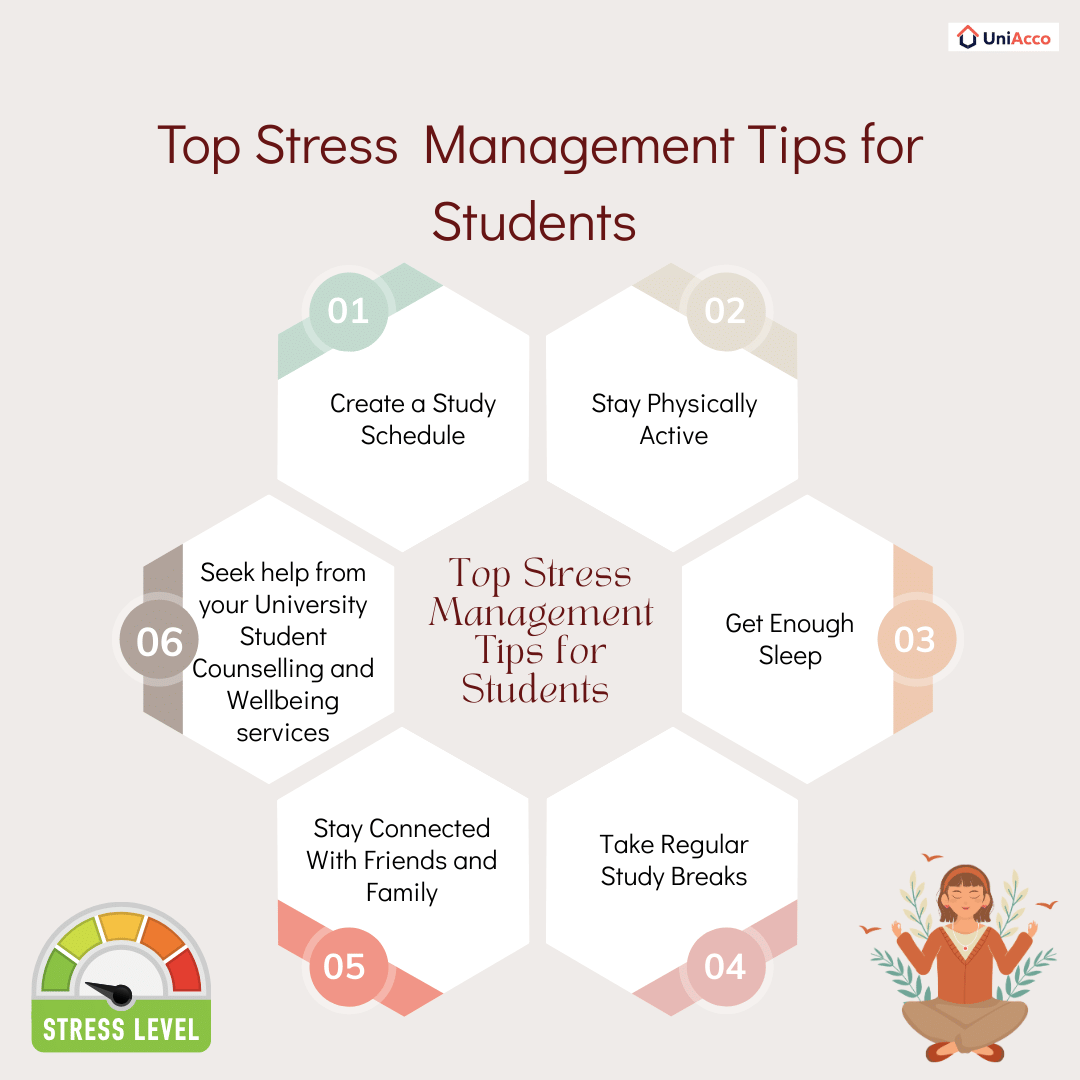
None of our problems disappears overnight, nor does stress. The key to managing stress lies within ourselves. First, identify what triggers stress, and once you understand that, find ways to handle stress. To help you figure this out better and make it easier for you, we’ve compiled a list of stress relief tips for students who might have experienced stress in one form or another.
Create a Study Schedule
No one can finish their entire syllabus overnight. Unless you have an eidetic memory like Mike Ross from Suits, you’re not going to remember everything in one sitting. That’s why preparing a good study schedule is so important and is simply one of the easiest ways to manage stress during exams. A study schedule helps you break your syllabus into smaller, manageable parts. Instead of trying to study everything at once, you can spread topics across days or weeks. This makes studying feel less overwhelming and gives your brain enough time to actually understand and remember what you learn. You’ll also hear your college professors recommend this as one of the most effective stress management tips for students.
Stay Physically Active
If you’ve found yourself googling “ stress management tips”, one method that usually works and always pops up in the search results is staying physically active. We won’t tell you. Walking, cycling, or playing sports are great stress relief tips for students; instead, we’d want you to get up, leave everything you’re doing, and go for a quick walk. We promise you that when you come back, your mind will be fresher, more focused, and calm. Any sort of physical activity instantly releases endorphins or “runner’s high” that act like natural painkillers or mood boosters along with other chemicals like dopamine, serotonin and norepinephrine, which overall reduce stress and improve your mood swings.
Get Enough Sleep
If you love sleeping, you’re definitely going to like this tip: getting good sleep. A good night’s sleep is one of the simplest ways to lower stress. Have you heard of REM sleep? REM means Rapid Eye Movement, and it’s the part of sleep when your brain sorts through emotions, memories, and what you learned that day. Sleeping for about 7 to 8 hours lets your body complete several sleep cycles, each lasting around 90 minutes. These cycles help your brain recharge. Without enough sleep, your brain misses out on these cycles, which can leave you feeling more stressed, tired, and unable to concentrate the next day. That’s why getting proper sleep is one of the most important stress management tips for students.
Take Regular Study Breaks
Studying for long hours without any breaks might seem productive, but it can actually make stress worse. When you study nonstop, your brain gets tired, your concentration drops, and even simple topics start to feel confusing. This can make students feel frustrated and overwhelmed. That’s why taking short breaks is one of the easiest stress management tips for students. One popular method many students use is the Pomodoro Technique. In this method, you study for 25 minutes, then take a 5-minute break. After repeating this four times, you take a longer break of about 15–20 minutes. During these short breaks, you can do something relaxing like listening to your favourite song or watching a quick, funny clip or a short episode from a series that makes you laugh. Just keep the break short; don’t start binge-watching an entire season when you still have chapters left to study.
Stay Connected With Friends and Family
Talking to someone you trust can actually do wonders when you’re stressed. Sometimes you don’t even need solutions. You just need someone to listen while you complain about that impossible assignment or confusing lecture. Many stress relief tips for students highlight the importance of social support. A quick chat with a friend, a call with your parents, or even ranting to your roommate about exams can make you feel a lot lighter. Spending time with people who understand what you’re going through is honestly one of the easiest stress management tips for students.
Seek help from your University Student Counselling and Wellbeing services
Most universities offer student counselling and wellbeing services, and honestly, they’re there for a reason. If stress starts feeling too heavy to handle on your own, reaching out for professional support is one of the smartest stress management tips for students. These services are run by trained professionals who understand what students go through and can offer practical tips for students for managing stress, along with emotional support. Think of it like having a guide who helps you figure things out when everything feels a bit too overwhelming.
Want to know more about when stress hits, what simple hacks students use to survive? Then, check out this Reddit thread!
If university stress is already giving you headaches and sleepless nights, don’t let housing add to it. Get 24/7 support for your student housing in Germany worries with UniAcco.
🏡 Explore Student Housing in GermanyWhat causes stress in students?
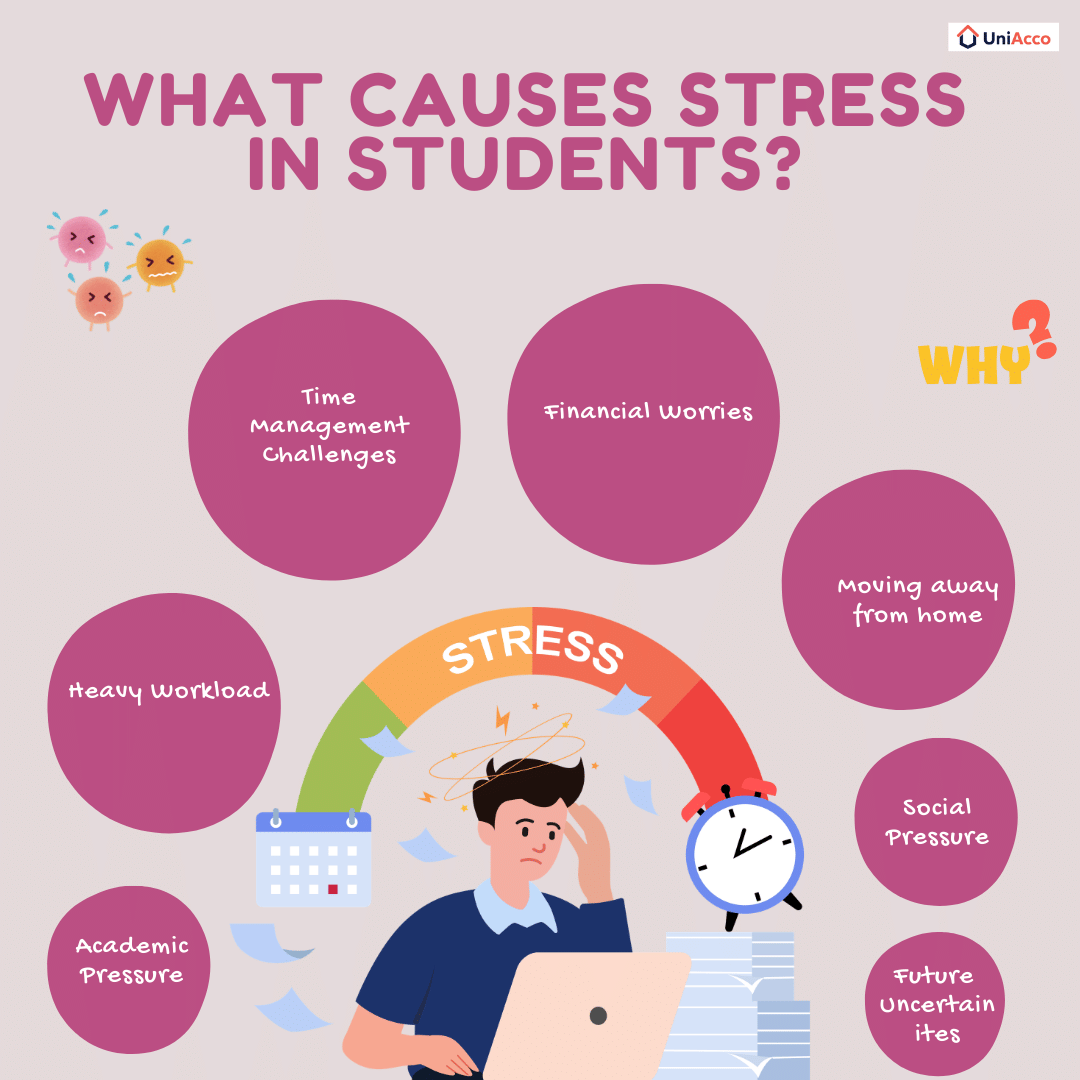
Let’s understand where all this stress comes from and what actually causes so much stress. Stress doesn’t appear out of thin air; it builds over time from your everyday student experiences. Things like exams, deadlines, expectations, and personal responsibilities.
We’ve already shared several stress management tips for students above, but understanding the causes of stress can help you figure out what exactly is triggering it for you. Once you know the source, it becomes much easier to apply the right stress management tips for students and handle the pressure in a healthier way.
Academic Pressure
Everyone wants to get good grades. So the pressure to do well in your exams, assignments, presentations, and deadlines can be overwhelming. Sometimes, it seems like as soon as one test ends, another one is right around the corner. This pressure to do well can easily cause anxiety. Learning practical ways to manage stress, like making a study schedule, staying active, and taking regular breaks, can help you stay calm and focused even when your workload feels heavy.
Heavy Workload
We know you’re not just studying one subject. You have multiple subjects, so each subject has its own assignments, projects, and reading lists. When everything piles up at once, it can feel like your to-do list never ends. Too much homework and too many assignments can make you feel burned out, anxious, and sleep-deprived. Many students end up spending more than two hours every night just trying to finish their homework. This is where you can also use a simple but effective tip for students to manage stress: break big tasks into smaller steps.
Time Management Challenges
We know being a student isn’t just about attending classes and studying for exams. One of the biggest causes of stress is having to go to lectures, do your homework, along with group projects. Some of you also have part-time jobs and family responsibilities. And you trying to balance everything can get tricky. When time starts slipping away, stress increases.
Financial Worries
When you’re an international student, you’ve got to be mindful of your expenses. Worries like student debt and rising living costs can cause a lot of stress, which adds to your already existing academic and workload stress. This pressure can lead to anxiety, low mood, and difficulty focusing on studies. To manage expenses, many students work longer hours, which leaves them with less time to study and rest. Over time, this can cause problems like poor sleep and constant tiredness, and it may also affect their confidence and self-esteem.
Moving away from home
A new city or even a new country, at first, feels exciting. But after some time, we know you’ll start to miss the comfort of home. Feeling lonely in a new environment is completely normal, and this is when many students start wondering how to cope with homesickness. Building a routine, joining student clubs, making new friends, and staying connected with family are some helpful stress relief tips for students because having a support system makes adjusting to a new place much easier.
Social Pressure
University is a place where students try to find where they fit in. The pressure to make friends, fit in, or keep up with others can be stressful. Social media often makes this harder because it looks like everyone else is doing great. Seeing other people’s “perfect” achievements online can put a lot of pressure on you. This happens because most of the time, influencers and others only show you a small, carefully chosen part of their reality. Because of this, students can start feeling like the grass is always greener on the other side. Over time, this comparison can create a toxic mindset where you begin to feel like you’re “not good enough,” even when you’re doing just fine. A stress management tip for students that usually goes a long way is to stop comparing yourself with others and focus on your own progress.
Future Uncertainities
No matter where you’re from, most students wonder, “Will I get a good job?” or “Am I studying the right subject?” It’s normal to think about the future, but worrying too much can add pressure to your life now. If you keep thinking about what will happen after graduation, it can make your current studies feel even more stressful. The best way to build a good future is to focus on what you can control today. By staying consistent with your studies, building your skills, and improving step by step, you move closer to your goals. The effort you put in now shapes your future.
Your to-do list is already chaotic—housing doesn’t need to be. Get all-inclusive student accommodation in Australia with utilities and high-speed Wi-Fi with UniAcco.
🏡 Explore Student Housing in AustraliaWrapping Up!
To conclude, student life can feel like you’re starring in a wild Netflix show. One day you’re on top of things, and the next you’re looking at your laptop thinking, “How do I have three deadlines and an exam this week?” Stress is a normal part of being a student, and almost everyone deals with it at some point.
The good news is that stress doesn’t have to take over your life. Small habits can really help. Managing stress isn’t about being perfect, but about finding routines that keep you balanced. This way, you can get through the busy student season without feeling overwhelmed by your to-do list. Even picking the right student accommodation with UniAcco can give you a comfortable place to study, relax, and recharge.











0 Comments