
Moving to Cambridge for university? One of the first questions every student – and every worried parent — asks is: “How much will I actually need each month?”
The honest answer depends on where you live. So instead of giving you one vague number, this guide gives you two real ones: what the University of Cambridge itself estimates a typical student spends, and what students actually pay based on real 2026 accommodation booking data. Then it breaks down exactly where that money goes, using the latest 2026 Numbeo market price index so every figure is checked against real Cambridge prices.
Cost Of Living Calculator
| Description | Cost (£) |
|---|---|
| Total Cost of Accommodation | 100 |
| Total Cost of Transport | 50 |
| Total Cost of Utilities | 30 |
| Total Cost of Food | 70 |
| Total Estimated Cost | 250 |
Students can plan and decide where they need to spend and where they can save with the help of a detailed budget. The choice of student accommodation, mode of transportation, and spending patterns for groceries and other extracurricular activities largely influence the costs. However, based on students’ preferences, the average cost of living in Cambridge can range from £1,356 to £1,464 per month. We have outlined the elements affecting the overall budget and the areas you should pay attention to. So let’s go through each one one by one and get it!
How Much Does It Cost to Live in Cambridge?
A moderate student budget in Cambridge runs between £1,305 and £1,660 per month, depending on your accommodation choice and lifestyle. Here’s how the two ends of that range break down.
If you book PBSA (private hall) with utilities and gym included
| Category | Monthly Cost | What’s Included |
| Rent | £1,049 | Room with utility bills included at UniAcco (weighted average across room types) |
| Utilities | £0 (worth ~£96 elsewhere) | Electricity, heating, water, wifi (bundled into rent if living in UniAcco property) |
| Groceries | £60 | A lean, staple-focused weekly food shop |
| Eating out | £106 | ~2 meals out per week |
| Transport | £72 | Standard monthly bus pass |
| Mobile (SIM-only) | £14 | Calls + 10GB+ data |
| Personal care | £18 | Toiletries, essentials |
| Entertainment | £44 | Cinema + one night out |
| Gym | £0 (worth ~£49 elsewhere) | Included at most PBSA properties |
| Miscellaneous buffer (10%) | £136 | Unplanned/one-off costs |
| Total | ≈ £1,499/month |
That’s roughly £145/month of value (bundled utilities + gym) that a student renting privately would have to budget for separately so a like-for-like private rental comes closer to £1,659/month.
Why Cambridge Is One of the UK’s Priciest Student Cities
Cambridge is synonymous with a world-class academic environment and centuries of history but that legacy comes at a price. Numbeo’s local Consumer Price Index for Cambridge stood at 61.2 in 2021; by mid-2026 it had climbed to 74.3, a 21.4% rise in the space of five years.
Two forces are driving that increase. Nationally, the 2022–2024 energy and food price shocks hit the whole UK economy. Locally, Cambridge’s “Silicon Fen” its high-tech and life sciences cluster has drawn in a growing, well-paid workforce that competes directly with students for a housing stock that hasn’t grown to match.
Student Accommodation Costs in Cambridge
Rent is by far your biggest line item, so it’s worth understanding properly.
What different room types actually cost
Looking at real 2026 Cambridge student bookings rather than list prices, the picture is more evenly split than in many other UK cities:
| Room Type | Typical Weekly Rent | Typical Monthly Rent | Share of Bookings |
| Non-ensuite | ~£224/week | ~£971/month | ~36% |
| Ensuite | ~£246/week | ~£1,066/month | ~33% |
| Studio | ~£292/week | ~£1,265/month | ~13% |
| All room types (weighted average) | £242/week | £1,049/month | 100% |
Unlike many student cities, Cambridge does not have one dominant room type. Ensuite and non-ensuite rooms are booked at almost the same rate. Both are popular choices rather than a compromise. Students looking to save money often choose non-ensuite rooms. Those who value more privacy usually prefer ensuite accommodation.
Types of accommodation in Cambridge
University Residences: Managed directly by individual colleges, these are the most secure option since you’re living within the university’s own system. Rent is genuinely all-inclusive — heating, electricity, wifi and water are bundled in and contracts typically run 27–39 weeks in line with term dates, which lowers your annual cost even where the weekly rate looks similar to private options.
Private Purpose-Built Student Accommodation (PBSA): Run by commercial operators like iQ and Student Castle, PBSA offers fully furnished studios or shared cluster flats with premium amenities gyms, 24-hour security, study lounges bundled into the rent. Commercial landlords generally require a 52-week fixed contract, longer than a college’s term-time lease.
Shared Apartments: Renting shared student accommodation with friends is fun; it also helps save money. But sometimes it can be exhausting because of the main challenges like splitting bills, chasing late payments, and managing a shared deposit.
Private Apartments: Full independence, no sharing but you’ll typically need a solid UK-based financial guarantor to secure the lease.
Utility Bills: What’s Included vs What You’ll Pay Separately
This is a cost a lot of guides gloss over, and it’s actually six separate bills rolled into one line: electricity, heating, cooling (where applicable), water, garbage/waste collection, and wifi/broadband.
Based on current Cambridge market pricing for a typical apartment, split three ways across a standard student house-share, this works out to roughly £96 per person per month — and that’s before winter energy spikes, which can push bills well above this in January.
If you’re renting privately rather than through an all-inclusive Purpose Built Student Accommodation PBSA or college contract, expect to pay something like:
- Electricity: £80 – £150
- Gas: £35 – £70
- Water: £25 – £60
- Internet: £35 – £60
- Mobile plan: £10 – £30
The hidden hassle of private renting. Beyond the cost, private renters are typically responsible for setting up accounts with an electricity/gas supplier, a water company and a broadband provider separately (often three-plus companies), submitting meter readings, splitting every bill fairly among housemates, and comparing energy deals something most students never get around to. Book PBSA or a college room and none of this applies: one bill, no meter readings, no arguments.
Do students pay council tax in Cambridge? Full-time students are exempt from UK council tax but the exemption applies to the property, not automatically to each tenant. If you share a house with even one non-student, the rules get more complicated: with one non-student housemate, the household usually gets a 25% discount, and the non-student is typically the one liable for that reduced bill. With two or more non-student housemates, there’s no discount at all. And if your name is on the tenancy agreement, you can still end up personally liable for the bill even as a “disregarded” student the disregard affects the discount calculation, not necessarily who the council chases for payment. This is a real risk if you move into a shared house with a mix of students and non-students (a graduate housemate, a working partner) without checking the tenancy details first. Student-only accommodation is usually registered as exempt automatically, so none of this applies.
Food Costs: Groceries and Eating Out
Grocery costs vary depending on how much you cook versus eat out — general “household” cost-of-living figures tend to overestimate what a single student actually spends.
A basic grocery shop can cost around £60/month (roughly £14/week). If you’re spending well below the estimate and it’s not a deliberate choice, it’s worth checking you’re eating enough rather than just spending little.
Grocery basket (current Cambridge prices):
| Item | Monthly Quantity | Unit Price | Monthly Cost |
| Milk | 6L | £1.25/L | £7.50 |
| White bread | 4 loaves (500g) | £1.33/loaf | £5.32 |
| Eggs | 2 dozen | £3.39/dozen | £6.78 |
| White rice | 2kg | £1.99/kg | £3.98 |
| Chicken fillets | 1.5kg | £12.13/kg | £18.20 |
| Cheese | 0.25kg | £7.35/kg | £1.84 |
| Beef | 0.25kg | £11.82/kg | £2.96 |
| Fruit (apples, bananas, oranges) | ~2kg mixed | ~£2.10/kg avg | £4.91 |
| Vegetables (tomatoes, potatoes, onions) | ~4kg mixed | ~£1.68/kg avg | £6.70 |
| Bottled water | ~8L | ~£0.30/L | £2.40 |
| Total | £60.59 |
Cooking at home is the most reliable way to control this budget — shopping at Aldi or Lidl instead of premium chains makes a noticeable difference over a month.
Dining out is where Cambridge really shows its price tag. A meal at an inexpensive restaurant runs about £18.50; a fast-food combo meal is around £8.00; a three-course dinner for two at a mid-range restaurant averages £87.50; a cappuccino is about £3.51; and a pint of domestic draught beer is roughly £5.46. Modelling a budget-conscious student eating out or ordering takeaway twice a week (8–9 times a month) at the inexpensive-meal/fast-food average puts eating out at around £106/month. Cook almost everything and this number drops fast; order takeaway most nights and it climbs well past it.
Getting Around: Transport Costs
A standard, non-discounted monthly public transport pass in Cambridge costs £72. A one-way bus ticket is £2.80, taxis start at a £6.00 base tariff (roughly £2.00/km after that), and petrol runs about £1.55/litre.
Most students won’t actually pay full price, though. Cambridge is flat, compact, and genuinely one of the most cycling-friendly cities in the UK, with over 80 miles of cycle lanes — a large share of students get around almost entirely by bike, cutting transport costs close to zero beyond a one-off bike purchase and basic maintenance. Cycling instead of taking the bus can save you up to £70/month.
For days you do need the bus, Stagecoach runs the main network across Cambridge and Cambridgeshire with real student discounts:
- Youth tickets (under 19, or students with valid ID) save on bus travel fares, across single, day, weekly and monthly tickets.
- Annual student tickets for Cambridgeshire, Bedfordshire and Peterborough work out from around £1.77 a day for unlimited travel across the academic year, including evenings, weekends and half-terms.
- Students and residents under 25 in Cambridgeshire and Peterborough can apply for a local Tiger pass, offering flat £1 single bus tickets.
Stagecoach tickets are available through their mobile app, so there’s no need for a physical card. If you know you’ll be in Cambridge for the full academic year, an annual pass typically works out cheaper than paying month to month.
Mobile, Personal Care, Entertainment & Gym
Mobile: A SIM-only plan with calls and 10GB+ of data runs about £14/month — most international students already have a phone and just need a UK SIM, so a full contract usually isn’t necessary. Unlimited home wifi at 60Mbps+ costs around £33/month if you’re paying for it separately.
Personal care: Toiletries and everyday essentials come to roughly £18/month for a modest, realistic routine.
Entertainment: Budget £44/month for two cinema trips (an international-release ticket runs about £12.95) plus one night out with friends. Busier social calendars should adjust upward; homebodies can trim this easily. Watching for student discounts on matinees, or splitting streaming/rental costs with friends, is an easy way to bring this down further.
Gym: A standalone fitness club membership in Cambridge runs about £49/month — but most PBSA properties include gym access as a free on-site amenity, effectively covering this cost already if you’ve booked one.
Study Costs & the Miscellaneous Buffer
Academic books and printing typically add around £30/month, though this varies a lot by course (lab and design-heavy subjects tend to cost more; humanities courses with mostly digital reading lists cost less).
On top of every category above, it’s worth building in a 10% miscellaneous buffer — around £136/month on the PBSA budget — for the unplanned costs that always seem to come up: a birthday gift, a late-night Amazon order, printing an assignment the night before it’s due.
Cost by Degree Type: Undergrad vs Postgrad vs PhD
Undergraduate. Cambridge runs a strict 3-term system, each roughly 8–9 weeks. UG students leave their college rooms over the Christmas and Easter breaks, so you’re only paying for about 9 months of active residency each year a meaningful saving over a full 12-month lease.
Postgraduate (Master’s). One-year master’s programmes run continuously through the traditional vacation months, so budget for a full 12-month calendar year effectively 3 extra months of rent, food and utilities compared to an undergraduate’s year.
PhD. Doctoral study typically runs 3–4 years, with students in Cambridge year-round like full-time researchers. Tuition is stable across those years, but the long, continuous exposure to Cambridge’s cost of living means a resilient, longer-term budgeting strategy matters more here than for shorter courses.
Scholarships That Can Lower Your Cambridge Costs
Gates Cambridge Scholarship. Covers the full cost of postgraduate study at Cambridge — full tuition, an annual maintenance allowance, and travel and visa costs. You’re automatically considered when you complete the funding section of your application.
Cambridge Trust Awards. The largest scholarship provider at the University, making around 350 new awards a year and supporting roughly 1,500 students in residence across all 31 colleges. The main selection window runs from March through July.
Cambridge Bursary Scheme. Provides up to £3,500 a year, non-repayable, for full-time UK undergraduates from households with an income up to £62,215 with higher amounts for clinical-year medical students, independent students (including care leavers), and students who were eligible for free school meals. Cambridge awards over £10 million a year through this scheme to more than 3,300 students annually around one in three UK undergraduates.
College-specific endowments. Individual colleges hold their own charitable endowments and use a portion of the investment returns to fund additional financial aid, research support and college-specific grants (like Trinity’s Maintenance Grant) well worth checking your specific college’s funding pages.
Part-Time Jobs to Help Cover Costs
The UK National Living Wage for workers aged 21+ is £12.71/hour (from April 2026), which works out to roughly £1,017/month gross for a typical part-time student schedule — enough to meaningfully offset food and utility costs.
| Role | Typical Pay |
| Academic tutor (GCSE/A-Lerivatvel, pe or online) | £15 – £30/hour |
| Hospitality (barista, kitchen porter) | £12.71 – £14.50/hour, often plus tips |
| University roles (library assistant, student ambassador, admin) | £12.71 – £15.00/hour, flexible hours |
| Retail (checkout, shop floor) | From £12.71/hour |
University-based roles are usually the most convenient option given their proximity to campus and flexibility around your timetable.
Where You Can Realistically Save Money
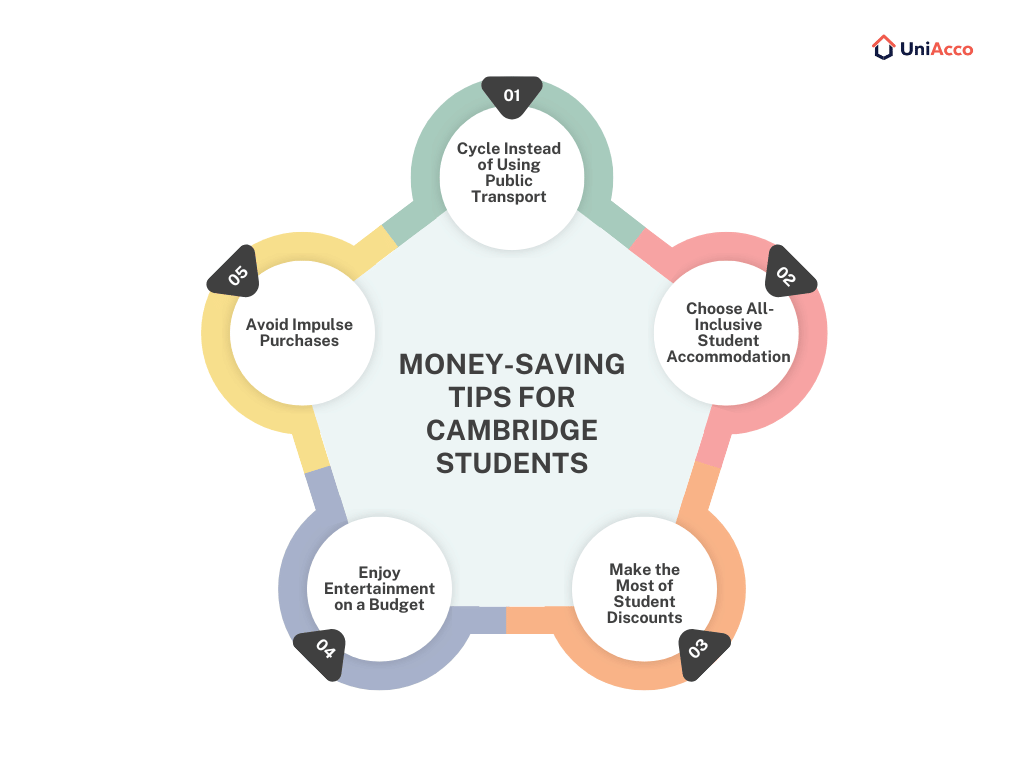
- Get a bike. Cambridge’s flat, compact layout makes cycling the single biggest realistic saving available — up to £70/month versus a bus pass.
- Book accommodation with utilities and gym bundled in. This alone is worth roughly £145/month compared with arranging electricity, water, wifi and a gym membership separately.
- Cook more, order less. Cutting eating out from twice a week to once a week saves roughly £57/month.
- Use student discount portals. Register with your university email on Student Beans, TOTUM and UNiDAYS for instant discounts on clothing, electronics, books and groceries at major retailers.
- Get creative with entertainment. Matinee pricing, student theatre rates, and splitting rentals with friends all add up over a term.
- Watch for impulse spending. On a tight student income, small unplanned purchases do more damage than they would once you’re earning a full salary — a habit worth building early.












0 Comments